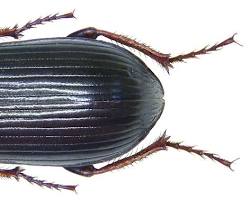
Zabrus Ground Beetles
Zabrus Ground Beetles are a group of large ground beetles best known for the agricultural pest species Corn Ground Beetle (Zabrus tenebrioides). Unlike most members of the ground beetle family, which are beneficial predators, Zabrus species are primarily plant feeders during their larval stage and can cause serious damage to cereal crops. They are particularly important pests of wheat, barley, rye, and other grain crops throughout parts of Europe, North Africa, and Western Asia.
The greatest economic impact comes from the larvae, which live underground and feed on young cereal seedlings. These larvae often pull leaves into their burrows and consume them below the soil surface. Heavy infestations can create large patches of missing plants, reduce stand density, and significantly lower crop yields. In severe outbreaks, farmers may be forced to reseed affected fields.
Because the damaging stage occurs underground and primarily feeds at night, infestations can be difficult to detect until substantial crop injury has already occurred.
Taxonomy and Classification
Zabrus Ground Beetles belong to the ground beetle family, although they differ significantly from many beneficial predatory species.
- Kingdom: Animalia
- Phylum: Arthropoda
- Class: Insecta
- Order: Coleoptera
- Family: Carabidae
- Genus: Zabrus
- Major Pest Species: Zabrus tenebrioides
The family Carabidae contains thousands of species worldwide, most of which are beneficial predators. Zabrus beetles are unusual because their larvae feed primarily on plants rather than insects.
Identification
Zabrus Ground Beetles can be identified by both their adult appearance and characteristic crop damage.
Adults
- Length: 15–20 mm.
- Color: Black to dark brown.
- Appearance: Robust, shiny, and heavily built.
- Legs: Strong running legs adapted for ground movement.
- Activity: Primarily nocturnal.
Adults are commonly found hiding beneath crop residue or soil during daylight hours.
Larvae
- Grayish-white body.
- Dark brown or black head capsule.
- Strong chewing mandibles.
- Prominent terminal abdominal segment.
- Subterranean lifestyle.
The larval stage is responsible for nearly all economic damage.
Damage Signs
- Missing cereal seedlings.
- Patchy crop stands.
- Chewed leaves.
- Leaves pulled into burrows.
- Reduced plant density.
- Irregular feeding patches across fields.
These symptoms are often most visible during the winter and spring growing periods.
Distribution and Habitat
Zabrus Ground Beetles occur primarily across Europe, North Africa, and Western Asia.
Common habitats include:
- Wheat fields
- Barley fields
- Rye production areas
- Cereal-growing regions
- No-till agricultural systems
- Reduced-tillage fields
Populations are often highest where crop residues remain on the soil surface and provide shelter for developing insects.
Host Plants
Zabrus larvae primarily attack cereal crops.
Common hosts include:
- Wheat
- Barley
- Rye
- Triticale
- Various cultivated grasses
Winter cereals are particularly vulnerable because larval feeding occurs during seedling establishment.
Life Cycle
Zabrus Ground Beetles undergo complete metamorphosis.
- Egg Stage: Females deposit eggs in the soil during late summer or autumn.
- Larval Stage: Larvae hatch and begin feeding on cereal seedlings.
- Overwintering: Larvae survive winter within underground burrows.
- Pupal Stage: Pupation occurs in the soil during spring or early summer.
- Adult Stage: Adults emerge and reproduce before the cycle begins again.
The larval stage may persist for several months and causes the majority of crop losses.
Feeding Behavior
Zabrus larvae display unique feeding habits compared to many agricultural pests.
- Feed primarily at night.
- Construct underground burrows.
- Pull leaves into burrows.
- Consume foliage below the soil surface.
- Remain concealed during daylight.
This behavior protects them from predators and makes detection more difficult.
Damage and Economic Importance
Zabrus Ground Beetles are significant agricultural pests because of their ability to reduce cereal crop establishment.
Seedling Destruction
- Chewing of young leaves.
- Removal of emerging seedlings.
- Plant death.
- Poor stand establishment.
Young cereal plants are especially vulnerable to attack.
Patchy Crop Development
- Missing plants.
- Uneven field growth.
- Reduced competitiveness.
- Yield variability.
Heavy infestations often create noticeable bare patches within fields.
Yield Reduction
- Reduced grain production.
- Lower plant populations.
- Economic losses.
- Potential reseeding costs.
Severe infestations can significantly reduce profitability.
Behavior and Conflict
Several biological characteristics contribute to the pest status of Zabrus Ground Beetles.
- Nocturnal Feeding: Larvae feed mainly at night.
- Subterranean Activity: Most feeding occurs below ground.
- Residue Preference: Crop residue provides shelter.
- Hidden Development: Larvae avoid exposure to predators.
- Extended Feeding Period: Damage may continue for months.
These factors make infestations difficult to detect and manage.
Monitoring and Detection
Regular monitoring is important in areas where Zabrus beetles are known pests.
Pitfall Traps
- Monitor adult activity.
- Assess future infestation risk.
- Track seasonal population levels.
Adult monitoring often provides early warning of future larval problems.
Field Scouting
- Inspect cereal seedlings.
- Look for missing plants.
- Search for burrows.
- Monitor feeding damage.
Field inspections are particularly important during autumn and spring.
Management and Prevention
Integrated Pest Management (IPM) provides the most effective long-term control.
Seed Treatments
- Protect emerging seedlings.
- Reduce early larval feeding.
- Improve crop establishment.
Systemic seed treatments are commonly used in high-risk areas.
Cultural Controls
- Crop rotation.
- Residue management.
- Tillage when appropriate.
- Field sanitation.
Reducing favorable habitat can lower pest survival rates.
Monitoring Programs
- Pitfall trapping.
- Population forecasting.
- Regular field inspections.
- Economic threshold assessments.
Monitoring allows treatments to be targeted when risk is highest.
Chemical Control
- Seed treatments.
- Targeted insecticide applications.
- Management based on population thresholds.
Chemical control is most effective when integrated with monitoring and cultural practices.
Conservation and Research
Research on Zabrus Ground Beetles focuses on understanding larval behavior, improving monitoring systems, developing sustainable management strategies, and identifying chemical cues that attract larvae to damaged cereal seedlings. Scientists are also investigating environmentally friendly control methods that minimize impacts on beneficial ground beetles and other non-target organisms.
Although many ground beetles are valuable predators, Zabrus Ground Beetles are important exceptions. Their ability to damage cereal seedlings and reduce crop establishment makes them significant agricultural pests in many grain-producing regions. Early detection, monitoring, and integrated management remain the best tools for preventing economic losses.