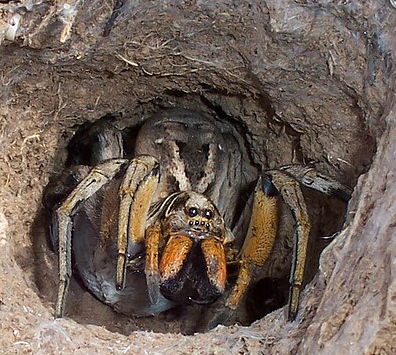
Wolf Spiders
Wolf Spiders are large, fast-moving hunting spiders belonging to the family Lycosidae. Unlike orb-weaving spiders that rely on webs to capture prey, wolf spiders actively hunt insects and other small arthropods on the ground. Their excellent eyesight, speed, and powerful hunting abilities make them some of the most effective natural predators found in gardens, fields, forests, and residential landscapes.
Wolf spiders are found throughout the world and are especially common in North America. They are often mistaken for more dangerous spiders because of their large size, hairy bodies, and rapid movements. However, wolf spiders are generally harmless to humans and play an important ecological role by helping control populations of insects and other pests.
Although they occasionally wander indoors, wolf spiders are not considered structural pests. Most encounters occur when these spiders accidentally enter homes while searching for prey or shelter.
Taxonomy and Classification
- Kingdom: Animalia
- Phylum: Arthropoda
- Class: Arachnida
- Order: Araneae
- Family: Lycosidae
The wolf spider family contains more than 2,400 species worldwide. Common North American genera include:
- Hogna
- Rabidosa
- Pardosa
- Tigrosa
- Schizocosa
These spiders are closely related to other hunting spiders but are distinguished by their eye arrangement and unique parental care behaviors.
Identification
Wolf spiders are among the largest hunting spiders commonly encountered outdoors.
- Body Length: 10 mm to 35 mm.
- Leg Span: Up to 100 mm in large species.
- Color: Brown, gray, black, tan, or mottled patterns.
- Body: Robust and hairy.
- Legs: Long, strong, and adapted for running.
Eye Arrangement
The most reliable identifying feature is their distinctive eye pattern.
- Four small eyes in the lowest row.
- Two very large eyes in the middle row.
- Two medium-sized eyes on top of the head.
Their large central eyes provide excellent vision and often reflect light at night when illuminated by a flashlight.
Female Wolf Spiders
Female wolf spiders display one of the most recognizable behaviors among spiders.
- Carry egg sacs attached to spinnerets.
- Transport spiderlings on their backs after hatching.
- Provide protection during early development.
This maternal behavior is unique and often surprises homeowners who encounter a female carrying dozens of young spiders.
Distribution and Habitat
Wolf spiders occur throughout the world and occupy a wide variety of habitats.
Common habitats include:
- Grasslands
- Forests
- Deserts
- Agricultural fields
- Gardens
- Lawns
- Woodlands
- Wetlands
Many species create burrows or use natural shelters beneath rocks, logs, and leaf litter.
Life Cycle
Wolf spiders undergo gradual development through several molts.
- Egg Stage: Eggs are enclosed within a silk egg sac carried by the female.
- Spiderling Stage: Young spiders hatch and ride on their mother’s back.
- Juvenile Stage: Spiderlings disperse and begin hunting independently.
- Adult Stage: Mature spiders reproduce and continue hunting.
Most species live one to two years, although larger species may survive longer.
Behavior and Hunting Strategies
Wolf spiders are active hunters that rely on speed and vision rather than webs.
Hunting Behavior
- Stalk prey actively.
- Ambush insects.
- Chase moving prey.
- Use excellent eyesight.
They typically hunt during evening and nighttime hours but may also be active during the day.
Burrowing Species
Some species construct burrows in soil.
- Silk-lined tunnels.
- Concealed entrances.
- Protected hunting locations.
- Shelter from predators and weather.
These burrows may remain occupied for extended periods.
Diet
Wolf spiders are beneficial predators that consume a wide variety of pests.
- Crickets
- Cockroaches
- Ants
- Grasshoppers
- Beetles
- Caterpillars
- Flies
- Other spiders
Their feeding activity helps reduce populations of many nuisance and agricultural pests.
Interaction with Humans
Wolf spiders frequently alarm people because of their size and speed, but they are generally harmless.
Bites
- Bites are uncommon.
- Usually occur when trapped or handled.
- Not medically significant.
- Typically cause mild localized pain and redness.
Unlike brown recluse or widow spiders, wolf spiders are not considered dangerous to healthy humans.
Indoor Encounters
Wolf spiders occasionally enter homes.
- Through door gaps.
- Through foundation cracks.
- While pursuing prey.
- Seeking shelter from weather.
They do not establish indoor infestations and generally die or leave if suitable conditions are unavailable.
Signs of Activity
- Large brown spider running across floors.
- Reflective eyes visible at night.
- Burrow openings in soil.
- Female carrying egg sac.
- Spiderlings riding on adult female.
Because they do not build prey-catching webs, web presence is not a useful indicator of wolf spider activity.
Management and Prevention
Control is rarely necessary because wolf spiders provide valuable pest control.
Exclusion
- Seal foundation cracks.
- Repair door sweeps.
- Screen vents and openings.
- Reduce gaps around utilities.
Exclusion is the most effective way to prevent accidental indoor entry.
Habitat Modification
- Reduce outdoor clutter.
- Remove wood piles near foundations.
- Trim vegetation touching structures.
- Reduce insect prey populations.
These measures make areas less attractive to hunting spiders.
Mechanical Removal
- Capture using a cup and paper.
- Relocate outdoors.
- Vacuum wandering individuals.
Relocation is generally preferred because of their beneficial role.
Ecological Importance
Wolf spiders are among the most important natural predators in many ecosystems. They help regulate insect populations and reduce pest pressure in gardens, agricultural fields, and natural environments. Studies have shown that wolf spiders can significantly reduce populations of crop-damaging insects, making them valuable allies in integrated pest management programs.
Research and Conservation
Scientists study wolf spiders extensively because of their importance as biological control agents and their unique behaviors. Research focuses on predator-prey relationships, habitat conservation, climate adaptation, and their contribution to sustainable agriculture.
Maintaining healthy wolf spider populations helps support balanced ecosystems and reduces dependence on chemical pest control methods.
Conclusion
Wolf spiders are beneficial hunting spiders that provide valuable natural pest control in a wide variety of habitats. Although their large size and rapid movements can be intimidating, they are generally harmless to humans and rarely bite. Their role as predators of insects and other arthropods makes them an important part of healthy ecosystems and integrated pest management programs.