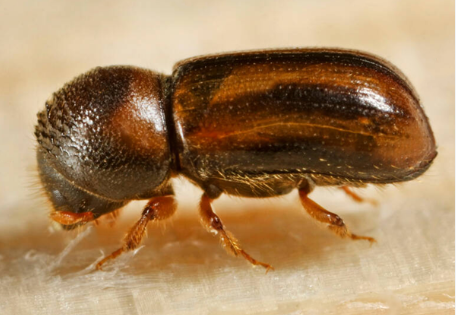
Ambrosia Beetles are a group of wood-boring insects in the subfamily Scolytinae (within the weevil family Curculionidae) known for their unique symbiotic relationship with fungi. Rather than feeding directly on wood, these beetles cultivate and consume specialized fungi—often called ambrosia fungi—inside tunnels they bore into trees. This behavior distinguishes them from many other borers and makes them significant pests in forests, orchards, nurseries, and ornamental landscapes.
Ambrosia beetles are found worldwide and attack a wide range of tree species. While many species target stressed, dying, or recently cut trees, some invasive species can infest healthy trees, causing serious economic and ecological damage.
Taxonomy and Classification
- Common Name: Ambrosia Beetles
- Family: Curculionidae
- Subfamily: Scolytinae
- Order: Coleoptera
- Type: Wood-boring beetle with fungal symbiosis
Ambrosia beetles are closely related to bark beetles, but differ in their feeding habits. Instead of consuming plant tissue directly, they rely on cultivated fungi as their primary food source.
Identification and Physical Description
Adult ambrosia beetles are typically small, ranging from 1/16 to 1/4 inch in length. They are cylindrical in shape and usually brown to black in color. Due to their small size, they are rarely noticed unless large numbers are present.
Larvae are white, legless grubs that develop within the galleries inside wood. Pupation also occurs within these tunnels.
One of the most distinctive signs of ambrosia beetle activity is the presence of toothpick-like frass tubes protruding from the bark. These structures are made of compacted sawdust pushed out of entry holes as the beetles tunnel into the tree.
Life Cycle
Ambrosia beetles undergo complete metamorphosis with egg, larva, pupa, and adult stages. The life cycle is closely tied to their fungal symbionts.
Female beetles bore into a host tree and create galleries in the wood. They introduce ambrosia fungi into these tunnels, which grow along the gallery walls. Eggs are laid within the galleries, and upon hatching, larvae feed on the cultivated fungus rather than the wood itself.
Larvae develop within the protected environment of the gallery, pupate, and emerge as adults. Many species can produce multiple generations per year under favorable conditions.
Host Trees
Ambrosia beetles attack a wide variety of trees, including:
- Hardwoods such as maple, oak, and walnut
- Fruit trees including apple, peach, and cherry
- Ornamental trees and shrubs
- Nursery stock and recently transplanted trees
Most species prefer stressed or weakened trees, but some invasive species can infest healthy hosts.
Damage and Symptoms
Ambrosia beetle damage results from both tunneling activity and fungal growth within the tree. While the beetles themselves do not consume wood, their actions can disrupt the tree’s vascular system.
Common symptoms include:
- Toothpick-like frass tubes extending from bark
- Small round entry holes on trunks and branches
- Wilting or dieback of branches
- Staining or discoloration within wood
- Rapid decline in heavily infested trees
The fungi introduced by ambrosia beetles can block water transport, leading to plant stress or death.
Notable Species
Several ambrosia beetle species are of particular concern:
- Granulate Ambrosia Beetle (Xylosandrus crassiusculus)
- Black Stem Borer (Xylosandrus germanus)
- Redbay Ambrosia Beetle (Xyleborus glabratus)
The redbay ambrosia beetle is especially notable for spreading laurel wilt disease, which has devastated certain tree species in affected regions.
Behavior and Ecology
Ambrosia beetles are attracted to trees emitting stress-related chemicals such as ethanol. This makes recently transplanted, drought-stressed, or damaged trees particularly vulnerable.
Once a suitable host is found, females initiate gallery formation and establish fungal colonies. This highly specialized relationship allows ambrosia beetles to thrive in environments where other wood-boring insects may not succeed.
Economic and Ecological Impact
Ambrosia beetles are significant pests in forestry, agriculture, and landscaping. Their impacts include:
- Loss of ornamental and nursery plants
- Damage to fruit and nut trees
- Reduced timber quality
- Spread of plant diseases
- Economic losses in horticulture and forestry industries
Invasive species pose an additional threat by attacking healthy trees and spreading destructive pathogens.
Management and Control
Managing ambrosia beetles can be challenging due to their protected life stages within wood. Effective control focuses on prevention and early intervention.
- Maintain plant health: Proper watering, fertilization, and care reduce susceptibility.
- Avoid stress: Minimize damage during planting or construction.
- Monitor trees: Check for frass tubes and entry holes.
- Remove infested trees: Prevent spread to nearby plants.
- Use preventative treatments: Apply insecticides to high-value trees before infestation.
- Sanitation: Dispose of infested wood properly.
Once beetles are inside the wood, control options are limited, making prevention critical.
Prevention
Preventative measures focus on reducing stress and limiting conditions that attract beetles.
- Water trees during drought conditions
- Avoid injuring bark and roots
- Inspect nursery stock before planting
- Maintain proper spacing and soil health
- Remove dead or declining trees promptly
Healthy trees are less likely to emit the stress signals that attract ambrosia beetles.
Related Articles
Conclusion
Ambrosia beetles are unique wood-boring insects that rely on fungal cultivation for survival. While many species target weakened trees, invasive species can cause significant damage to healthy plants and ecosystems.
Effective management depends on prevention, early detection, and maintaining plant health. By understanding their biology and behavior, landowners and growers can reduce the risk of infestation and protect valuable trees and crops.