Overview
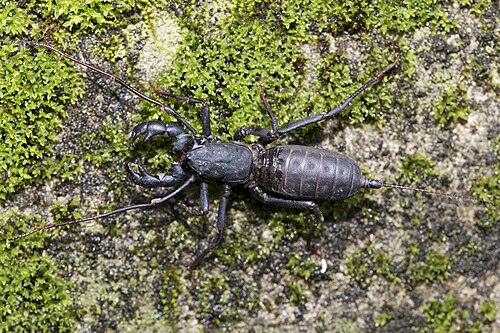
Vinegaroons, also known as Whip Scorpions, are fascinating arachnids belonging to the order Thelyphonida. Despite their intimidating appearance, these creatures are harmless to humans and play an important ecological role as predators of insects and other arthropods. Their common name comes from their ability to spray a vinegar-like defensive liquid when threatened.
Vinegaroons are often mistaken for true scorpions because of their large pincers and segmented bodies. However, they lack a venomous stinger and are not considered dangerous. They are primarily nocturnal hunters that help control populations of cockroaches, crickets, termites, and other pests.
Although they occasionally wander into homes, garages, and sheds, Vinegaroons are generally considered beneficial arachnids rather than significant pests.
Taxonomy and Classification
- Kingdom: Animalia
- Phylum: Arthropoda
- Class: Arachnida
- Order: Thelyphonida
- Family: Various families depending on species
Vinegaroons are related to spiders, scorpions, whip spiders, and mites. They belong to a unique arachnid group distinguished by their whip-like tail and chemical defense system.
Physical Description
Adult Vinegaroons range from 25 mm to over 80 mm in body length, with some species appearing much larger when their appendages are included.
Key Identification Features
- Large Pedipalps: Powerful pincer-like appendages used for capturing prey.
- Whip-Like Tail: A long, thin sensory appendage extending from the rear of the body.
- Flattened Body: Dark brown to black coloration with a heavily armored appearance.
- Eight Legs: The front pair functions largely as sensory organs.
- No Stinger: Unlike true scorpions, Vinegaroons lack a venomous stinger.
Their intimidating appearance often causes unnecessary alarm, but these arachnids are incapable of delivering a dangerous sting.
Distribution and Habitat
Vinegaroons are primarily found in tropical, subtropical, and arid regions around the world.
In the United States, they are most commonly encountered in:
- Arizona
- Texas
- New Mexico
- Nevada
- Southern California
Preferred habitats include:
- Desert environments
- Grasslands
- Woodlands
- Under rocks and logs
- Burrows
- Leaf litter
- Garages and crawl spaces
They require sheltered locations that provide protection from extreme temperatures and moisture loss.
Life Cycle
Egg Stage
Female Vinegaroons lay eggs in underground chambers and guard them closely until they hatch.
Juvenile Stage
Newly hatched young climb onto their mother’s back and remain there for a period before dispersing.
This parental care is relatively uncommon among arthropods and contributes to offspring survival.
Adult Stage
Juveniles undergo several molts before reaching adulthood. Depending on environmental conditions, development may require several years.
Adults can live surprisingly long lives, with some individuals surviving more than seven years.
Behavior
Nocturnal Activity
Vinegaroons spend daylight hours hidden beneath rocks, logs, debris, or inside burrows.
They emerge at night to hunt for prey.
Predatory Lifestyle
Vinegaroons are active hunters that feed on:
- Cockroaches
- Crickets
- Termites
- Beetles
- Spiders
- Millipedes
- Other small arthropods
Their large pedipalps allow them to quickly capture and restrain prey.
Defensive Behavior
When threatened, Vinegaroons typically attempt to flee. If escape is impossible, they may raise their pincers and release a defensive spray.
This spray contains acetic acid and related compounds, producing a strong vinegar odor that gives the animal its common name.
Damage and Economic Importance
Vinegaroons do not damage structures, furniture, stored products, or landscaping.
Unlike many household pests, they are actually beneficial predators.
Positive Impacts
- Reduce cockroach populations
- Feed on termites and other pests
- Help maintain ecological balance
- Reduce nuisance insect numbers
Potential Concerns
- Fear due to appearance
- Occasional indoor encounters
- Defensive vinegar spray
- Minor pinching if handled carelessly
Overall, Vinegaroons provide more benefits than problems in most environments.
Can Vinegaroons Harm Humans?
Vinegaroons are not considered dangerous.
They:
- Do not possess venom
- Cannot sting
- Rarely pinch humans
- Avoid confrontation whenever possible
The defensive spray may cause mild irritation if it contacts the eyes or sensitive skin, but serious injuries are extremely rare.
For most people, the greatest impact is simply the surprise of encountering such an unusual-looking arachnid.
Signs of Activity
Homeowners may occasionally encounter Vinegaroons in:
- Garages
- Basements
- Sheds
- Patios
- Crawl spaces
- Wood piles
Unlike infestations of insects, Vinegaroons are usually solitary and do not occur in large numbers.
Natural Predators
Despite their armor and chemical defenses, Vinegaroons have several natural enemies.
- Birds
- Roadrunners
- Lizards
- Small mammals
- Larger spiders
- Predatory insects
Their vinegar spray helps deter many predators but does not make them immune to predation.
Management and Control (IPM)
Exclusion
The most effective method of preventing indoor encounters is exclusion.
- Seal cracks around foundations
- Install door sweeps
- Repair damaged screens
- Close gaps around pipes and utilities
Habitat Modification
Reducing favorable hiding places can discourage Vinegaroons from lingering near structures.
- Remove wood piles
- Reduce debris accumulation
- Trim dense vegetation
- Improve drainage around buildings
Relocation
Because they are beneficial predators, Vinegaroons found indoors can be carefully captured and released outdoors.
Relocation is generally preferred over extermination.
Chemical Control
Chemical treatments are rarely necessary because Vinegaroons do not reproduce indoors or form infestations.
Addressing entry points and habitat conditions is typically sufficient.
Ecological Importance
Vinegaroons are important predators in desert and woodland ecosystems. By feeding on insects and other arthropods, they help maintain natural population balances and contribute to healthy ecological communities.
Many scientists consider them valuable indicators of habitat quality because they require stable, relatively undisturbed environments.
Conclusion
Vinegaroons are unique arachnids that often inspire fear due to their large size, powerful pincers, and unusual appearance. Despite these intimidating features, they are harmless to humans and provide valuable pest-control services by feeding on cockroaches, crickets, termites, and other insects. Their vinegar-like defensive spray, nocturnal habits, and fascinating behavior make them one of the most distinctive arachnids found in North America. In most situations, tolerance and simple exclusion measures are the best management strategies.