Overview
Vegetable Leafminers are small flies belonging primarily to the genus Liriomyza, including species such as Liriomyza sativae, Liriomyza trifolii, and Liriomyza huidobrensis. These insects are among the most important leaf-feeding pests of vegetable crops worldwide. Their larvae feed within leaf tissue, creating distinctive winding tunnels known as mines that reduce photosynthesis, weaken plants, and lower crop quality.
Vegetable leafminers attack a wide range of crops, including tomatoes, peppers, beans, lettuce, spinach, cucumbers, melons, celery, onions, and many ornamental plants. Because the larvae develop inside the leaf, they are protected from many predators and insecticide applications, making management challenging.
Taxonomy and Classification
- Kingdom: Animalia
- Phylum: Arthropoda
- Class: Insecta
- Order: Diptera
- Family: Agromyzidae
- Genus: Liriomyza
Leafminers belong to the family Agromyzidae, commonly known as leaf-mining flies. More than 3,000 species exist worldwide, but only a handful cause significant agricultural damage.
Identification
Adult Flies
Adult vegetable leafminers are tiny flies that often go unnoticed.
- Length: 1–2 mm.
- Color: Black and yellow.
- Body Shape: Compact with clear wings.
- Key Feature: Bright yellow scutellum located between the wing bases.
- Behavior: Frequently seen walking across leaf surfaces.
Larvae
The larvae are legless maggots that live entirely within leaves.
- Color: Pale yellow to cream.
- Shape: Cylindrical and tapered.
- Location: Inside leaf tissue.
- Visibility: Often visible through the leaf surface as they tunnel.
Pupae
Mature larvae exit the leaf and pupate in the soil or plant debris.
- Color: Golden brown to dark brown.
- Shape: Oval, seed-like puparium.
Distribution and Habitat
Vegetable leafminers are found throughout tropical, subtropical, and temperate agricultural regions worldwide.
Common habitats include:
- Commercial vegetable farms
- Home gardens
- Greenhouses
- Nurseries
- Urban landscapes
- Organic production systems
Warm temperatures and intensive crop production favor rapid population growth.
Host Plants
Vegetable leafminers have an exceptionally broad host range.
Common host plants include:
- Tomatoes
- Peppers
- Beans
- Peas
- Spinach
- Lettuce
- Celery
- Cucumbers
- Melons
- Squash
- Onions
- Potatoes
- Chrysanthemums
- Many ornamental flowers
Life Cycle
Egg Stage
Females puncture leaf tissue and insert eggs directly into the leaf. During this process they also create feeding punctures known as stipples.
Larval Stage
After hatching, larvae begin feeding between the upper and lower leaf surfaces.
As they grow, they create winding serpentine mines that become progressively wider.
The larval stage causes nearly all economic damage.
Pupal Stage
When fully developed, larvae cut exit holes in leaves and drop to the ground to pupate.
Pupation typically occurs in soil, mulch, or crop residue.
Adult Stage
Adults emerge from pupae and begin mating within a few days.
Under favorable conditions, the entire life cycle may be completed in as little as two to three weeks, allowing many generations per year.
Damage and Economic Importance
Leaf Mining
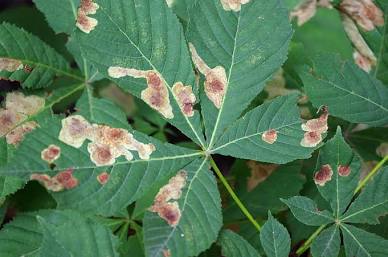
The most recognizable damage is the characteristic serpentine mine.
- White winding tunnels
- Blotchy damaged tissue
- Reduced photosynthetic area
- Premature leaf aging
Stippling Damage
Adult females create numerous feeding punctures.
Heavy stippling can cause leaves to appear speckled or bleached.
Defoliation
Severe infestations may result in:
- Leaf yellowing
- Leaf curling
- Premature leaf drop
- Reduced plant vigor
Yield Reduction
Leaf damage limits photosynthesis and can significantly reduce yields in vegetable crops.
Fruit quality may also decline due to plant stress and reduced energy production.
Greenhouse Impact
Leafminers are especially problematic in greenhouses where favorable temperatures allow year-round reproduction.
Signs of Infestation
- White serpentine mines in leaves
- Tiny feeding punctures on foliage
- Visible larvae inside mines
- Yellowing leaves
- Premature leaf drop
- Small black-and-yellow flies around plants
Management and Control (IPM)
Monitoring
Regular scouting is essential.
Inspect susceptible crops weekly for mines and adult activity.
Yellow Sticky Traps
Yellow sticky cards are highly effective for monitoring adult populations.
- Detect new infestations
- Track population trends
- Assist treatment timing
Biological Control
Natural enemies are among the most effective controls.
Important parasitoids include:
- Diglyphus isaea
- Opius species
- Dacnusa species
These tiny wasps attack larvae inside leaf mines.
Cultural Controls
- Remove infested leaves
- Destroy crop residue after harvest
- Rotate crops
- Control weeds that serve as alternate hosts
- Use row covers on young plants
Insecticidal Products
Conventional insecticides often have limited effectiveness because larvae remain protected within leaves.
Products containing spinosad, abamectin, or insect growth regulators may provide control when applied correctly.
Care should be taken to preserve beneficial parasitoids whenever possible.
Prevention
- Inspect transplants before planting
- Maintain weed control around fields
- Monitor crops frequently
- Use resistant varieties when available
- Preserve beneficial insects
- Practice crop rotation
Conclusion
Vegetable Leafminers are among the most challenging pests of vegetable crops due to their protected feeding habits and rapid reproductive cycle. Their characteristic serpentine mines can significantly reduce plant vigor, crop quality, and yields. Successful management depends on early detection, conservation of beneficial parasitoids, crop sanitation, and integrated pest management practices that reduce reliance on broad-spectrum insecticides.