Overview
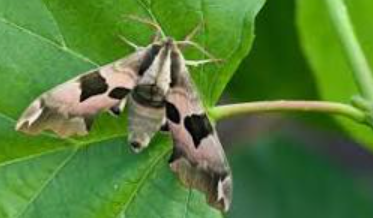
Hawkmoths, also known as sphinx moths, belong to the family Sphingidae and are among the most impressive and ecologically important moths in the world. Known for their rapid flight, streamlined bodies, and ability to hover in front of flowers, hawkmoths are often compared to hummingbirds. Many species possess exceptionally long proboscises that allow them to reach nectar hidden deep within flowers, making them important pollinators for numerous plant species.
Hawkmoths occur throughout North America, South America, Europe, Africa, Asia, and Australia. They are found in a wide variety of habitats, including forests, deserts, grasslands, gardens, agricultural fields, and urban landscapes. Their powerful flight muscles enable them to travel long distances, and some species are capable of seasonal migrations.
The life cycle of a hawkmoth includes a caterpillar stage commonly known as a hornworm. These caterpillars are often large, colorful, and easy to recognize because of the horn-like projection found on the rear of the body. While adult hawkmoths are generally beneficial pollinators, their larvae can sometimes become agricultural or garden pests when they feed heavily on leaves, flowers, and stems.
Because they function as both pollinators and herbivores, hawkmoths occupy an important place in ecosystems and demonstrate the complex relationship between insects and plants.
Taxonomy and Classification
- Kingdom: Animalia
- Phylum: Arthropoda
- Class: Insecta
- Order: Lepidoptera
- Family: Sphingidae
The family Sphingidae contains more than 1,500 species worldwide. Many species are famous for their large size, swift flight, and specialized relationships with flowering plants. Common North American examples include the Tobacco Hornworm Moth, White-Lined Sphinx Moth, Achemon Sphinx, Hummingbird Clearwing, and various species of Eumorpha sphinx moths.
Identification
Adult hawkmoths are medium to large moths with thick, streamlined bodies and long, narrow wings. Their aerodynamic shape allows them to fly rapidly and maneuver with remarkable precision.
Many species have wingspans ranging from 2 to 6 inches, although some tropical species can be even larger. Their coloration varies widely depending on species and may include shades of brown, gray, olive, green, pink, white, yellow, black, or tan. Many display camouflage patterns that help them blend into bark, leaves, or other natural surfaces during the day.
One of their most distinctive characteristics is their ability to hover while feeding. This behavior resembles hummingbirds and allows them to access nectar without landing. Some species even produce an audible humming sound as their wings beat rapidly.
The larval stage, commonly called a hornworm, is typically large and cylindrical. Most hornworms possess a curved horn or spine on the rear segment, though this structure is harmless and primarily serves as a defensive feature against predators.
Distribution and Habitat
Hawkmoths are highly adaptable and can be found in almost every terrestrial environment except extreme polar regions. Different species occupy different habitats, but many are associated with flowering plants and nectar sources.
Common habitats include:
- Gardens and landscaped yards
- Agricultural fields
- Forest edges and woodlands
- Grasslands and prairies
- Deserts and arid regions
- Wetlands and riparian areas
- Urban parks and green spaces
Adults frequently visit flowering plants such as petunias, moonflowers, honeysuckle, evening primrose, phlox, and trumpet vines. Many species are especially attracted to flowers that bloom at night and produce strong fragrances.
Life Cycle
Like all moths and butterflies, hawkmoths undergo complete metamorphosis consisting of four stages: egg, larva, pupa, and adult.
Females deposit eggs on host plants that will serve as food for developing caterpillars. After hatching, hornworms begin feeding immediately and grow rapidly through a series of molts.
Depending on the species, larvae may feed on:
- Tomatoes
- Tobacco
- Grapes
- Virginia creeper
- Evening primrose
- Elm trees
- Ash trees
- Various ornamental plants
When fully grown, the caterpillar pupates either underground or among leaf litter. During this stage, the insect undergoes a dramatic transformation before emerging as an adult moth.
Some species complete multiple generations per year, while others produce only one generation annually depending on climate and geographic location.
Behavior and Feeding
Adult hawkmoths feed primarily on nectar. Their long proboscis allows them to access nectar hidden deep within tubular flowers that many other insects cannot reach.
As they move from flower to flower, pollen is transferred between plants, making hawkmoths highly effective pollinators. Some plants rely heavily on hawkmoths for successful reproduction.
Many species are nocturnal and become active around dusk, throughout the night, and into the early morning hours. Others, such as clearwing hawkmoths, are active during daylight and are frequently mistaken for hummingbirds or large bees.
Larvae feed on leaves and foliage. In most situations, feeding damage remains minor, but large populations can quickly defoliate host plants and become economically significant pests.
Ecological Importance
Hawkmoths provide valuable ecological services. As pollinators, they support the reproduction of countless flowering plants, including native wildflowers, ornamentals, and agricultural crops.
Their pollination activities are particularly important for plants that bloom after sunset. Many night-blooming flowers have evolved specific characteristics, such as pale colors and strong fragrances, to attract hawkmoths.
Hornworms also serve as an important food source for birds, reptiles, spiders, parasitic wasps, and predatory insects. This places hawkmoths in a vital position within food webs.
Damage and Conflict
While adult hawkmoths are almost entirely beneficial, hornworms can occasionally cause concern for gardeners and farmers. Tomato hornworms and tobacco hornworms are among the most well-known examples.
These caterpillars consume large amounts of foliage and may damage:
- Tomato plants
- Pepper plants
- Eggplants
- Tobacco crops
- Grape vines
- Ornamental flowers
Heavy infestations may reduce plant vigor, decrease crop yields, or create cosmetic damage. Fortunately, significant outbreaks are relatively uncommon in most home gardens.
Prevention and Control
Management should focus primarily on the larval stage rather than adult moths. Since adult hawkmoths are beneficial pollinators, unnecessary treatment should be avoided.
Recommended control methods include:
- Hand-picking hornworms from plants.
- Inspecting leaves regularly during the growing season.
- Encouraging birds and beneficial insects.
- Protecting parasitic wasps that naturally attack hornworms.
- Using biological controls when necessary.
- Maintaining healthy, diverse gardens.
Many hornworms are naturally controlled by parasitic wasps. Caterpillars covered with small white cocoons should be left alone, as they are already serving as hosts for beneficial parasitoids.
Conclusion
Hawkmoths are among the most remarkable insects in the order Lepidoptera. Their ability to hover like hummingbirds, pollinate flowers after dark, and travel long distances makes them important members of ecosystems worldwide. Although their hornworm larvae can occasionally damage crops and garden plants, adult moths provide valuable pollination services that benefit both natural environments and agriculture.
Understanding the dual role of hawkmoths as pollinators and herbivores helps gardeners and homeowners appreciate their ecological importance. In most situations, these fascinating insects deserve protection and observation rather than aggressive control.