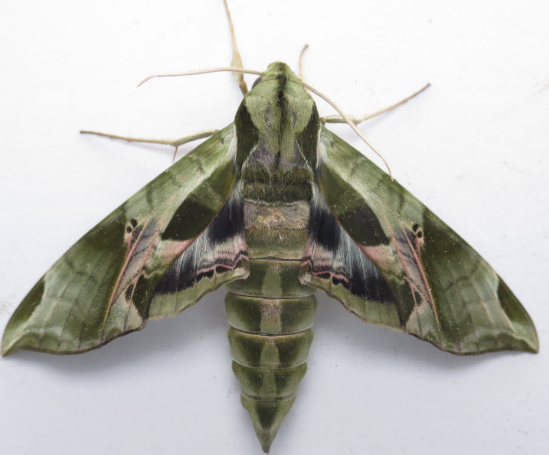
Eumorpha sphinx moths are large, fast-flying moths in the family Sphingidae, a group commonly known as sphinx moths, hawk moths, or hummingbird moths. Members of the genus Eumorpha are known for their strong bodies, narrow wings, rapid flight, and often striking green, brown, olive, or patterned coloration. While they are not major household pests, their caterpillars may occasionally be noticed feeding on grape, Virginia creeper, peppervine, and other host plants.
Taxonomy and Classification
- Order: Lepidoptera
- Family: Sphingidae
- Genus: Eumorpha
- Common Group: Sphinx moths or hawk moths
Identification
Adult Eumorpha sphinx moths are typically medium to large moths with streamlined bodies and long, pointed forewings. Many species have complex wing patterns that help them blend into bark, leaves, and shaded vegetation during the day. Their bodies are often thick and tapered, giving them a powerful, aerodynamic appearance. Like other sphinx moths, adults may hover near flowers while feeding on nectar, using a long proboscis to reach deep blossoms.
The caterpillars are often more noticeable than the adults. Many sphinx moth larvae are called hornworms because they have a curved hornlike projection near the rear of the body. In some Eumorpha species, the mature caterpillar may lose or reduce this horn, replacing it with a noticeable eyespot or buttonlike marking. Larvae can be green, brown, reddish, or patterned depending on species and growth stage.
Habitat and Distribution
Eumorpha sphinx moths are found in many parts of the Americas, including woodlands, gardens, vineyards, edges of forests, suburban landscapes, and areas where host plants grow. Adults are most active at dusk and nighttime, when they visit flowers for nectar. They are often attracted to lights, making them occasional visitors around porches, garages, and commercial buildings.
Life Cycle
These moths undergo complete metamorphosis. Females lay eggs on suitable host plants, and the larvae feed on leaves as they grow through several stages. Once mature, the caterpillars usually move to the soil or leaf litter to pupate. Adults later emerge, mate, and continue the cycle. In warm regions, more than one generation may occur during the growing season.
Plant Damage
Most Eumorpha sphinx moth caterpillars cause only light to moderate feeding damage. They may chew leaves on grapevines and related plants, but healthy plants usually tolerate this feeding well. Large caterpillars can look alarming because of their size, yet they are generally not considered serious pests unless present in unusual numbers on valuable ornamental or crop plants.
Management and Control
Management is usually simple. Handpick caterpillars from small garden plants when necessary, especially on young vines or ornamental plantings. Encourage birds, parasitic wasps, and other natural enemies that help keep sphinx moth populations balanced. Avoid unnecessary broad-spectrum insecticides, since many sphinx moths are valuable nighttime pollinators and are part of a healthy landscape ecosystem.