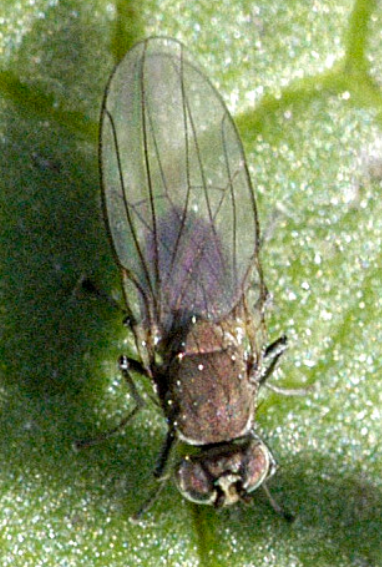
Ephydrid Shore Flies are small, moisture-loving flies in the family Ephydridae, a large and diverse group of true flies often associated with shorelines, marshes, wetlands, irrigated fields, algae-covered surfaces, and greenhouse production areas. Although most shore flies are not serious household pests, they can become noticeable when conditions favor algae growth, standing water, excessive moisture, or decaying organic matter. In greenhouses and nurseries, large populations may become a nuisance and can contribute to sanitation problems around benches, pots, drains, and propagation areas.
Shore flies are sometimes confused with fungus gnats, but they differ in appearance, behavior, and biology. Fungus gnats are usually slender, delicate flies with long legs and larvae that feed in moist growing media. Shore flies are more compact, stronger-bodied insects that are commonly found on algae, wet surfaces, and areas where moisture persists. Their larvae feed primarily on algae, bacteria, and organic films rather than directly attacking healthy plant tissue.
Taxonomy and Classification
- Kingdom: Animalia
- Phylum: Arthropoda
- Class: Insecta
- Order: Diptera
- Family: Ephydridae
- Common Name: Ephydrid Shore Flies
The family Ephydridae includes many species adapted to wet, salty, alkaline, or organically rich habitats. Some species live along seashores, while others occur near ponds, lakes, irrigation ditches, livestock areas, wastewater sites, and commercial growing operations. Their ability to exploit algae-rich environments makes them especially common where water, nutrients, and light combine to create persistent green films on surfaces.
Physical Description
Adult Ephydrid Shore Flies are usually small, measuring only a few millimeters in length. They are often dark gray, black, brown, or metallic in appearance, with compact bodies and relatively short antennae. Many species have wings that are clear, smoky, or patterned, and some shore flies display a spotted or speckled wing appearance. Their bodies are generally sturdier than those of fungus gnats, and they often move in short bursts across wet surfaces.
One of the easiest field clues is their resting behavior. Shore flies are frequently seen sitting on algae-covered benches, wet concrete, pot rims, greenhouse floors, or surfaces near standing water. They may also gather around drains, irrigation mats, and areas where fertilizer runoff supports algae growth. Adults are capable fliers but often remain close to breeding sites.
The larvae are small, legless maggots that develop in wet organic films, algae mats, and saturated debris. They are not usually visible unless breeding sites are disturbed. Because they feed on algae and microorganisms, their presence often indicates an underlying moisture or sanitation issue rather than a direct plant-feeding problem.
Distribution and Habitat
Shore flies occur worldwide and are especially common in habitats where moisture remains available for long periods. Natural habitats include wetlands, pond margins, lake edges, marshes, tidal flats, muddy shorelines, and slow-moving waterways. In human-managed environments, they may appear in greenhouses, nurseries, irrigated fields, hydroponic systems, livestock areas, and poorly drained landscapes.
In greenhouses, shore flies thrive where algae grows on floors, benches, pots, capillary mats, irrigation lines, and exposed growing media. Excess fertilizer, constant watering, high humidity, and poor air movement can all support algae growth. Because algae is the main food source for many shore fly larvae, controlling algae is usually the key to reducing fly populations.
Life Cycle
Like all true flies, Ephydrid Shore Flies undergo complete metamorphosis with four main stages: egg, larva, pupa, and adult. Females lay eggs in moist areas where algae or organic films are present. After hatching, larvae feed in the wet material and continue developing until they are ready to pupate.
Development time depends on temperature, moisture, food availability, and species. Warm, humid greenhouse conditions can allow populations to increase quickly. When algae is abundant and water is consistently present, overlapping generations may occur, making shore flies a recurring problem unless the underlying habitat is corrected.
Behavior and Impact
Most shore flies are not dangerous to people, pets, or structures. They do not bite, sting, or chew wood, fabric, or stored food. Their primary importance is as a nuisance and sanitation indicator. When adults are numerous, they may fly around greenhouse workers, collect on windows, contaminate surfaces, or create an unclean appearance in commercial growing environments.
In greenhouse production, shore flies are often viewed as secondary pests. Their larvae usually do not feed on living plant roots the way some fungus gnat larvae can. However, adult flies can move across contaminated surfaces and may contribute to the spread of plant pathogens under certain conditions. Their presence may also indicate excessive watering, poor drainage, algae accumulation, or inadequate sanitation practices.
For homeowners, shore flies are most likely to be noticed near ponds, fountains, overwatered potted plants, wet patios, drainage areas, or areas with persistent algae. Indoors, they are less common than fungus gnats but may appear around indoor plants, aquariums, drains, or areas with chronic moisture.
Signs of Infestation
- Small dark flies resting on wet surfaces, pots, drains, or greenhouse benches
- Adults flying low over algae-covered soil or standing water
- Green algae films on floors, mats, containers, or irrigation areas
- Repeated fly activity after watering or irrigation
- High numbers near propagation benches, hydroponic systems, or poorly drained areas
Management and Control
Effective management of Ephydrid Shore Flies begins with moisture correction and algae reduction. Because the larvae depend heavily on algae and organic films, insecticides alone rarely provide long-term control if wet breeding sites remain available.
Reduce standing water by correcting drainage problems, emptying trays, cleaning clogged drains, and avoiding unnecessary pooling beneath benches or containers. In greenhouses, irrigation should be managed carefully so growing media stays appropriate for plant health without creating constantly saturated surfaces.
Remove algae and organic buildup from floors, benches, walkways, irrigation mats, and containers. Scrubbing surfaces, improving sanitation, and reducing fertilizer runoff can make the environment less favorable for larvae.
Improve air circulation where possible. Better airflow helps surfaces dry more quickly and reduces the humid microclimates that support algae growth. Greenhouse benches, floors, and propagation areas should be inspected regularly.
Use monitoring tools such as yellow sticky cards to track adult fly populations. These cards help determine whether numbers are increasing or decreasing after sanitation and moisture changes are made.
Avoid overwatering, especially in potted plants and greenhouse crops. Watering based on plant need rather than a fixed schedule can reduce algae formation and limit fly development.
Prevention
Prevention focuses on keeping moist environments from becoming algae-rich breeding sites. Regular cleaning, careful irrigation, good drainage, and removal of plant debris are the most important long-term measures. In greenhouses, shore fly prevention should be part of a broader integrated pest management program that also monitors fungus gnats, thrips, whiteflies, and other moisture-associated pests.
Conclusion
Ephydrid Shore Flies are small flies closely tied to wet, algae-rich environments. While they are usually not direct plant-damaging pests, large populations can become a nuisance and may signal moisture, sanitation, or drainage problems. In homes, landscapes, and greenhouses, the best control strategy is to remove standing water, reduce algae, improve drainage, and maintain clean growing or drainage areas. By addressing the conditions that allow shore flies to breed, infestations can usually be reduced without relying heavily on chemical treatments.