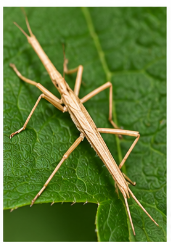
Prairie Walkingsticks (Diapheromera velii) are remarkable stick insects that have evolved one of nature’s most effective camouflage strategies. Their long, slender bodies closely resemble the twigs and stems of prairie vegetation, allowing them to remain nearly invisible to birds, reptiles, and other predators. Native to the grasslands and shrublands of central North America, these insects spend much of their lives motionless among grasses and shrubs, relying on disguise rather than speed or aggression for protection.
Although Prairie Walkingsticks feed on leaves and tender vegetation, they rarely occur in numbers large enough to cause significant damage. Instead, they are considered fascinating members of native prairie ecosystems, where they contribute to biodiversity while serving as prey for numerous wildlife species. Their exceptional camouflage and unique defensive behaviors make them favorites among entomologists and nature enthusiasts alike.
Taxonomy and Classification
Prairie Walkingsticks belong to the order Phasmatodea, a group of insects commonly known as stick insects or walkingsticks because of their remarkable resemblance to plant stems and twigs.
- Order: Phasmatodea
- Family: Diapheromeridae
- Genus: Diapheromera
- Species: Diapheromera velii
The genus Diapheromera includes several North American walkingstick species that occupy forests, woodlands, and grassland habitats.
Physical Description
Prairie Walkingsticks are masters of camouflage, possessing bodies that closely imitate the appearance of narrow twigs and grass stems.
- Length: Approximately 60–100 mm.
- Color: Green, brown, tan, or gray depending on age and surrounding vegetation.
- Body: Extremely long, thin, and cylindrical with an unmistakable stick-like appearance.
- Legs: Long and slender, blending seamlessly with the body.
- Antennae: Long, thread-like sensory organs used to detect obstacles and food plants.
When disturbed, they often freeze completely or gently sway back and forth, mimicking the movement of vegetation in the wind.
Distribution and Habitat
Prairie Walkingsticks occur primarily throughout the Great Plains and portions of central North America where native grasslands and shrubs remain abundant.
Common habitats include:
- Prairie grasslands
- Native shrublands
- Open woodlands
- Field margins
- Roadside vegetation
- Nature preserves
They spend much of their time climbing shrubs and herbaceous plants where their camouflage is most effective.
Behavior and Life Cycle
Prairie Walkingsticks undergo simple metamorphosis, developing through egg, nymph, and adult stages.
Females deposit eggs individually onto the ground, where they resemble small plant seeds and overwinter beneath vegetation. Nymphs emerge during spring and resemble miniature adults, gradually molting several times as they grow.
Both nymphs and adults are primarily active during the evening and nighttime hours when they feed on leaves and tender plant tissue. During daylight, they remain motionless among vegetation, depending almost entirely on camouflage to avoid predators.
If threatened, Prairie Walkingsticks may slowly rock back and forth like a twig moving in the breeze or simply remain perfectly still until danger has passed.
Diet and Ecological Importance
Prairie Walkingsticks are herbivores that consume a variety of native plants.
- Leaves: Feed on shrubs, grasses, and herbaceous plants.
- Native Vegetation: Primarily utilize plants found within prairie ecosystems.
- Wildlife Food Source: Provide prey for birds, reptiles, spiders, and small mammals.
- Biodiversity: Contribute to healthy grassland food webs.
- Natural Camouflage Example: Frequently studied for their remarkable defensive adaptations.
Because populations are usually low, their feeding rarely causes noticeable injury to native vegetation or ornamental plants.
Management and Prevention
Prairie Walkingsticks are not considered significant pests and generally require no control.
- No Treatment Necessary: Small populations rarely damage plants.
- Preserve Native Habitat: Healthy prairies support balanced insect communities.
- Avoid Unnecessary Insecticides: Protect beneficial native insects and wildlife.
- Observe Without Disturbing: Their camouflage and behavior make them fascinating insects for nature observation.
Only exceptionally high populations—which are uncommon—may produce noticeable defoliation of certain shrubs or trees.
Conservation and Research
Scientists study Prairie Walkingsticks because of their extraordinary camouflage, defensive behaviors, and evolutionary adaptations. Their ability to imitate twigs with remarkable accuracy has made walkingsticks classic examples of protective mimicry in evolutionary biology. Researchers also monitor native populations as indicators of healthy prairie ecosystems, since habitat loss can reduce their abundance.
Conclusion
Prairie Walkingsticks are among North America’s most perfectly camouflaged insects. Their twig-like appearance, slow movements, and peaceful nature allow them to survive in open grasslands while avoiding predators with remarkable efficiency. Although they feed on vegetation, they rarely become pests and instead contribute to the biodiversity and ecological balance of native prairie habitats. Protecting these fascinating insects helps preserve one of North America’s most unique examples of natural camouflage.
Related Pestipedia Articles
“`