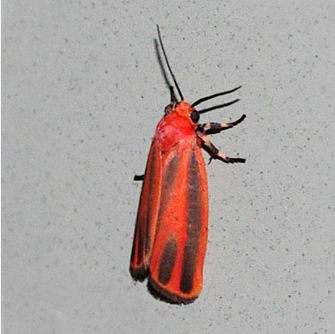
Eilema Lichen Moths are a group of small moths associated with lichens, mosses, and algae growing on trees, rocks, fences, roofs, and other shaded surfaces. Belonging to the genus Eilema within the lichen moth group, these insects are generally considered beneficial or environmentally neutral because their larvae feed primarily on lichens rather than living plants. Although they occasionally appear around homes or outdoor lighting in noticeable numbers, they are not considered destructive pests.
Taxonomy and Classification
Eilema moths belong to the family Erebidae, subfamily Lithosiinae, a specialized group commonly known as lichen moths. These moths are closely related to tiger moths and share several defensive characteristics, including warning coloration and sound-producing organs in some species.
The genus Eilema includes numerous species distributed across North America, Europe, and Asia. Many species are adapted specifically for feeding on lichens and algae rather than traditional plant foliage.
Identification
Adult Eilema moths are typically slender with narrow wings held tightly against the body when resting. Most species display muted coloration such as pale gray, buff, yellow, cream, or light brown. Their simple coloration helps them blend into bark, lichens, and stone surfaces.
The larvae are small, dark-colored caterpillars often covered with fine hairs or bristles. Their camouflage allows them to remain difficult to detect on lichen-covered bark and rock surfaces.
Like many related tiger moths, some species possess specialized hearing organs that help detect hunting bats. Certain species may also produce faint clicking sounds as a defensive behavior.
Distribution and Habitat
Eilema Lichen Moths are found throughout wooded regions, forest edges, gardens, parks, and suburban landscapes where lichens and algae are abundant. They are especially common in moist or shaded environments where lichen growth is extensive.
These moths are frequently associated with:
- Tree bark covered with lichens
- Stone walls and fences
- Moss-covered roofs
- Woodland habitats
- Shaded siding and structures
Large populations may occasionally develop on roofs, walls, or shaded structures where mosses and lichens provide abundant food for larvae.
Life Cycle
Female moths lay eggs on lichen-covered surfaces such as bark, stone, or wood. After hatching, larvae begin feeding on lichens, algae, and mosses. The caterpillars pass through several molts before pupating in sheltered crevices beneath bark, within leaf litter, or in protected outdoor locations.
Adults emerge to mate and repeat the cycle. Depending on climate conditions, some species may produce multiple generations annually.
Behavior and Ecology
Eilema moth larvae function primarily as ecological grazers. Rather than damaging living trees or crops, they feed on surface growths such as lichens and algae. This activity contributes to nutrient cycling and helps regulate lichen accumulation on natural surfaces.
Adult moths are nocturnal and strongly attracted to lights, which explains why they are occasionally noticed around porches, garages, and outdoor lighting systems.
While generally harmless, the fine hairs on some caterpillars may occasionally cause mild skin irritation in sensitive individuals if handled directly.
Damage and Economic Importance
Eilema Lichen Moths are not considered significant pests. They do not damage crops, ornamental plants, furniture, fabrics, or structural wood.
Their impact is usually limited to:
- Temporary nuisance aggregations on buildings
- Larvae crawling on walls or roofs
- Minor homeowner concerns caused by visible caterpillars
- Occasional attraction to outdoor lighting
In ecological terms, they are generally considered beneficial insects because they help recycle organic growth and provide food for birds, bats, and other insectivorous wildlife.
Management and Control (IPM)
Control is rarely necessary because these moths are harmless and environmentally beneficial.
- Lichen Removal: Cleaning moss and lichen buildup from roofs and siding reduces larval food sources.
- Pressure Washing: Water pressure can remove caterpillars from structures without pesticides.
- Light Reduction: Limiting nighttime outdoor lighting reduces attraction of adult moths.
- Preservation: Avoid unnecessary insecticide applications because these insects support local biodiversity.
Ecological Importance
Eilema Lichen Moths are important components of woodland ecosystems. Their feeding helps regulate lichen growth while also serving as prey for birds, spiders, bats, and predatory insects.
Because they are sensitive to environmental conditions and pollution, the presence of healthy lichen moth populations may also indicate relatively clean air quality and stable habitat conditions.
Conclusion
Eilema Lichen Moths are specialized insects adapted to feeding on lichens and algae in wooded and shaded environments. Although they occasionally appear around homes and structures, they pose little threat to human property and instead contribute positively to ecosystem health and biodiversity.