Overview
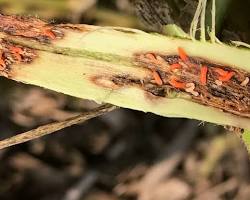
Stem Gall Midges are small fly pests belonging to the family Cecidomyiidae that induce abnormal growths known as galls on the stems of host plants. Unlike chewing insects that consume leaves or stems directly, stem gall midges manipulate plant growth, causing the host to produce swollen tissues that protect and nourish the developing larvae. These specialized insects attack a wide variety of plants, including ornamental shrubs, grasses, agricultural crops, native plants, and certain trees.
The formation of a stem gall is one of the most remarkable examples of insect-plant interaction. After eggs are deposited on young plant tissue, the developing larvae release chemicals that alter normal growth patterns. The resulting gall serves as both shelter and food source for the insect while disrupting the plant’s normal development.
Although some galls are largely cosmetic, severe infestations can weaken stems, reduce flowering, stunt growth, interfere with nutrient movement, and increase susceptibility to breakage. In agricultural settings, stem gall midges may reduce yields and market quality, while in landscapes they often diminish ornamental value.
Taxonomy and Classification
Stem Gall Midges belong to the order Diptera (True Flies) and the family Cecidomyiidae, commonly known as gall midges.
- Kingdom: Animalia
- Phylum: Arthropoda
- Class: Insecta
- Order: Diptera
- Family: Cecidomyiidae
Common stem-galling genera include:
- Lasioptera
- Neolasioptera
- Rhopalomyia
- Asphondylia
Thousands of gall midge species exist worldwide, many of which are highly host-specific.
Physical Description
Adult stem gall midges are tiny and often go unnoticed.
- Adult (Key ID): Delicate mosquito-like fly measuring 2–4 mm long with long legs, hairy wings, and slender antennae.
- Larva (Key ID): Tiny legless maggot, usually white, cream, yellow, pink, or orange depending on species.
- Gall (Key ID): Distinctive swelling, knot, or enlargement on stems, branches, or nodes.
- Exit Holes: Small circular holes may appear after adult midges emerge.
- Conflict: Stem distortion, nutrient diversion, structural weakness, and reduced plant performance.
Distribution and Habitat
Stem Gall Midges occur throughout North America and around the world wherever suitable host plants grow.
Common habitats include:
- Gardens and landscapes
- Agricultural fields
- Native grasslands
- Orchards
- Vineyards
- Shrublands
- Natural ecosystems
Many species are highly specialized and attack only one or a few closely related plant hosts.
Life Cycle
Stem Gall Midges undergo complete metamorphosis with four life stages.
Egg Stage
Females lay eggs on tender stems, buds, or newly developing shoots.
Larval Stage
After hatching, larvae begin feeding and release chemicals that stimulate gall formation.
The developing gall gradually surrounds the larva, creating a protected chamber.
Pupal Stage
Pupation occurs either within the gall or in nearby soil depending on the species.
Adult Stage
Adults emerge through small exit holes and live only a short time, focusing on mating and egg-laying.
Some species complete one generation annually, while others may produce multiple generations in warmer climates.
Gall Formation and Plant Interaction
Stem gall midges are unique because they do not simply feed on plant tissue. Instead, they manipulate plant growth.
As larvae feed, they trigger the plant to redirect nutrients and hormones toward the feeding site. This process creates a specialized gall that provides:
- Protection from predators
- Protection from environmental stress
- A constant food supply
- Shelter from some pesticides
The gall effectively becomes a living nursery built by the host plant.
Damage and Symptoms
Symptoms vary depending on host plant and infestation severity.
Stem Swelling
The most recognizable symptom is abnormal enlargement of stems or branches.
Distorted Growth
Infested plants may exhibit:
- Crooked stems
- Twisted growth
- Reduced branching
- Abnormal node development
Reduced Flowering
Energy diverted into gall production often reduces flowering and seed production.
Structural Weakness
Large galls may weaken stems, making them more susceptible to wind damage and breakage.
Dieback
Severe galling can restrict nutrient flow and cause foliage above the gall to decline or die.
Economic Importance
The economic impact of stem gall midges varies greatly depending on host species.
Potential consequences include:
- Reduced crop yields
- Lower seed production
- Reduced flowering
- Ornamental damage
- Weakened stems
- Increased plant stress
In commercial agriculture, gall formation can significantly affect plant vigor and harvest quality.
Behavior and Ecology
Stem Gall Midges demonstrate highly specialized ecological relationships with their host plants.
- Host Specificity: Many species attack only one host plant species.
- Protected Development: Larvae remain hidden within the gall throughout development.
- Nutrient Diversion: Galls act as nutrient sinks that draw resources away from normal growth.
- Natural Enemy Interactions: Specialized parasitoid wasps frequently attack gall midge larvae.
Because larvae are concealed within plant tissue, they often escape predation and environmental hazards.
Management and Control (IPM)
Integrated Pest Management focuses on prevention, monitoring, and timely intervention.
Pruning and Removal
- Remove infested stems before adults emerge.
- Destroy pruned material immediately.
- Do not compost heavily infested plant material.
Monitoring
- Inspect plants regularly during active growth.
- Watch for swelling and abnormal stem development.
- Check galls for larvae and emergence holes.
Biological Control
Numerous parasitoid wasps naturally attack stem gall midge larvae.
Protecting beneficial insects can help suppress populations.
Cultural Controls
- Maintain plant vigor through proper watering.
- Avoid excessive nitrogen fertilization.
- Select resistant plant varieties when available.
- Remove heavily infested plants when necessary.
Chemical Control
Once galls form, insecticides are generally ineffective because larvae are protected within plant tissue.
If treatment is necessary, applications must target adults or newly hatched larvae before gall formation occurs.
Research and Conservation
Researchers continue studying stem gall midges to better understand insect-induced plant growth, host specialization, and biological control opportunities. Their unique ability to manipulate plant development provides valuable insight into plant-insect interactions and evolutionary ecology.
Many parasitoid wasps, predatory insects, and natural enemies help regulate stem gall midge populations in natural ecosystems.
Conclusion
Stem Gall Midges are fascinating but potentially damaging insects that alter plant growth to create protective galls for their developing larvae. While some infestations are largely cosmetic, severe galling can reduce plant vigor, weaken stems, limit flowering, and cause economic losses. Early detection, pruning, and conservation of natural enemies remain the most effective management strategies.