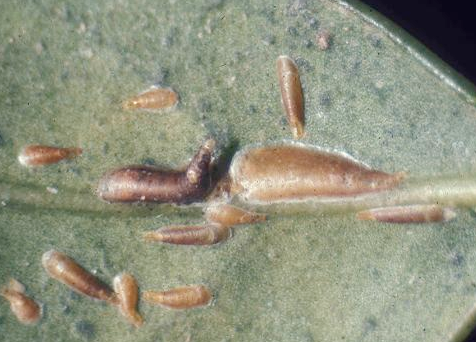
The Camellia Scale (Lepidosaphes camelliae) is an armored scale insect associated with camellias and other susceptible ornamental plants. These small, sap-feeding insects attach themselves to plant surfaces and remain protected beneath waxy covers while feeding on plant tissues. Although individual insects are difficult to detect, established populations can cause leaf discoloration, reduced plant vigor, and deterioration in the appearance of ornamental shrubs.
Camellias are prized for their glossy evergreen foliage and showy flowers. Scale infestations can reduce their ornamental value, particularly when populations accumulate on leaves and stems over multiple growing seasons. Because armored scales are protected by their coverings, infestations may persist without regular monitoring and appropriately timed management.
Early detection, accurate identification, and conservation of natural enemies are essential for maintaining healthy camellia plantings.
Taxonomy and Classification
- Common Name: Camellia Scale
- Scientific Name: Lepidosaphes camelliae
- Order: Hemiptera
- Family: Diaspididae
- Genus: Lepidosaphes
- Species: L. camelliae
- Primary Host: Camellia species
- Pest Type: Armored scale insect
The family Diaspididae includes armored scale insects that produce protective coverings over their bodies. Members of the genus Lepidosaphes commonly have elongated, mussel-shaped covers. These insects differ from soft scales because they do not normally produce honeydew.
Several armored scale species can infest camellias, including tea scale and other closely related pests. Species-level identification may require microscopic examination of adult females.
Physical Description and Identification
Adult Females: Mature females remain beneath elongated, narrow, brownish protective covers. The covers are often slightly curved or mussel-shaped, helping distinguish Lepidosaphes species from circular armored scales.
Adult Males: Male scales develop beneath smaller protective covers. Winged adult males are tiny and short-lived, emerging primarily to locate females for mating.
Eggs: Females deposit eggs beneath their protective covers, where the developing offspring remain sheltered until hatching.
Crawlers: Newly hatched nymphs are extremely small, mobile insects that move across plant surfaces before selecting feeding locations.
Key Identification Features
- Small, elongated, brownish scale covers attached to leaves or stems.
- Clusters of immobile insects on infested plant surfaces.
- Yellowish spotting or discoloration associated with feeding.
- Reduced vigor in heavily infested ornamental shrubs.
- Persistent scale covers that may remain after the insects die.
- Absence of sticky honeydew associated with soft scale insects.
Distribution and Habitat
Camellia scale is associated with cultivated camellias and suitable ornamental landscapes. Its local occurrence and economic importance vary by region, and distribution records should be confirmed through regional diagnostic or agricultural resources.
Suitable habitats include residential gardens, ornamental nurseries, landscaped properties, and collections of evergreen shrubs.
Dense foliage and sheltered plant surfaces can make infestations difficult to detect. Plants already stressed by drought, unsuitable growing conditions, or other pests may be less able to tolerate additional feeding injury.
Life Cycle and Reproduction
Camellia scale develops through eggs, mobile crawlers, and settled immature stages before reaching adulthood. As with other armored scales, females remain largely immobile after settling.
Egg Stage
Females produce eggs beneath their protective coverings. The number of eggs and timing of reproduction depend on environmental conditions and the biology of the local population.
Crawler Stage
Newly hatched crawlers emerge and disperse across the host plant. This is the principal mobile stage and an important period for monitoring and control.
Settled Nymphs
After finding a suitable feeding location, crawlers insert their piercing-sucking mouthparts into plant tissue and begin forming protective coverings.
Adult Stage
Adult females continue feeding beneath their covers. Males, where present, develop into small winged adults that locate receptive females.
Generation timing varies with climate. Populations may overlap where environmental conditions allow extended reproduction.
Damage and Signs of Infestation
Camellia scale damages plants through prolonged feeding on living tissues. Heavy infestations may produce visible symptoms and reduce ornamental quality.
- Leaf Discoloration: Yellowish spots or chlorotic areas may develop near feeding sites.
- Reduced Plant Vigor: Persistent infestations may weaken susceptible shrubs.
- Premature Leaf Drop: Severely affected plants may shed damaged foliage.
- Stem Infestation: Scales may accumulate on suitable stems and other protected surfaces.
- Ornamental Damage: Visible scale covers and discolored foliage reduce the appearance of landscape plants.
- Increased Plant Stress: Heavy feeding can compound problems caused by drought, poor drainage, or nutrient deficiencies.
Scale covers alone do not establish that an infestation is active. Inspect beneath selected covers for living insects before deciding whether treatment is necessary.
Management and Integrated Pest Management (IPM)
1. Inspect Camellia Plants Regularly
Examine leaf surfaces, undersides, and stems for scale covers. Check older foliage and sheltered portions of the canopy where infestations may remain unnoticed.
2. Confirm Active Infestations
Carefully lift a few scale covers to determine whether living insects are present. Empty or dry covers may represent old infestations.
3. Remove Heavily Infested Growth
Prune severely affected branches when practical. Dispose of infested material appropriately and disinfect pruning equipment when other plant diseases are a concern.
4. Encourage Natural Enemies
Predatory beetles and parasitoid wasps can contribute to armored scale suppression. Avoid unnecessary broad-spectrum insecticide applications that may disrupt beneficial insects.
5. Monitor Crawler Activity
Use close visual inspection or appropriately placed monitoring tape to detect crawler emergence. Young crawlers are generally more vulnerable to contact treatments than established scales.
6. Apply Horticultural Oils
Horticultural oils labeled for camellias and armored scales may help suppress infestations when applied thoroughly. Follow label instructions concerning plant sensitivity, temperature, and application timing.
7. Maintain Healthy Growing Conditions
Provide suitable irrigation, drainage, mulch, and nutrition. Avoid excessive nitrogen fertilization and unnecessary plant stress.
Conclusion
The Camellia Scale (Lepidosaphes camelliae) is an armored scale insect that can reduce the health and appearance of susceptible ornamental plants. Its protective covering makes established populations difficult to manage without proper timing. Regular inspection, crawler monitoring, selective pruning, natural enemy conservation, and carefully applied horticultural oils can help maintain healthy camellias and prevent persistent infestations.