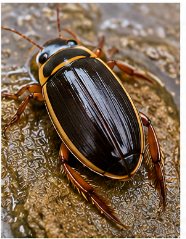
Predaceous Diving Beetles (family Dytiscidae) are among the most efficient aquatic predators found in freshwater ecosystems around the world. Both the adults and larvae are voracious hunters that prey on a wide variety of aquatic animals, helping regulate populations of mosquitoes, aquatic insects, and other invertebrates. Their streamlined bodies, powerful swimming legs, and ability to carry air beneath their wing covers make them perfectly adapted for life underwater.
More than 4,000 species of predaceous diving beetles have been described worldwide, with hundreds occurring throughout North America. Although they occasionally prey on small fish or tadpoles in ponds, they are generally considered beneficial insects because they help maintain healthy aquatic ecosystems and naturally suppress mosquito larvae and other nuisance insects.
Taxonomy and Classification
Predaceous Diving Beetles belong to the family Dytiscidae, one of the largest families of aquatic beetles. Both adults and larvae are active predators throughout their lives.
- Order: Coleoptera
- Family: Dytiscidae
- Common Groups: Predaceous Diving Beetles, Diving Beetles
Well-known North American genera include Dytiscus, Acilius, Cybister, Graphoderus, and Hydaticus, all of which possess similar aquatic adaptations.
Physical Description
Predaceous Diving Beetles are highly specialized for underwater hunting.
- Length: Approximately 10–40 mm depending on species, with some tropical species growing even larger.
- Color: Usually dark brown, black, olive, or bronze, often with yellow margins or markings.
- Body: Smooth, oval, and streamlined to reduce resistance while swimming.
- Legs: Flattened hind legs fringed with swimming hairs that function like paddles.
- Air Storage: Adults trap an air bubble beneath their wing covers (elytra) that supplies oxygen while submerged.
The larvae, commonly called water tigers, possess long bodies and large sickle-shaped jaws used to capture and consume prey.
Distribution and Habitat
Predaceous Diving Beetles occur on every continent except Antarctica and inhabit nearly every type of freshwater environment.
Common habitats include:
- Ponds
- Lakes
- Marshes
- Wetlands
- Slow-moving streams
- Flooded ditches
- Temporary pools
- Garden water features
Most species prefer clean freshwater containing abundant aquatic vegetation that provides shelter and hunting opportunities.
Behavior and Life Cycle
Predaceous Diving Beetles undergo complete metamorphosis, progressing through egg, larva, pupa, and adult stages.
Females lay eggs on or within aquatic plants. After hatching, the highly predatory larvae immediately begin hunting aquatic insects, mosquito larvae, tadpoles, and other small organisms. Once fully grown, larvae leave the water and burrow into moist soil along the shoreline where they pupate.
Adults emerge several weeks later and return to nearby water. Many species are capable of flying considerable distances at night to locate new ponds and wetlands, especially after rainfall.
Feeding Behavior
Both adults and larvae are aggressive predators with broad diets.
Common prey includes:
- Mosquito larvae
- Aquatic fly larvae
- Water boatmen
- Backswimmers
- Dragonfly and damselfly nymphs
- Small crustaceans
- Tadpoles
- Small fish and fish fry
- Other aquatic beetles
Larvae inject digestive enzymes into captured prey before consuming the liquefied tissues, while adults chew and consume their prey directly.
Ecological Importance
Predaceous Diving Beetles perform several valuable ecological functions.
- Natural Mosquito Control: Consume large numbers of mosquito larvae.
- Aquatic Predator: Help regulate populations of numerous aquatic insects.
- Food Source: Serve as prey for fish, amphibians, turtles, and aquatic birds.
- Biodiversity: Contribute to balanced freshwater ecosystems.
- Water Quality Indicators: Sensitive species often indicate healthy aquatic habitats.
Although they occasionally prey upon fish fry in hatcheries or ornamental ponds, they rarely become serious pests in natural environments.
Management and Prevention
Predaceous Diving Beetles are beneficial insects that generally require no control.
- Preserve Wetlands: Healthy aquatic habitats support stable beetle populations.
- Reduce Water Pollution: Good water quality benefits both beetles and other aquatic wildlife.
- Avoid Unnecessary Insecticides: Broad-spectrum pesticides may kill beneficial aquatic predators.
- Monitor Ornamental Ponds: If valuable fish fry are present, temporary exclusion may be warranted during breeding periods.
Most homeowners and land managers benefit from allowing these beetles to remain in ponds where they naturally suppress mosquito populations.
Conservation and Research
Researchers study Predaceous Diving Beetles because they serve as important indicators of freshwater ecosystem health. Their sensitivity to pollution, habitat loss, and changes in water quality makes them useful biological indicators for wetland monitoring. Scientists also investigate their swimming mechanics, underwater respiration, and predatory behavior, which have inspired research in robotics and aquatic engineering.
Conclusion
Predaceous Diving Beetles are highly specialized aquatic predators that play a vital role in freshwater ecosystems. Their streamlined bodies, powerful swimming abilities, and voracious appetite for mosquito larvae and other aquatic prey make them valuable natural allies in ponds, wetlands, and lakes. Although they occasionally prey upon small fish or amphibians, their overall ecological benefits far outweigh any minor concerns, making them important contributors to healthy aquatic environments.