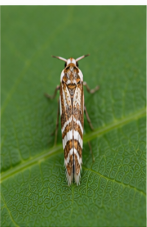
The Pondweed Moth (Elophila obliteralis) is an aquatic moth species whose larvae feed on aquatic plants such as pondweed.
The “Aquatic Caterpillar”: Pondweed Moth
The Pondweed Moth (primarily species within the genera Elophila and Parapoynx) is a fascinating aquatic insect found throughout much of the United States and other temperate regions of the world. Unlike most moths, whose caterpillars live on land, Pondweed Moth larvae spend their entire immature stage underwater feeding on aquatic plants. This unusual lifestyle makes them one of the most specialized members of the order Lepidoptera. While these insects occasionally become minor pests in ornamental ponds and water gardens, they are generally considered beneficial components of freshwater ecosystems and pose no threat to people, pets, or structures.
Taxonomy and Classification
Pondweed Moths belong to the family Crambidae, commonly known as the grass moth or snout moth family. Many species in this family have evolved to exploit aquatic habitats, making them unique among moths.
- Order: Lepidoptera
- Family: Crambidae
- Subfamily: Acentropinae
- Genera: Elophila, Parapoynx, and related genera
- Representative Species: Elophila obliteralis
The Acentropinae subfamily contains many species adapted to life in freshwater habitats. Their aquatic larvae represent one of the most remarkable evolutionary adaptations found among moths.
Physical Description
Adult Pondweed Moths are relatively small and delicate insects with wingspans typically ranging from 10 to 25 millimeters. Their coloration often consists of intricate patterns of white, tan, cream, and brown markings that provide camouflage among aquatic vegetation.
- Wingspan: Approximately 10–25 mm
- Coloration: White, tan, brown, or cream with wavy bands and spots
- Body Shape: Slender body with narrow, triangular wings
- Diagnostic Feature: Small dark spots or markings along wing margins
The larvae are even more distinctive. These caterpillars are usually translucent green, yellowish, or cream-colored and possess specialized filamentous gills that allow them to extract oxygen directly from water. This adaptation enables them to remain submerged throughout their entire larval development.
Many species also exhibit case-building behavior, constructing portable shelters from pieces of aquatic leaves that are held together with silk. These protective cases resemble miniature leaf sandwiches and help conceal larvae from predators.
Distribution and Habitat
Pondweed Moths are widely distributed across North America and occur in freshwater habitats throughout the United States. They are particularly common in areas containing abundant aquatic vegetation.
- Ponds
- Lakes
- Marshes
- Wetlands
- Slow-moving streams
- Water gardens
- Artificial ornamental ponds
These moths thrive wherever aquatic host plants are abundant. They are frequently observed in shallow water bodies rich in pondweeds, water lilies, duckweed, and other submerged or floating vegetation.
Life Cycle
Pondweed Moths undergo complete metamorphosis consisting of egg, larval, pupal, and adult stages. Females lay eggs directly on aquatic vegetation or water surfaces.
After hatching, larvae begin feeding on nearby aquatic plants. Unlike terrestrial caterpillars, these larvae remain submerged and use specialized gills to breathe underwater. Many species construct silk-lined cases from leaf fragments, carrying these shelters as they move and feed.
The larval stage may last several weeks depending on temperature, food availability, and species. Mature larvae pupate within their protective cases or attached to aquatic vegetation. Adult moths emerge from pupae and typically become active during warm evenings.
Multiple generations may occur annually in warmer regions, while northern populations often produce only one or two generations each year.
Behavior and Ecology
The most remarkable feature of Pondweed Moths is their aquatic behavior. Their caterpillars spend virtually their entire lives underwater, feeding on submerged and floating plants. This ecological niche is relatively rare among moths and contributes significantly to freshwater biodiversity.
Larvae feed by chewing irregular holes in leaves or skeletonizing plant tissue. Some species cut circular sections from leaves to enlarge or repair their protective cases.
Adults are nocturnal and are often attracted to lights near water bodies. During the day, they rest among shoreline vegetation where their patterned wings provide effective camouflage.
Pondweed Moths also serve as an important food source for numerous freshwater organisms, including:
- Bluegill
- Bass
- Minnows
- Dragonfly nymphs
- Water beetles
- Waterfowl
- Amphibians
Damage and Economic Importance
In natural ecosystems, Pondweed Moths rarely cause significant damage and are considered beneficial members of aquatic communities. However, in ornamental ponds and water gardens, heavy populations can occasionally affect the appearance and health of aquatic plants.
Common signs of larval feeding include:
- Irregular holes in floating leaves
- Skeletonized foliage
- Missing sections of water lily leaves
- Silk-lined leaf cases attached to plants
- Reduced vigor in ornamental aquatic plants
Water lilies, pondweeds, and duckweed are among the most frequently damaged host plants. Severe infestations are uncommon, but concentrated populations in small decorative ponds may stunt plant growth or reduce aesthetic value.
Management and Control
Management of Pondweed Moths is rarely necessary in natural ponds or wetlands. In ornamental settings, control efforts should focus on maintaining ecological balance rather than eliminating the insects entirely.
The following integrated pest management (IPM) practices are recommended:
| Strategy | Description | Benefit |
|---|---|---|
| Manual Removal | Remove leaf cases and heavily damaged leaves by hand. | Reduces localized populations without harming beneficial organisms. |
| Biological Control | Encourage native fish and aquatic predators. | Provides natural population regulation. |
| Plant Diversity | Maintain a variety of aquatic plant species. | Reduces the likelihood of severe feeding damage. |
| Avoid Broad-Spectrum Insecticides | Limit pesticide use in ponds. | Protects fish, amphibians, dragonflies, and other beneficial wildlife. |
Routine monitoring of aquatic plants during the growing season can help detect larval activity before significant damage occurs. Most infestations remain minor and do not warrant chemical intervention.
Conservation and Scientific Importance
Pondweed Moths are important indicators of freshwater ecosystem health. Their specialized aquatic adaptations make them valuable subjects for scientific research into insect evolution, respiration, and aquatic ecology.
Healthy populations of these moths often indicate good water quality and abundant aquatic vegetation. Conservation of wetlands and freshwater habitats therefore benefits not only Pondweed Moths but entire aquatic communities.
Conclusion
The Pondweed Moth is one of North America’s most unusual moths due to its fully aquatic larval stage. Although larvae may occasionally damage ornamental aquatic plants, these insects are generally harmless and play important ecological roles in freshwater ecosystems. Their underwater caterpillars, specialized gills, and case-building behavior make them among the most fascinating insects encountered in ponds, wetlands, and water gardens throughout the United States.