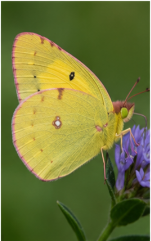
Pink-edged Sulphur Butterflies (Colias interior) are attractive native butterflies found throughout the boreal forests and mountainous regions of northern North America. They are best known for the delicate pink border that outlines the edges of their bright yellow wings, distinguishing them from many other sulphur butterflies. As members of the white and sulphur butterfly family (Pieridae), they are important pollinators that contribute to healthy forest ecosystems. Their caterpillars feed primarily on native legumes, while adults visit a wide variety of wildflowers for nectar.
Unlike some insects featured on Pestipedia, the Pink-edged Sulphur is not considered a pest. It rarely causes noticeable damage to host plants and is generally regarded as a beneficial species that supports biodiversity and pollination in northern landscapes.
Taxonomy and Classification
The Pink-edged Sulphur belongs to the family Pieridae, a group containing the whites, orange tips, and sulphur butterflies.
- Order: Lepidoptera
- Family: Pieridae
- Genus: Colias
- Species: Colias interior
Like all butterflies, Pink-edged Sulphurs undergo complete metamorphosis, progressing through egg, caterpillar, chrysalis, and adult stages.
Physical Description
Pink-edged Sulphur Butterflies are medium-sized butterflies with vibrant coloration that makes them easy to recognize during flight.
- Wingspan: Approximately 35–45 mm.
- Upper Wings: Bright yellow to yellow-orange with narrow black margins.
- Pink Border: Fine pink edging along the outer wing margins gives the species its common name.
- Underside: Pale yellow-green with small silvery spots that provide camouflage while resting.
- Body: Slender and covered with fine hairs typical of butterflies.
- Sexual Differences: Females are often paler and may display broader dark markings than males.
Distribution and Habitat
Pink-edged Sulphur Butterflies are distributed across northern North America, particularly in cooler climates.
Preferred habitats include:
- Boreal forests
- Conifer woodlands
- Mountain meadows
- Forest clearings
- Peatlands and bog margins
- Shrubby northern landscapes
The species is most commonly encountered during the warmer summer months when nectar-producing wildflowers are abundant.
Behavior and Ecology
Adults are active during daylight hours, flying rapidly between flowering plants in search of nectar. Their flight is strong and direct, allowing them to travel considerable distances while searching for food and mates.
The caterpillars feed primarily on native legumes, especially species of Vaccinium associates and members of the pea family that occur within boreal habitats. Feeding rarely reaches levels that affect plant health.
Adult butterflies serve as valuable pollinators, transferring pollen among numerous wildflowers while providing food for birds, spiders, dragonflies, and other insect predators.
Life Cycle
Pink-edged Sulphur Butterflies complete a four-stage life cycle.
- Eggs: Females deposit eggs individually on suitable host plants.
- Larvae: Green caterpillars feed on legume foliage while passing through several molts.
- Pupae: The chrysalis remains attached to vegetation until adult emergence.
- Adults: Newly emerged butterflies reproduce and continue the annual life cycle.
Most northern populations produce a single generation each year because of the relatively short growing season.
Pest Status
Pink-edged Sulphur Butterflies are beneficial insects and are not considered agricultural, structural, or garden pests. Their caterpillars rarely occur in sufficient numbers to cause noticeable defoliation, while adults provide valuable pollination services throughout their range.
Management and Prevention
No control measures are recommended or necessary.
- Protect Native Habitat: Preserve forests, meadows, and native flowering plants.
- Plant Nectar Sources: Native wildflowers support adult butterflies throughout the season.
- Reduce Pesticide Use: Broad-spectrum insecticides can negatively affect butterfly populations.
- Maintain Host Plants: Native legumes provide essential food for developing caterpillars.
Conservation and Research
Pink-edged Sulphur Butterflies are valuable indicators of healthy northern ecosystems. Scientists study their population dynamics, habitat preferences, climate adaptability, and relationships with native host plants to better understand the effects of environmental change on butterfly diversity. Conservation efforts focus on protecting boreal forests and preserving native flowering habitats.
Conclusion
The Pink-edged Sulphur Butterfly is a beautiful native pollinator whose distinctive pink wing margins make it one of the more attractive members of the sulphur butterfly family. Although its caterpillars feed on native legumes, they rarely cause significant damage, making this species an important and beneficial part of North America’s northern ecosystems.