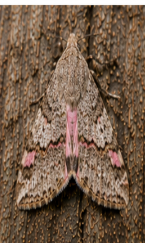
Pink-barred Pseudeustrotia Moths (Pseudeustrotia carneola) are small, nocturnal moths native to eastern North America. They are recognized by the delicate pinkish bands that cross their gray forewings, giving them a distinctive yet subtle appearance. Although they belong to the large family of owlet moths (Noctuidae), they are not considered agricultural, structural, or garden pests. Instead, they are a natural component of woodland ecosystems where their caterpillars feed on native vegetation and adults serve as prey for birds, bats, and other insectivorous wildlife.
Because of their small size and cryptic coloration, Pink-barred Pseudeustrotia Moths often go unnoticed except when they are attracted to porch lights or ultraviolet light traps during warm summer evenings. Their attractive wing pattern makes them a favorite among moth enthusiasts and photographers, while their ecological role contributes to healthy forest biodiversity.
Taxonomy and Classification
Pink-barred Pseudeustrotia Moths belong to the order Lepidoptera and the family Noctuidae, one of the world’s largest moth families.
- Order: Lepidoptera
- Family: Noctuidae
- Genus: Pseudeustrotia
- Species: Pseudeustrotia carneola
Like all owlet moths, they undergo complete metamorphosis, developing through egg, larva, pupa, and adult stages.
Physical Description
Pink-barred Pseudeustrotia Moths are relatively small but easily recognized by their attractive wing markings.
- Wingspan: Approximately 18–25 mm.
- Forewings: Gray to grayish-brown with distinctive pink or rosy crossbands and fine darker markings.
- Hindwings: Pale gray with lighter coloration than the forewings.
- Body: Small, slender, and densely covered with fine scales.
- Antennae: Thin and thread-like, typical of many noctuid moths.
The muted coloration provides excellent camouflage against tree bark, dead leaves, and woodland debris during daylight hours.
Distribution and Habitat
Pink-barred Pseudeustrotia Moths occur primarily throughout the eastern United States and southeastern Canada.
Preferred habitats include:
- Deciduous forests
- Mixed woodlands
- Forest edges
- Wooded parks
- Shrubby clearings
- Suburban landscapes bordering forests
Adults are most commonly encountered from late spring through summer, depending on regional climate.
Behavior and Ecology
Adults are strictly nocturnal and become active shortly after sunset. They readily visit outdoor lighting, making them occasional visitors around homes located near wooded habitats.
The larvae feed on the foliage of various native woodland plants, although they rarely occur in numbers sufficient to cause noticeable defoliation. Adult moths consume nectar and other carbohydrate-rich food sources when available, while also serving as an important food resource for bats, birds, spiders, and predatory insects.
Their cryptic coloration allows them to remain concealed during daylight hours, reducing the risk of predation.
Life Cycle
Like other moths, Pink-barred Pseudeustrotia Moths undergo complete metamorphosis.
- Eggs: Deposited on suitable host plants.
- Larvae: Caterpillars feed on leaves while passing through several developmental stages.
- Pupae: Pupation occurs within leaf litter or protected ground debris.
- Adults: Emerge during the growing season to reproduce and continue the life cycle.
Most populations complete one or two generations annually depending on local environmental conditions.
Pest Status
Pink-barred Pseudeustrotia Moths are not considered pests. Their caterpillars rarely produce economically important feeding damage, and the adults neither infest homes nor damage stored products, fabrics, or wood.
They are generally viewed as harmless native insects that contribute to forest biodiversity.
Management and Prevention
No management is typically necessary.
- Lighting: Reduce unnecessary outdoor lighting if adult moths become a nuisance around entrances.
- Habitat Conservation: Preserve native woodland vegetation that supports healthy moth populations.
- Avoid Broad-spectrum Insecticides: These products can negatively impact beneficial moths and other pollinating insects.
- Natural Predators: Birds, bats, and spiders naturally regulate populations.
Conservation and Research
Although not considered rare, Pink-barred Pseudeustrotia Moths contribute to healthy woodland food webs. Researchers study noctuid moth diversity, seasonal abundance, and habitat requirements to better understand forest ecosystem health. Maintaining native forests and minimizing unnecessary pesticide use helps conserve these and many other beneficial moth species.
Conclusion
Pink-barred Pseudeustrotia Moths are attractive native woodland moths that play an important ecological role despite rarely attracting attention. Their distinctive pink wing bands, nocturnal habits, and harmless nature make them fascinating members of North America’s forest insect communities. While they occasionally appear at porch lights, they require no control and are best appreciated as part of a healthy natural ecosystem.