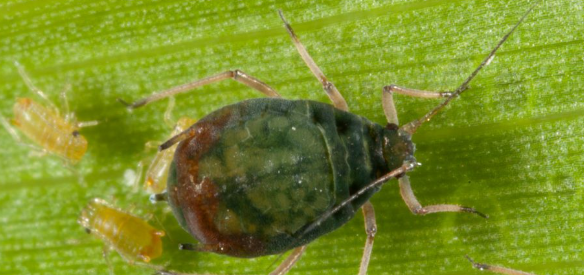
Cereal Aphids are a group of small, sap-feeding insects that infest grain crops such as wheat, barley, oats, and rye. These pests are important because they weaken plants through direct feeding and can spread damaging plant viruses, including Barley Yellow Dwarf Virus.
Common cereal aphid species include the Bird Cherry-Oat Aphid (Rhopalosiphum padi), English Grain Aphid (Sitobion avenae), and Greenbug (Schizaphis graminum). Although each species has slightly different feeding habits and host preferences, they are collectively important agricultural pests.
Taxonomy and Classification
- Common Name: Cereal Aphids
- Order: Hemiptera
- Family: Aphididae
- Type: Sap-feeding grain pest
- Common Hosts: Wheat, barley, oats, rye, and other grasses
Cereal aphids are true bugs with piercing-sucking mouthparts. They feed by inserting their mouthparts into plant tissue and removing phloem sap.
Identification
Cereal aphids are small, soft-bodied insects that are usually green, yellow, olive, brown, or dark-colored. They may occur in both winged and wingless forms, depending on population density and environmental conditions.
- Bird Cherry-Oat Aphid: Often olive-green with a reddish-orange patch near the rear of the body.
- English Grain Aphid: Commonly green with long, dark cornicles.
- Greenbug: Pale green to yellow-green, often with a darker stripe along the back.
Signs of infestation may include clusters of aphids on leaves, stems, or grain heads, along with sticky honeydew, white shed skins, yellowing foliage, and reduced plant vigor.
Distribution and Habitat
Cereal aphids are found in grain-producing regions throughout the United States and many other parts of the world. They are most common in fields growing small grains and grasses.
Populations often increase during periods of mild temperatures and favorable humidity. Winged adults can move between fields and spread infestations over large areas.
Life Cycle
Cereal aphids reproduce rapidly and can produce multiple generations during a single growing season. In favorable conditions, females may give birth to live young without mating, allowing populations to increase quickly.
Some species overwinter as eggs, while others may remain active in mild climates or move between crop and non-crop hosts. Winged forms develop when colonies become crowded or when host plants decline in quality.
Damage and Impact
Cereal aphids damage crops in two main ways: direct feeding and disease transmission.
- Direct Feeding: Aphids remove plant sap, reducing plant vigor, tillering, grain fill, and overall yield potential.
- Honeydew Production: Sticky honeydew can encourage sooty mold and reduce crop quality.
- Virus Transmission: Several cereal aphids can transmit Barley Yellow Dwarf Virus, which causes yellowing, stunting, poor root development, and reduced grain yield.
- Toxic Feeding: Greenbugs can inject toxic saliva that causes yellow or reddish feeding spots with dead brown centers.
Virus transmission is often the most serious concern because infected plants cannot be cured once disease is established.
Management and Control
Effective cereal aphid management depends on regular field scouting and an Integrated Pest Management approach.
| Strategy | Purpose | Benefit |
|---|---|---|
| Field Monitoring | Inspect leaves, stems, and grain heads for aphids and feeding symptoms. | Helps determine whether populations are increasing and whether treatment is needed. |
| Delayed Fall Planting | Reduce exposure of young winter grains to migrating aphids. | Lowers the risk of early virus transmission. |
| Natural Enemies | Protect lady beetles, lacewings, hover fly larvae, and parasitic wasps. | Can suppress aphid colonies naturally. |
| Resistant Varieties | Use crop varieties with resistance or tolerance where available. | Reduces yield loss and pest pressure. |
| Targeted Treatments | Apply insecticides only when economic thresholds are reached. | Prevents unnecessary applications and protects beneficial insects. |
Growers should also look for aphid mummies, which are swollen tan or dark aphids parasitized by tiny wasps. Their presence may indicate that natural biological control is active.
Prevention
- Scout fields regularly during fall and spring.
- Control volunteer grains and grassy weeds that can harbor aphids or viruses.
- Encourage beneficial insects by avoiding unnecessary broad-spectrum insecticides.
- Use resistant crop varieties when available.
- Time planting to reduce early-season exposure to aphid flights.
Related Articles
Conclusion
Cereal aphids are serious pests of wheat, barley, oats, rye, and related grain crops. Their ability to reproduce rapidly, weaken plants, and spread viruses makes early detection essential.
Successful management relies on field monitoring, crop timing, natural enemies, resistant varieties, and targeted treatments when needed. By using integrated pest management, growers can reduce aphid damage while preserving beneficial insects and crop health.