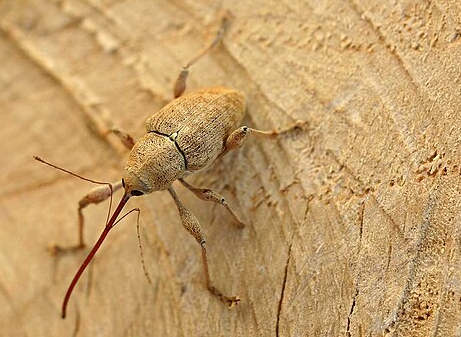
Chestnut Weevils (Curculio spp.) are specialized nut-feeding beetles that attack chestnut trees and occasionally other nut-bearing species. These pests are particularly problematic in orchards and natural stands where chestnuts are grown for food or restoration purposes. Their larvae develop inside nuts, consuming the edible kernel and rendering the crop unmarketable.
Because infestations often go unnoticed until harvest, chestnut weevils are considered high-impact agricultural pests that require careful monitoring and management.
Taxonomy and Classification
- Common Name: Chestnut Weevils
- Genus: Curculio
- Order: Coleoptera
- Family: Curculionidae
- Type: Internal nut-feeding pest
Important species include the Small Chestnut Weevil (Curculio sayi) and the Large Chestnut Weevil (Curculio caryatrypes). These species are closely tied to chestnut production cycles.
Identification
Adult chestnut weevils are medium-sized beetles with distinctive long snouts.
- Body: Brown to golden-brown coloration
- Size: Approximately 6 to 10 mm long
- Rostrum: Long, curved snout (especially long in females)
The larval stage is responsible for crop damage:
- Larvae: Creamy-white, legless, C-shaped grubs
- Head: Reddish-brown
- Location: Found inside chestnuts
A key sign of infestation is a small, round exit hole in the nut where the larva has emerged. :contentReference
Distribution and Habitat
Chestnut weevils are found throughout the United States and other regions where chestnut trees are grown. They are commonly associated with:
- Chestnut orchards
- Natural forest stands
- Areas growing American, Chinese, or hybrid chestnut trees
Their lifecycle is closely synchronized with nut development, making chestnuts their primary habitat and food source. :contentReference
Behavior and Life Cycle
Chestnut weevils typically have one generation per year, although some individuals may remain in the soil for extended periods.
The lifecycle includes:
- Egg Stage: Females lay eggs inside developing nuts using their long snout
- Larval Stage: Larvae feed inside the nut kernel
- Exit Phase: Mature larvae bore exit holes and drop to the soil
- Pupal Stage: Pupation occurs underground
- Adult Stage: Adults emerge the following season
Egg-laying damage is often invisible externally, making early detection difficult.
Feeding and Damage
Chestnut weevils cause damage through internal feeding within the nut.
- Kernel Consumption: Larvae consume the edible portion of the nut
- Frass Contamination: Nuts become filled with waste material
- Exit Holes: Small round holes indicate larval emergence
- Post-Harvest Spoilage: Infested nuts deteriorate during storage
This damage results in complete loss of affected nuts and can significantly reduce overall yield. :contentReference[oaicite:5]{index=5}
Management and Control
Effective management focuses on interrupting the life cycle and preventing larval development.
| Strategy | Purpose | Benefit |
|---|---|---|
| Hot Water Treatment | Soak harvested nuts at 122°F (50°C) for 20 minutes | Kills eggs and larvae inside nuts |
| Frequent Harvesting | Collect fallen nuts daily | Prevents larvae from entering soil |
| Biological Control | Introduce poultry such as chickens or guineas | Reduces larvae and adult populations |
| Soil Management | Cultivate soil around trees | Disrupts overwintering stages |
Proper timing and consistent orchard sanitation are essential for effective control.
Prevention
- Monitor adult activity during late summer
- Inspect nuts for early signs of infestation
- Maintain orchard cleanliness
- Harvest frequently to reduce larval escape
- Use thermal treatments for stored nuts
Preventative practices can significantly reduce infestation levels and crop loss.
Related Articles
Conclusion
Chestnut weevils are highly specialized pests that can cause severe losses in chestnut production. Their hidden lifecycle and internal feeding make them difficult to detect and manage.
By combining monitoring, sanitation, and targeted treatments, growers can reduce infestations and protect nut quality, ensuring successful harvests and long-term orchard health.