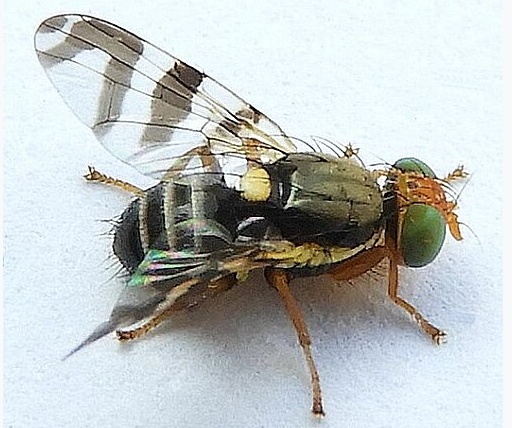
Cherry Fruit Flies (Rhagoletis spp.) are serious pests of cherry production, known for infesting developing fruit and rendering it unmarketable. These insects lay eggs inside cherries, where larvae feed on the fruit flesh, causing softening, discoloration, and internal decay. :contentReference[oaicite:0]{index=0}
They are particularly problematic in commercial orchards, where even low infestation levels can lead to rejected shipments. Their lifecycle is closely tied to fruit development, making timing critical for effective management. :contentReference[oaicite:1]{index=1}
Taxonomy and Classification
- Common Name: Cherry Fruit Flies
- Genus: Rhagoletis
- Order: Diptera
- Family: Tephritidae
- Type: Internal fruit-feeding pest
Important species include the Eastern Cherry Fruit Fly (Rhagoletis cingulata) and the Western Cherry Fruit Fly (Rhagoletis indifferens), both of which are major pests in North American cherry-growing regions.
Identification
Adult cherry fruit flies are small, dark-colored flies with distinctive wing patterns.
- Body: Black with pale or white markings
- Wings: Transparent with characteristic dark banding
- Size: Small, typically under 1/4 inch
The larval stage is more damaging and consists of:
- White, legless maggots
- Soft-bodied
- Found inside fruit
Infestation is often not visible externally until fruit damage becomes severe.
Distribution and Habitat
Cherry fruit flies are found throughout major cherry-producing regions, especially in the Pacific Northwest and Northeastern United States. :contentReference[oaicite:2]{index=2}
They are commonly associated with:
- Commercial orchards
- Backyard cherry trees
- Areas with sweet and sour cherry production
Adults are highly mobile and can spread quickly between orchards, increasing the risk of widespread infestation. :contentReference[oaicite:3]{index=3}
Behavior and Life Cycle
Cherry fruit flies typically have one generation per year.
The life cycle includes:
- Egg Stage: Eggs are laid inside developing cherries using a needle-like ovipositor.
- Larval Stage: Larvae hatch and feed internally on fruit pulp.
- Pupal Stage: Mature larvae exit the fruit and pupate in the soil.
- Adult Stage: Adults emerge the following season.
The timing of adult emergence is closely synchronized with fruit development, making early detection critical for control.
Feeding and Damage
Damage caused by cherry fruit flies is primarily internal and often not visible until fruit is harvested or opened.
- Internal Feeding: Larvae consume fruit flesh, causing softening and breakdown.
- Fruit Decay: Damaged fruit becomes discolored and unsuitable for consumption.
- “Stinging”: Egg-laying punctures may introduce pathogens, even if larvae do not develop.
- Premature Fruit Drop: Infested fruit may fall before harvest.
Even a single larva in fruit can result in complete rejection of commercial shipments, making this pest a major economic concern. :contentReference[oaicite:4]{index=4}
Management and Control
Effective control depends on monitoring adult activity and targeting the egg-laying stage.
| Strategy | Purpose | Benefit |
|---|---|---|
| Sticky Trap Monitoring | Use yellow sticky traps to detect adult emergence. | Determines optimal timing for treatment. |
| Sanitation | Remove and destroy fallen or infested fruit. | Reduces future populations. |
| Ground Barriers | Use mulch or fabric under trees. | Prevents larvae from entering soil to pupate. |
| Targeted Treatments | Apply insecticides during egg-laying period. | Prevents larval infestation inside fruit. |
Timing is critical—treatments must be applied before larvae enter the fruit.
Prevention
- Monitor orchards early in the season using traps
- Remove fallen fruit promptly
- Maintain orchard sanitation
- Apply treatments at the correct timing
- Use exclusion methods in small-scale orchards
Preventative practices significantly reduce infestation risk.
Conservation and Research
Cherry fruit flies are major agricultural pests rather than conservation concerns. Research focuses on improving:
- Monitoring systems for early detection
- Integrated pest management strategies
- Biological and environmentally friendly controls
Advancements in these areas help reduce reliance on chemical treatments and improve crop protection.
Related Articles
Conclusion
Cherry fruit flies are highly destructive orchard pests that can severely impact fruit quality and marketability. Their internal feeding behavior makes them difficult to detect until damage is already done.
Effective management relies on early monitoring, proper sanitation, and precise timing of control measures. By implementing integrated pest management strategies, growers can reduce losses and protect crop quality.
an reduce losses and protect crop quality.