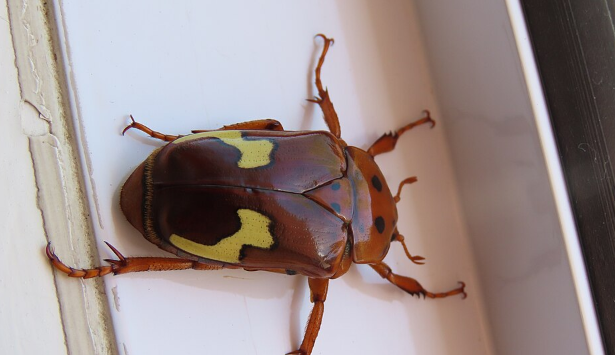
Chafer Beetles are a group of scarab beetles whose larvae, commonly known as white grubs, are significant pests of lawns, turfgrass, and agricultural crops. These insects are widely distributed and are best known for their ability to damage plant roots, leading to weakened or dying vegetation.
In residential settings, chafer beetles are particularly problematic for lawns, where infestations can result in brown patches, thinning turf, and easily uprooted grass. Much of the visible damage is caused by the larval stage feeding below ground. :contentReference[oaicite:0]{index=0}
Taxonomy and Classification
- Common Name: Chafer Beetles
- Family: Scarabaeidae
- Order: Coleoptera
- Type: Root-feeding turf pest
Common species include the European Chafer (Amphimallon majale) and various Masked Chafers (Cyclocephala spp.). These species are among the most common turf pests in North America.
Identification
Adult chafer beetles are medium-sized and typically range from light brown to tan in color. They have a robust, oval-shaped body and are often active during warm summer evenings.
Key identifying features include:
- Oval, light brown to tan body
- Serrated antennae
- Clumsy flight, often seen around lights at dusk
The larval stage, known as a white grub, is the most damaging and easily recognized form:
- C-shaped body
- Creamy white color
- Brown head capsule
- Six visible legs
Grubs are typically found in the upper soil layers feeding on grass roots.
Distribution and Habitat
Chafer beetles are widely distributed across the United States and other temperate regions. They are commonly found in:
- Residential lawns
- Golf courses
- Parks and sports fields
- Agricultural fields
They prefer well-drained soils where turfgrass or crops are present. Adults emerge in summer and lay eggs in the soil, initiating the next generation.
Behavior and Life Cycle
Chafer beetles typically have one generation per year.
The life cycle includes:
- Egg Stage: Eggs are laid in soil during summer.
- Larval Stage: Grubs hatch and begin feeding on roots.
- Overwintering: Larvae move deeper into the soil during winter.
- Spring Feeding: Grubs return to the surface and resume feeding.
- Pupal Stage: Pupation occurs in soil before adult emergence.
- Adult Stage: Beetles emerge in early to mid-summer.
Adults are often seen flying at dusk and gathering near lights or vegetation for mating.
Damage and Impact
Chafer beetles cause damage primarily during the larval stage.
- Root Feeding: Grubs feed on grass roots, reducing the plant’s ability to absorb water and nutrients.
- Turf Damage: Lawns develop brown patches and may feel spongy or loose.
- Severe Infestations: Turf can be rolled back like a carpet due to root loss.
- Secondary Damage: Birds, raccoons, and skunks dig up lawns to feed on grubs, causing additional destruction. :contentReference[oaicite:1]{index=1}
Damage is often most noticeable during hot, dry conditions when weakened turf cannot recover.
Management and Control
Effective management focuses on monitoring and targeting the larval stage.
| Strategy | Purpose | Benefit |
|---|---|---|
| Monitoring | Inspect soil for grubs by digging small sections of turf. | Determines infestation levels and treatment need. |
| Healthy Turf Maintenance | Maintain proper watering, mowing, and fertilization. | Strengthens grass and reduces vulnerability. |
| Biological Control | Apply beneficial nematodes or encourage natural predators. | Provides environmentally friendly control. |
| Targeted Treatments | Apply insecticides when grub populations exceed thresholds. | Reduces damage while minimizing chemical use. |
Timing is critical, as treatments are most effective when young larvae are active near the soil surface.
Prevention
- Maintain thick, healthy turf to resist infestation
- Water deeply but infrequently to encourage strong root systems
- Reduce excessive thatch buildup
- Monitor for early signs of grub activity
- Encourage beneficial insects and organisms
Preventative lawn care practices can significantly reduce the likelihood of severe infestations.
Related Articles
Conclusion
Chafer beetles are significant turf pests whose larvae can cause extensive root damage and lawn deterioration. While adult beetles are mostly a nuisance, the underground feeding activity of grubs poses the greatest threat to turf health.
Through proper monitoring, lawn care, and targeted management strategies, homeowners and professionals can effectively reduce damage and maintain healthy, resilient landscapes.