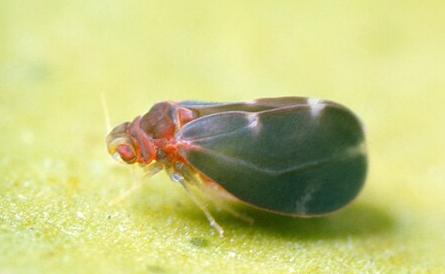
Citrus Blackflies (Aleurocanthus woglumi) are serious pests of citrus trees, known for weakening plants through sap feeding and promoting the growth of sooty mold. These insects are closely related to whiteflies but are distinguished by their darker coloration and spiny immature stages.
They are particularly problematic in tropical and subtropical regions where citrus production is significant. Heavy infestations can reduce plant vigor, decrease fruit yield, and make fruit unmarketable due to contamination.
Taxonomy and Classification
- Common Name: Citrus Blackfly
- Scientific Name: Aleurocanthus woglumi
- Order: Hemiptera
- Family: Aleyrodidae
- Type: Sap-feeding citrus pest
Despite their name, citrus blackflies are not true flies but belong to the group of sap-feeding insects that includes whiteflies and aphids.
Identification
Citrus blackflies can be identified by both adult and immature stages.
- Adults: Small (about 1.5 mm), slate-blue to dark gray with a powdery, waxy coating and distinctive red eyes
- Nymphs: Oval, black, and covered with stiff spines, giving them an armored appearance
- Egg Pattern: Laid in distinctive spiral patterns on the undersides of leaves
Common signs of infestation include sticky honeydew, black sooty mold, and clusters of dark, spiny nymphs attached to leaf surfaces.
Distribution and Habitat
Citrus blackflies are found in tropical and subtropical regions and are established in parts of the southern United States, including Texas and Florida.
They infest a wide range of host plants, including:
- Citrus trees (orange, lemon, lime)
- Gardenias
- Coffee plants
- Other ornamental shrubs
They typically reside on the undersides of leaves, where they feed and reproduce.
Behavior and Life Cycle
Citrus blackflies undergo incomplete metamorphosis, developing through egg, nymph, and adult stages.
Key life cycle characteristics include:
- Egg Stage: Eggs are deposited in spiral patterns on leaf undersides
- Nymph Stage: Nymphs remain stationary and feed on plant sap
- Adult Stage: Adults emerge and disperse to new plants
Multiple overlapping generations can occur in warm climates, allowing populations to increase rapidly.
Feeding and Damage
Citrus blackflies cause damage through both direct feeding and secondary effects.
- Sap Removal: Feeding weakens plants and reduces growth
- Honeydew Production: Sticky excretions coat leaves and fruit
- Sooty Mold Growth: Black fungal growth develops on honeydew, blocking sunlight
- Reduced Photosynthesis: Mold and feeding damage limit energy production
- Yield Loss: Fruit quality and quantity decline
Severe infestations can lead to long-term decline in tree health and productivity.
Management and Control
Effective management relies on an Integrated Pest Management (IPM) approach combining biological, cultural, and mechanical strategies.
| Strategy | Purpose | Benefit |
|---|---|---|
| Biological Control | Introduce parasitoid wasps such as Encarsia opulenta | Provides long-term population suppression |
| Mechanical Washing | Use water sprays to remove insects and honeydew | Reduces populations and prevents mold buildup |
| Insecticidal Soaps | Apply potassium-based soaps | Breaks down protective coatings and kills nymphs |
| Ant Control | Reduce ant populations on trees | Allows natural predators to control blackflies |
Early detection and consistent management are essential to prevent widespread infestations.
Prevention
- Inspect leaves regularly, especially undersides
- Encourage beneficial insects such as parasitoid wasps
- Control ant populations that protect blackflies
- Prune heavily infested branches
- Maintain overall tree health
Preventative measures reduce the likelihood of severe infestations and long-term damage.
Related Articles
Conclusion
Citrus blackflies are destructive pests that significantly impact citrus production through sap feeding and the promotion of sooty mold. Their rapid reproduction and ability to spread make them a serious concern in affected regions.
Through early detection, biological control, and integrated management strategies, growers and homeowners can effectively reduce infestations and protect plant health.