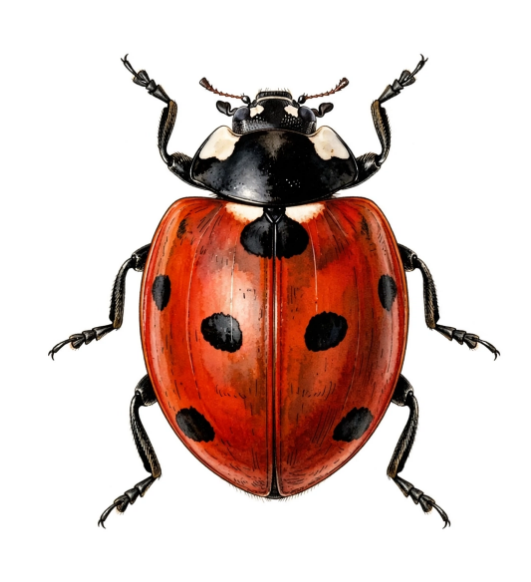
Ladybugs, also known as Lady Beetles or Ladybird Beetles, are among the most beneficial insects found in gardens, farms, orchards, and natural ecosystems. Belonging to the family Coccinellidae, these colorful beetles are celebrated for their appetite for destructive plant pests, particularly aphids. Their bright red, orange, yellow, or black wing covers, often decorated with contrasting spots, make them one of the easiest insects to recognize.
Unlike many insects commonly found around homes and landscapes, most ladybugs are considered valuable allies rather than pests. Both adults and larvae consume large numbers of aphids, mealybugs, scale insects, mites, and other soft-bodied insects that damage crops, ornamental plants, vegetables, and fruit trees. Their natural predatory behavior reduces the need for chemical insecticides and makes them an essential component of integrated pest management (IPM) and organic gardening.
Although the vast majority of ladybug species are beneficial, one introduced species—the Asian Lady Beetle (Harmonia axyridis)—can become a nuisance when thousands gather on buildings during autumn while searching for protected places to spend the winter.
Taxonomy and Classification
Ladybugs belong to the order Coleoptera, the largest order of insects, and the family Coccinellidae. More than 6,000 species have been described worldwide, with hundreds occurring throughout North America.
- Kingdom: Animalia
- Phylum: Arthropoda
- Class: Insecta
- Order: Coleoptera
- Family: Coccinellidae
Most members of this family are predatory throughout both their larval and adult stages. However, a small number of species, including the Mexican Bean Beetle, feed on plants and are considered agricultural pests rather than beneficial insects.
Physical Description
Adult ladybugs are small, dome-shaped beetles measuring approximately 1/16 to 3/8 inch long. Their rounded bodies and brightly colored wing covers make them easily recognizable.
- Shape: Rounded, dome-shaped body
- Size: Approximately 1/16 to 3/8 inch long
- Colors: Red, orange, yellow, black, pink, or combinations of these colors
- Markings: Spots, stripes, or no markings depending on species
- Legs: Six short legs
- Antennae: Short and clubbed
Contrary to popular belief, the number of spots does not indicate a ladybug’s age. Spot number varies by species and remains constant throughout adulthood.
Ladybug Larvae
Ladybug larvae look completely different from adults and are often mistaken for pests. They have elongated, segmented bodies resembling tiny alligators and are usually gray, black, or dark blue with orange, yellow, or red markings.
Despite their unusual appearance, larvae are even more voracious predators than adults. A single larva may consume several hundred aphids before pupating.
The pupal stage is attached to leaves or stems, where the insect transforms into its adult form.
Distribution and Habitat
Ladybugs occur on every continent except Antarctica and inhabit nearly every terrestrial ecosystem where prey insects are available.
Common habitats include:
- Home gardens
- Agricultural fields
- Fruit orchards
- Greenhouses
- Forests
- Prairies
- Meadows
- Urban landscapes
- Wetland edges
- Roadside vegetation
They are especially abundant wherever aphid populations develop, since aphids represent one of their preferred food sources.
Life Cycle
Ladybugs undergo complete metamorphosis, progressing through egg, larva, pupa, and adult stages.
Egg Stage
Females lay clusters of yellow or orange eggs on the undersides of leaves, usually close to aphid colonies so newly hatched larvae immediately have food available.
Larval Stage
After hatching, larvae actively hunt prey for several weeks. During this period they consume enormous numbers of aphids, mealybugs, mites, whiteflies, and scale insects.
Pupal Stage
Once fully grown, the larva attaches itself to vegetation and forms a pupa. During this stage it transforms into the familiar adult beetle.
Adult Stage
Adults emerge with soft, pale wing covers that harden and develop their characteristic coloration within several hours. Depending on species and environmental conditions, adults may live for several months to over one year.
Diet and Feeding Habits
Ladybugs are among nature’s most effective biological pest-control agents. Both larvae and adults consume large numbers of plant pests throughout their lives.
Common prey includes:
- Aphids
- Scale insects
- Mealybugs
- Spider mites
- Whiteflies
- Psyllids
- Small insect eggs
- Soft-bodied caterpillars
An adult ladybug may consume dozens of aphids each day, while a developing larva may eat hundreds before reaching adulthood.
When prey becomes scarce, adults may supplement their diet with pollen, nectar, honeydew, or fungal spores.
Ecological Importance
Ladybugs are considered one of the world’s most important beneficial insects. By naturally reducing pest populations, they help maintain healthy ecosystems and reduce reliance on synthetic insecticides.
Their presence benefits:
- Vegetable gardens
- Fruit orchards
- Commercial agriculture
- Greenhouses
- Native plant communities
- Home landscapes
Because they attack pests before severe infestations develop, ladybugs play an important role in integrated pest management programs.
The Asian Lady Beetle
The Asian Lady Beetle (Harmonia axyridis) was introduced into North America for biological control. Although highly effective at controlling aphids, it has become a nuisance species in many areas.
Unlike most native ladybugs, Asian Lady Beetles commonly gather in enormous numbers on sunny sides of buildings during autumn. They search for cracks and crevices where they can overwinter inside walls, attics, garages, and living spaces.
Once indoors they generally do not reproduce or damage structures, but they may:
- Stain walls and fabrics with defensive fluids
- Produce an unpleasant odor
- Cause allergic reactions in sensitive individuals
- Become a nuisance because of large numbers
Defense Mechanisms
Ladybugs possess several effective defenses against predators.
Their bright coloration serves as a warning that they are unpleasant to eat. When disturbed, many species perform reflex bleeding, releasing a yellowish fluid from their leg joints. This liquid has a bitter taste and distinctive odor that discourages birds, reptiles, and other predators.
Some species also remain motionless, allowing their camouflage or warning colors to protect them.
Overwintering Behavior
Many ladybug species spend winter in protected locations where they enter a period of reduced activity until temperatures rise.
Natural overwintering sites include:
- Beneath bark
- Leaf litter
- Rock crevices
- Tree cavities
- Dense vegetation
Asian Lady Beetles frequently choose buildings instead of natural shelters, leading to seasonal nuisance problems.
Benefits to Gardens
Gardeners actively encourage ladybug populations because they provide free, environmentally friendly pest control.
Ladybugs help protect:
- Roses
- Tomatoes
- Peppers
- Cucumbers
- Beans
- Fruit trees
- Berry bushes
- Ornamental flowers
Healthy ladybug populations often prevent aphid outbreaks from reaching damaging levels.
Inspection and Identification
Ladybugs are usually found on plants supporting aphid colonies or other soft-bodied insects. Inspect the undersides of leaves, flower buds, and stems for adults, larvae, eggs, or pupae.
Learning to recognize the alligator-like larvae is especially important because many gardeners mistakenly remove these highly beneficial predators.
Management and Conservation
Management generally focuses on protecting and encouraging beneficial ladybug populations rather than eliminating them.
Conservation
- Avoid unnecessary broad-spectrum insecticides.
- Plant flowering species that provide nectar and pollen.
- Maintain diverse landscapes.
- Allow moderate aphid populations to support predators.
- Provide water during dry periods.
Managing Asian Lady Beetles
Where Asian Lady Beetles become nuisance pests, prevention is the best solution.
- Seal cracks around windows and doors before autumn.
- Repair damaged screens.
- Seal utility penetrations.
- Vacuum beetles found indoors rather than crushing them.
- Release captured beetles outdoors away from the structure when practical.
Crushing lady beetles may leave yellow stains and produce an unpleasant odor.
Commercial Releases
Ladybugs are widely sold through garden centers and biological-control suppliers. Commercial releases may provide temporary suppression of aphids in gardens and greenhouses, although success depends on proper timing, adequate prey, weather conditions, and habitat.
Providing flowering plants, minimizing pesticide use, and encouraging naturally occurring populations often produces better long-term results than repeated releases.
Conservation and Research
Ladybugs are among the most studied beneficial insects in agriculture. Research continues to improve biological control techniques, commercial rearing methods, habitat conservation, and understanding of invasive species such as the Asian Lady Beetle.
Scientists also study how native ladybug populations respond to habitat loss, pesticide exposure, invasive competitors, and changing climate conditions.
Conclusion
Ladybugs are among the most valuable natural predators found in gardens, farms, orchards, and landscapes. Both adults and larvae consume enormous numbers of aphids, mealybugs, scale insects, mites, and other destructive pests, making them an essential part of environmentally friendly pest management.
With the exception of nuisance problems caused by overwintering Asian Lady Beetles, ladybugs rarely create conflicts with people. Encouraging their presence through habitat conservation, careful pesticide use, and diverse plantings allows these remarkable beetles to provide effective, natural pest control while supporting healthy ecosystems.