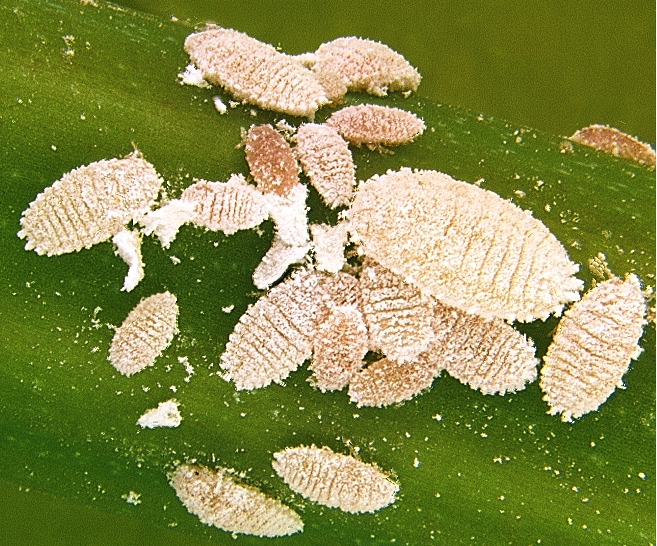
The Cassava Mealybug (Phenacoccus manihoti) is a destructive sap-feeding insect that attacks cassava plants, particularly tender shoots and developing leaves. Native to South America, this pest became internationally important after spreading into African cassava-growing regions during the twentieth century.
Cassava mealybugs feed by inserting their piercing-sucking mouthparts into plant tissues. Their feeding causes leaf distortion, shortened internodes, reduced shoot growth, and characteristic bunching of leaves near growing points. Severe infestations can significantly reduce cassava root yields.
The species is especially notable for its history of successful classical biological control using the parasitoid wasp Anagyrus lopezi, which helped suppress damaging populations across large areas of Africa.
Taxonomy and Classification
- Common Name: Cassava Mealybug
- Scientific Name: Phenacoccus manihoti
- Order: Hemiptera
- Family: Pseudococcidae
- Genus: Phenacoccus
- Species: P. manihoti
- Primary Host: Cassava (Manihot esculenta)
- Pest Type: Sap-feeding mealybug
Physical Description and Identification
Adult Females: Adult females are small, oval, soft-bodied insects covered with white, powdery wax. They are generally a few millimeters long and may appear pale pinkish beneath the wax coating.
Adult Males: Males are rarely encountered in many invasive populations, which reproduce predominantly without mating.
Eggs and Reproduction: Cassava mealybugs commonly reproduce by parthenogenesis, producing female offspring without fertilization. Developmental and reproductive characteristics distinguish this species from many other mealybugs.
Nymphs: Immature mealybugs resemble smaller adults and remain active while feeding on tender plant tissues.
Key Identification Features
- White, wax-covered insects clustered around cassava shoot tips.
- Distorted and curled young leaves.
- Shortened internodes and compacted shoot growth.
- Rosette-like clusters of foliage at growing points.
- Sticky honeydew and possible sooty mold.
- Stunted plants during heavy infestations.
Distribution and Habitat
The Cassava Mealybug is native to South America and has spread to cassava-growing regions in Africa and parts of Asia. Its introduction into Africa resulted in major agricultural losses before widespread biological control programs were implemented.
The pest is associated primarily with cassava fields and locations where suitable host plants remain available throughout the growing season.
Dry weather often favors population increases, while natural enemies and environmental conditions can influence seasonal abundance.
Life Cycle and Reproduction
Cassava mealybugs develop through immature nymphal stages before becoming reproductive adults.
Reproduction
Females commonly reproduce without mating, allowing populations to establish rapidly from relatively few individuals.
Nymphal Development
Young mealybugs feed on tender plant tissues and molt repeatedly as they grow.
Adult Development
Adult females continue feeding and producing offspring. Multiple generations may overlap under favorable conditions.
Dispersal
Movement of infested planting material, wind-assisted transport of young nymphs, and contact between plants can contribute to spread.
Damage and Signs of Infestation
- Leaf Distortion: Young foliage becomes curled and misshapen.
- Shoot Bunching: Shortened internodes produce compact clusters of leaves.
- Reduced Growth: Feeding interferes with normal shoot development.
- Honeydew Production: Sticky secretions may accumulate on foliage.
- Root Yield Reduction: Severe infestations reduce the plant’s capacity to produce storage roots.
- Plant Weakening: Persistent feeding can leave cassava more vulnerable to environmental stress.
Management and Integrated Pest Management (IPM)
1. Biological Control
The parasitoid wasp Anagyrus lopezi is one of the most important natural enemies of cassava mealybug. Classical biological control programs using this species have achieved substantial long-term suppression.
2. Use Clean Planting Material
Avoid moving infested cassava cuttings between fields or growing regions.
3. Monitor Growing Points
Inspect young shoots for wax-covered insects, leaf distortion, and shortened internodes.
4. Remove Infested Material
Where practical, remove heavily infested shoots and dispose of them appropriately.
5. Maintain Natural Enemies
Avoid unnecessary broad-spectrum insecticides that may eliminate parasitoids and predators.
6. Use Resistant or Tolerant Varieties
Select locally recommended cassava cultivars that tolerate pest feeding where available.
Conclusion
The Cassava Mealybug (Phenacoccus manihoti) is a major sap-feeding pest capable of reducing cassava productivity. Its rapid reproduction and preference for growing points can result in serious crop damage. Biological control, clean planting material, resistant varieties, and regular monitoring are central to sustainable management.