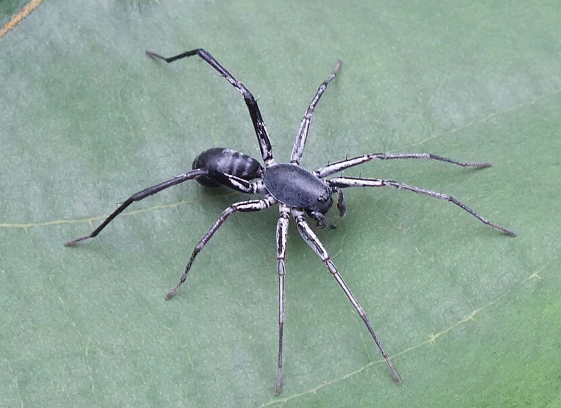
Ant Mimic Spider refers to a group of spiders that have evolved to resemble ants in appearance and behavior. Many of these species belong to the family Salticidae (jumping spiders), particularly the genus Myrmarachne, although ant mimicry occurs across several spider families. These spiders are found worldwide, including North America, and are commonly seen in gardens, forests, and urban environments.
Ant Mimic Spiders are known for their remarkable ability to imitate ants, a form of Batesian mimicry that helps them avoid predators. Despite their ant-like appearance, they are true spiders and are beneficial predators of small insects.
Taxonomy and Classification
- Common Name: Ant Mimic Spider
- Representative Genus: Myrmarachne and others
- Order: Araneae
- Family: Often Salticidae (Jumping Spiders)
- Type: Predatory spider (mimic species)
Ant mimicry has evolved independently in multiple spider families, making it a widespread adaptation rather than a single taxonomic group.
Identification and Physical Description
Ant Mimic Spiders are generally small, typically measuring 3 to 10 mm in length. Their bodies are elongated and constricted to resemble the segmented appearance of ants.
Key identifying features include:
- Narrow “waist” between body segments
- Dark coloration, often black or brown
- Raised front legs held like antennae
- Jerky, ant-like movements
Some species also have modified mouthparts or body shapes that enhance the illusion of being an ant.
Unlike ants, these spiders have eight legs and lack true antennae, although they may simulate antennae with their front legs.
Life Cycle
Ant Mimic Spiders undergo incomplete development, progressing from egg to spiderling to adult without a pupal stage.
Females lay eggs in silk sacs, which are often hidden in sheltered locations. After hatching, spiderlings resemble miniature adults and grow through a series of molts.
As they mature, they develop more pronounced mimicry traits. Lifespans vary but are typically around one year.
Habitat and Distribution
Ant Mimic Spiders are found in a wide range of habitats, including:
- Forests and woodland edges
- Grasslands and fields
- Gardens and residential areas
- Urban environments
They are often found near ant colonies, where their resemblance provides protection from predators.
Behavior and Ecology
Ant Mimic Spiders exhibit behaviors that closely resemble ants, including erratic, stop-and-go movement patterns and the habit of raising their front legs to mimic antennae.
This mimicry provides protection from predators that avoid ants due to their aggressive nature, chemical defenses, or unpalatability.
Despite their resemblance, these spiders are active predators. Many species, particularly jumping spiders, rely on excellent vision and agility to capture prey.
They may hunt small insects, including flies, aphids, and even ants in some cases.
Diet
Ant Mimic Spiders are carnivorous predators that feed on a variety of small insects, including:
- Flies
- Aphids
- Small beetles
- Other arthropods
Some species specialize in hunting ants, while others avoid them entirely and rely on mimicry for protection.
Benefits and Importance
Ant Mimic Spiders provide ecological benefits as natural predators:
- Control of small insect populations
- Contribution to biodiversity
- Support of balanced ecosystems
They are particularly valuable in gardens and agricultural areas as part of natural pest management.
Human Interaction and Risks
Ant Mimic Spiders are harmless to humans. While they are capable of biting, such incidents are extremely rare and typically result in mild, insignificant effects.
They are often mistaken for ants or other insects and are generally unnoticed due to their small size.
Management and Control
Control is not necessary, as Ant Mimic Spiders are beneficial and pose no threat.
Encouraging their presence can help reduce pest insect populations naturally.
Prevention
No prevention is required. Maintaining a balanced ecosystem will naturally support populations of these beneficial spiders.
- Avoid unnecessary pesticide use
- Encourage natural habitats
- Support plant diversity
These practices benefit a wide range of predatory insects and spiders.
Related Articles
Conclusion
Ant Mimic Spiders are fascinating examples of evolutionary adaptation, using mimicry to survive in complex ecosystems. Their resemblance to ants provides protection while allowing them to function as effective predators.
With no need for control and clear ecological benefits, these spiders are best appreciated as a unique and valuable component of natural and managed environments.