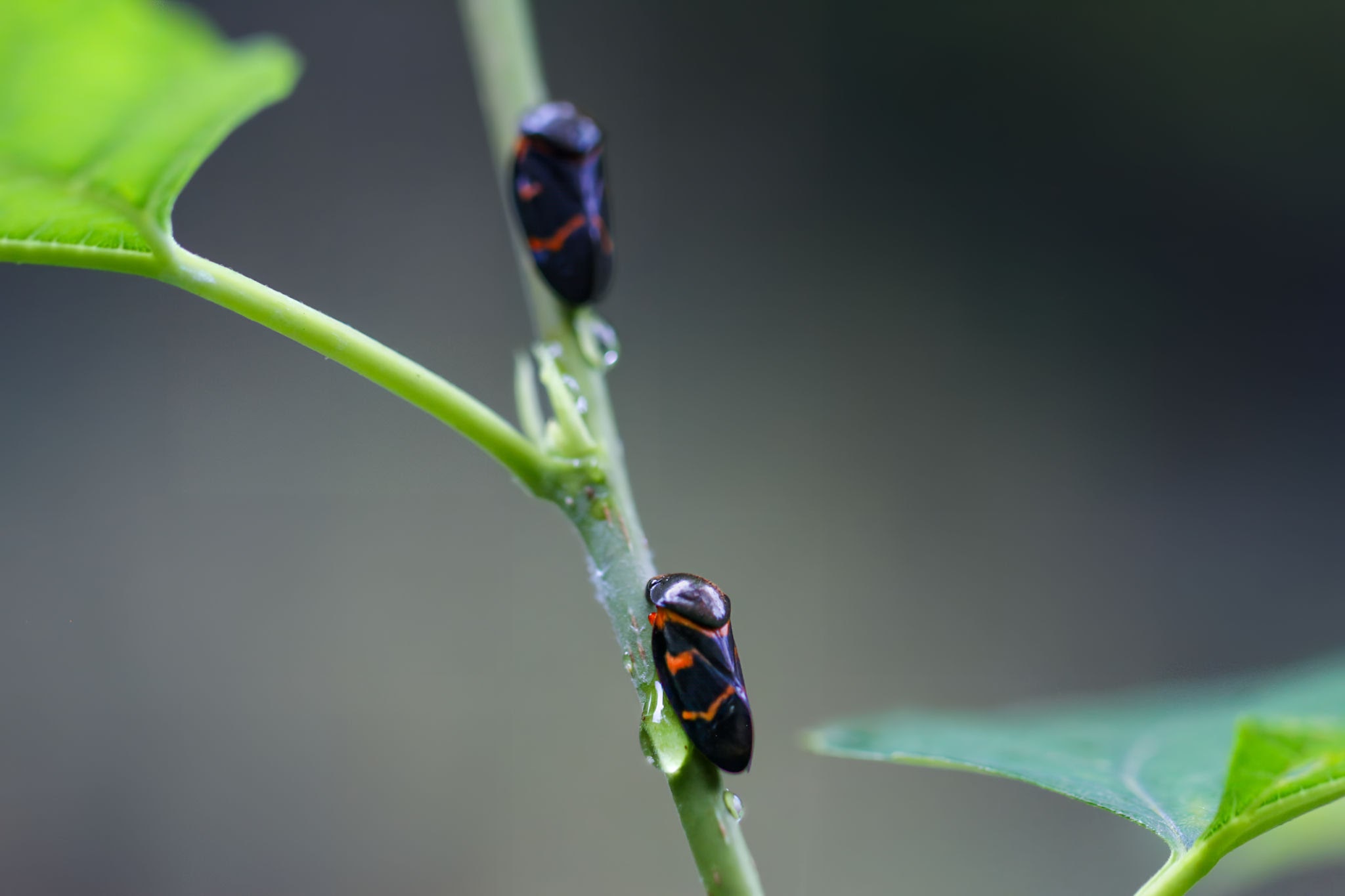
Twolined Spittlebugs (Prosapia bicincta) are sap-feeding insects that can become serious pests of turfgrass, pastures, ornamental plants, and landscape vegetation. They are best known for the frothy, foam-like masses produced by their immature stages, which resemble small deposits of spit on grass stems and plant foliage. While individual insects are relatively small, large populations can cause significant damage by removing plant fluids and injecting toxic saliva into host plants. Infestations may lead to yellowing, browning, thinning turf, reduced plant vigor, and declining ornamental quality. Twolined Spittlebugs are especially problematic in warm, humid environments where dense vegetation and excessive moisture provide ideal breeding conditions.
Taxonomy and Classification
Twolined Spittlebugs belong to the order Hemiptera, commonly known as the true bugs. They are members of the family Cercopidae, a group commonly referred to as froghoppers or spittlebugs.
- Order: Hemiptera
- Family: Cercopidae
- Genus: Prosapia
- Species: Prosapia bicincta
Like other spittlebugs, they feed by inserting specialized piercing-sucking mouthparts into plant tissues and extracting fluids. Both nymphs and adults feed on host plants and contribute to plant injury.
Identification
Twolined Spittlebugs are among the most recognizable spittlebug species due to their distinctive coloration.
Adult Spittlebugs
- Size: Approximately 1/4 inch long.
- Color: Black or very dark brown.
- Markings: Two bright orange or red horizontal bands across the wings.
- Body Shape: Wedge-shaped and somewhat robust.
- Movement: Strong jumpers that resemble leafhoppers.
Nymphs
- Color: Pale yellow, cream-colored, or greenish.
- Body: Soft-bodied and wingless.
- Location: Hidden within protective foam masses.
Spittle Masses
The most obvious sign of infestation is the characteristic frothy foam surrounding immature nymphs.
- White or cream-colored bubbles.
- Found near the base of grass plants.
- Present on stems and low-growing vegetation.
- Protect nymphs from predators and dehydration.
When the foam is disturbed, the developing nymph can usually be observed inside.
Distribution and Habitat
Twolined Spittlebugs occur throughout much of the southeastern and southern United States, Central America, Mexico, and parts of South America.
They are commonly found in:
- Lawns
- Golf courses
- Athletic fields
- Pastures
- Landscape ornamentals
- Roadsides
- Weedy fields
- Groundcover plantings
Dense vegetation, excessive thatch, high humidity, and frequent irrigation create ideal habitat conditions for population growth.
Host Plants
Twolined Spittlebugs feed on a wide variety of plants.
Common hosts include:
- Bermudagrass
- Centipedegrass
- St. Augustinegrass
- Zoysiagrass
- Hollies
- Ornamental shrubs
- Pasture grasses
- Various weeds
Turfgrass is particularly vulnerable because dense growth and thatch provide favorable conditions for nymph development.
Life Cycle
Twolined Spittlebugs undergo incomplete metamorphosis.
- Egg Stage: Females deposit eggs in plant tissue, thatch, or protected vegetation.
- Nymph Stage: Eggs hatch into nymphs that begin feeding immediately.
- Foam Production: Nymphs create protective spittle masses around themselves.
- Adult Stage: Mature insects emerge from the foam and disperse.
Depending on climate, one or more generations may occur annually. Warm weather supports faster development and larger populations.
Damage and Symptoms
Both nymphs and adults remove plant fluids through feeding, but much of the damage is caused by toxins present in their saliva.
Early symptoms include:
- Yellow Streaking: Discolored patches on grass blades.
- White or Purple Tinting: Initial signs of feeding injury.
- Reduced Vigor: Slower plant growth.
As infestations increase, more severe symptoms develop.
- Brown Turf: Large patches of grass become discolored.
- Wilting: Plants lose vigor despite adequate moisture.
- Thinning Lawns: Turf density decreases significantly.
- Dead Areas: Severe infestations may kill sections of turf.
- Declining Ornamentals: Shrubs and landscape plants become weakened.
Damage often resembles drought stress, disease problems, or nutrient deficiencies, making proper diagnosis important.
Behavior and Conflict
Several biological traits contribute to the pest status of Twolined Spittlebugs.
- Protected Nymphs: Foam masses shield immature stages from predators and environmental stress.
- Rapid Feeding: Both nymphs and adults feed extensively on plant fluids.
- Moisture Preference: Populations thrive in wet, humid conditions.
- Thatch Dependence: Heavy thatch layers provide ideal habitat.
- High Reproduction: Multiple generations can occur during favorable seasons.
Lawns with poor maintenance practices often experience the most severe infestations.
Monitoring and Detection
Regular inspections help detect infestations before severe damage develops.
- Search for foam masses at the base of plants.
- Inspect thatch layers carefully.
- Watch for adult insects jumping when disturbed.
- Look for yellowing or browning turf patches.
- Monitor vulnerable areas during warm weather.
A simple soap flush can also be used to force hidden insects to the surface for easier detection.
Management and Prevention
An Integrated Pest Management (IPM) approach provides the most effective long-term control.
Cultural Controls
- Dethatching: Remove excessive thatch where nymphs develop.
- Proper Mowing: Maintain recommended mowing heights.
- Irrigation Management: Avoid excessive watering.
- Weed Control: Remove alternate host plants.
- Improve Airflow: Reduce humidity around vegetation.
Physical Controls
- Strong water sprays can disrupt foam masses.
- Remove heavily infested vegetation when practical.
- Monitor and treat localized infestations early.
Biological Control
- Spiders
- Predatory insects
- Ground beetles
- Parasitic organisms
- Birds and other insectivores
Conserving beneficial organisms helps suppress populations naturally.
Chemical Control
When infestations become severe, insecticides may be necessary.
- Target nymphs before adults emerge.
- Ensure sprays penetrate foam masses.
- Combine treatments with cultural improvements.
- Follow all label directions carefully.
Chemical control alone rarely provides lasting results if favorable habitat conditions remain unchanged.
Conservation and Research
Research on Twolined Spittlebugs focuses on improving turfgrass resistance, enhancing biological control programs, and developing sustainable pest management strategies. Scientists continue studying environmental factors that influence outbreaks and methods for reducing pesticide reliance while maintaining healthy turf systems.
Maintaining healthy lawns, reducing excessive moisture, and minimizing thatch accumulation remain the most effective long-term strategies for preventing damaging infestations.