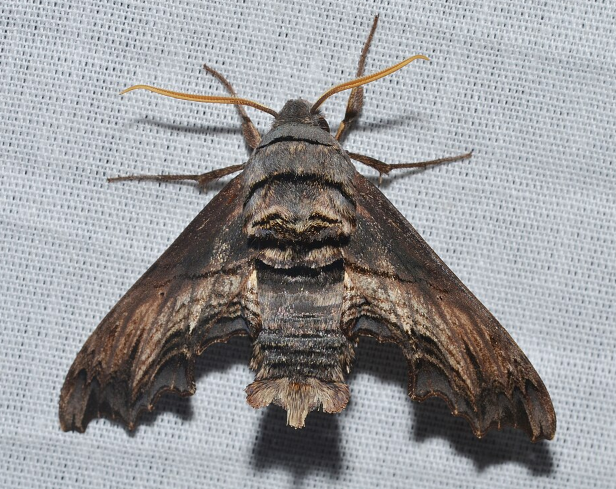
Abbott’s Sphinx Moth (Sphecodina abbottii) is a distinctive species of hawk moth in the family Sphingidae. Known for its unusual appearance and rapid, darting flight, this moth is often mistaken for a hummingbird or a large bee when in motion. It is widely distributed across eastern North America and is commonly found in wooded areas, gardens, and landscapes where host plants are present.
Abbott’s Sphinx Moth is of particular interest due to its mimicry and ecological role as both a pollinator and herbivore. While its larvae may occasionally feed on ornamental or wild plants, it is not typically considered a significant pest.
Taxonomy and Classification
- Common Name: Abbott’s Sphinx Moth
- Scientific Name: Sphecodina abbottii
- Order: Lepidoptera
- Family: Sphingidae
- Type: Hawk moth (sphinx moth)
The family Sphingidae includes many species of fast-flying moths capable of hovering while feeding, similar to hummingbirds. Abbott’s Sphinx Moth is unique within this group due to its coloration and behavior that resemble stinging insects.
Identification and Physical Description
Adult Abbott’s Sphinx Moths are medium-sized, with a wingspan of approximately 2 to 2.5 inches. They have a robust body and relatively narrow wings. Their coloration includes a mix of brown, black, and reddish tones, often with a fuzzy thorax that enhances their resemblance to bees or hummingbirds.
The hindwings are typically darker and may show reddish or rust-colored patches. This coloration, combined with rapid wing movement, creates the illusion of a different type of insect in flight.
Larvae are smooth-bodied caterpillars that can grow up to 2 to 3 inches long. They are usually green or brown and may display faint striping. Like many sphinx moth caterpillars, they have a horn-like structure at the rear, although it is less pronounced than in some related species.
Life Cycle
Abbott’s Sphinx Moth undergoes complete metamorphosis, progressing through egg, larva, pupa, and adult stages.
Females lay eggs on host plants, often on the underside of leaves. After hatching, larvae begin feeding on foliage. This stage lasts several weeks, during which the caterpillars grow rapidly.
When fully developed, larvae descend to the ground and pupate in the soil or leaf litter. The pupal stage allows the insect to transform into an adult moth. Adults typically emerge in late spring or early summer.
In most regions, there is one generation per year, although warmer climates may support additional generations.
Host Plants
The larvae of Abbott’s Sphinx Moth feed primarily on plants in the grape family (Vitaceae). Common host plants include:
- Wild grapevines
- Virginia creeper
- Other climbing vines
These plants are commonly found in wooded areas, hedgerows, and residential landscapes, providing suitable habitat for the species.
Damage and Symptoms
Larval feeding results in the consumption of leaf tissue. Typical signs of feeding include:
- Chewed or missing leaves
- Minor defoliation of vines
- Localized plant damage
In most cases, the damage is minimal and does not significantly affect plant health. High populations are uncommon, so economic impact is typically low.
Behavior and Ecology
Abbott’s Sphinx Moth is known for its rapid, erratic flight, which helps it evade predators. Its resemblance to bees or hummingbirds is a form of defensive mimicry, deterring potential threats.
Adults are active during the day and at dusk, feeding on nectar from flowers. They play a role in pollination, particularly for plants with tubular flowers that require hovering feeders.
Larvae rely on camouflage to avoid detection and are typically solitary feeders. As part of the food web, both larvae and adults serve as prey for birds, bats, and other predators.
Habitat and Distribution
Abbott’s Sphinx Moth is found throughout eastern North America, including the United States and parts of southern Canada. It is commonly associated with:
- Woodlands and forest edges
- Hedgerows and thickets
- Gardens and residential landscapes
- Areas with abundant host plants
The species prefers environments where climbing vines are present, providing both food and shelter.
Management and Control
Control measures are rarely necessary for Abbott’s Sphinx Moth due to its limited impact on plants. However, if caterpillars become noticeable, simple management strategies can be used.
- Hand removal: Caterpillars can be removed from plants manually.
- Encourage natural predators: Birds and beneficial insects help control populations.
- Monitor plant health: Regular inspection can identify early feeding activity.
Because this species is not a major pest, chemical control is generally not recommended.
Prevention
Preventative measures focus on maintaining balanced ecosystems and healthy plant growth.
- Encourage biodiversity in gardens and landscapes
- Maintain proper plant care and nutrition
- Monitor for unusual increases in caterpillar populations
Healthy plants can tolerate minor feeding without long-term effects.
Related Articles
Conclusion
Abbott’s Sphinx Moth is a fascinating species known for its mimicry, rapid flight, and ecological importance. While its larvae may cause minor feeding damage, it is generally not considered a significant pest.
Its role as a pollinator and its place in the natural food web highlight its value within ecosystems. With minimal management needs, Abbott’s Sphinx Moth is best appreciated as a unique and beneficial component of the environment.