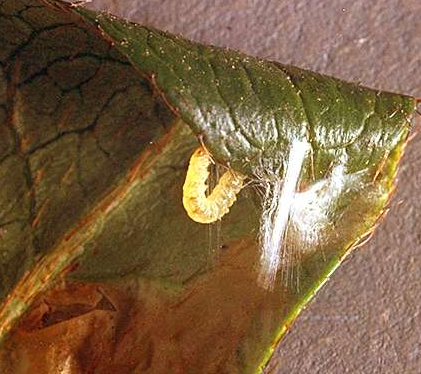
Rhododendron Leaf Miners are small insect pests that attack rhododendrons and azaleas by feeding within leaf tissues. Most species associated with rhododendrons belong to the moth family Gracillariidae, particularly Caloptilia azaleella, commonly known as the Azalea Leaf Miner. These insects create distinctive mines and leaf distortions as they develop, reducing the aesthetic value of ornamental shrubs and, in severe infestations, weakening plant health.
Taxonomy and Classification
Rhododendron leaf miners belong primarily to the order Lepidoptera (moths) and the family Gracillariidae. Several leaf-mining species may occasionally attack rhododendrons, but Caloptilia azaleella is considered the most significant pest in North America.
- Order: Lepidoptera
- Family: Gracillariidae
- Genus: Caloptilia
- Species: Caloptilia azaleella
Leaf miners are defined by their feeding behavior rather than strict taxonomy. Their larvae feed between the upper and lower surfaces of leaves, remaining protected inside the plant tissue for much of their development. :contentReference[oaicite:0]{index=0}
Physical Description
Adult rhododendron leaf miners are tiny moths measuring approximately 8–10 mm in wingspan.
- Adult (Key ID): Small, slender moth with golden-yellow to bronze forewings marked by darker bands or spots.
- Larva (Key ID): Flattened, pale yellow to green caterpillar measuring 6–12 mm long.
- Pupa: Develops within folded or rolled leaves near feeding sites.
- Damage ID: Blotch mines, serpentine tunnels, curled leaf tips, and brown patches on foliage.
- Conflict: Ornamental, Landscape Pest.
Distribution and Habitat
Rhododendron leaf miners occur throughout much of the United States, Canada, and Europe wherever rhododendrons and azaleas are cultivated. They are particularly common in ornamental landscapes, nurseries, botanical gardens, and residential gardens.
Preferred habitats include:
- Rhododendron plantings
- Azalea shrubs
- Woodland gardens
- Nursery production areas
- Urban landscapes
Infestations are most common in dense plantings with limited air circulation. :contentReference[oaicite:1]{index=1}
Life Cycle
Rhododendron leaf miners undergo complete metamorphosis consisting of egg, larval, pupal, and adult stages.
Egg Stage
Females deposit eggs on the undersides of rhododendron or azalea leaves during spring and summer.
Larval Stage
After hatching, larvae tunnel between leaf surfaces, feeding internally and creating visible mines. As larvae mature, many species leave the mine and fold or roll portions of the leaf to complete development within a protected shelter.
Pupal Stage
Pupation occurs within the rolled leaf tissue or inside the mined leaf.
Adult Stage
Adults emerge to mate and lay eggs, beginning another generation. Multiple generations may occur annually depending on climate conditions. :contentReference[oaicite:2]{index=2}
Behavior and Feeding
Leaf miner larvae are internal feeders that consume mesophyll tissue while leaving the outer leaf surfaces largely intact.
- Internal Mining: Young larvae create narrow, winding tunnels within leaves.
- Leaf Rolling: Older larvae often fold or roll leaf tips using silk to create protective shelters.
- Protected Feeding: Feeding inside leaves shields larvae from predators and many insecticides.
- Seasonal Activity: Peak damage generally occurs during spring and summer generations.
Damage and Symptoms
Damage caused by rhododendron leaf miners is primarily aesthetic but may reduce plant vigor during severe infestations.
Leaf Mines
Early feeding produces serpentine or blotchy mines visible through the leaf surface.
Leaf Curling
Mature larvae roll or curl leaf tips, creating obvious distortions.
Discoloration
Infested leaves often develop yellow, brown, or bronze patches.
Premature Defoliation
Heavy infestations may cause leaves to yellow and drop prematurely.
Reduced Vigor
Repeated infestations can reduce flowering and weaken shrubs over time. :contentReference[oaicite:3]{index=3}
Signs of Infestation
- Blotchy or winding mines within leaves
- Rolled or folded leaf tips
- Brown or yellow leaf patches
- Premature leaf drop
- Presence of larvae or pupae inside leaves
- Reduced ornamental appearance
Management and Control (IPM)
Integrated pest management provides the most effective long-term suppression.
Monitoring
- Inspect leaves regularly during spring and summer.
- Look for mines, rolled leaves, and discoloration.
Mechanical Control
- Remove and destroy mined or rolled leaves.
- Prune heavily infested branches.
- Dispose of fallen leaves to eliminate overwintering stages.
Cultural Control
- Maintain plant health through proper watering and fertilization.
- Provide adequate spacing for improved air circulation.
- Avoid unnecessary plant stress.
Biological Control
Natural enemies include parasitic wasps, predatory insects, and birds. Conserving these beneficial organisms often helps suppress populations naturally.
Chemical Control
Because larvae are protected inside leaf tissue, treatments are most effective when applied against newly hatched larvae before extensive mining occurs. Systemic insecticides may be warranted for severe infestations on valuable ornamental specimens. :contentReference[oaicite:4]{index=4}
Economic Importance
Although rhododendron leaf miners rarely kill established shrubs, they can significantly reduce the aesthetic quality of ornamental landscapes, nurseries, and public gardens. Repeated infestations may increase maintenance costs and reduce the commercial value of nursery stock.
Research and Conservation
Current research focuses on improving biological control programs, identifying resistant rhododendron cultivars, and developing environmentally sustainable management practices that preserve beneficial insects while minimizing ornamental damage.