Overview
Salt Marsh Mosquitoes (Aedes sollicitans, Aedes taeniorhynchus, and related species) are aggressive biting insects associated with coastal wetlands, tidal marshes, and brackish water habitats. They are among the most notorious mosquito pests in North America due to their ability to emerge in enormous numbers following flooding events. Large outbreaks can create severe nuisance conditions for residents, tourists, outdoor workers, livestock, and wildlife.
Unlike many mosquitoes that rely on permanent standing water, salt marsh mosquitoes are uniquely adapted to temporary flooding cycles. Their eggs can survive extended dry periods and hatch rapidly when exposed to tidal flooding, storm surges, or heavy rainfall. This adaptation allows populations to explode almost overnight, creating some of the largest mosquito outbreaks found in coastal environments.
Taxonomy and Classification
- Kingdom: Animalia
- Phylum: Arthropoda
- Class: Insecta
- Order: Diptera
- Family: Culicidae
- Genus: Aedes
The most important salt marsh mosquito species include the Eastern Salt Marsh Mosquito (Aedes sollicitans) and the Black Salt Marsh Mosquito (Aedes taeniorhynchus). Both species are recognized for their aggressive biting behavior and ability to disperse long distances from breeding sites.
Physical Description
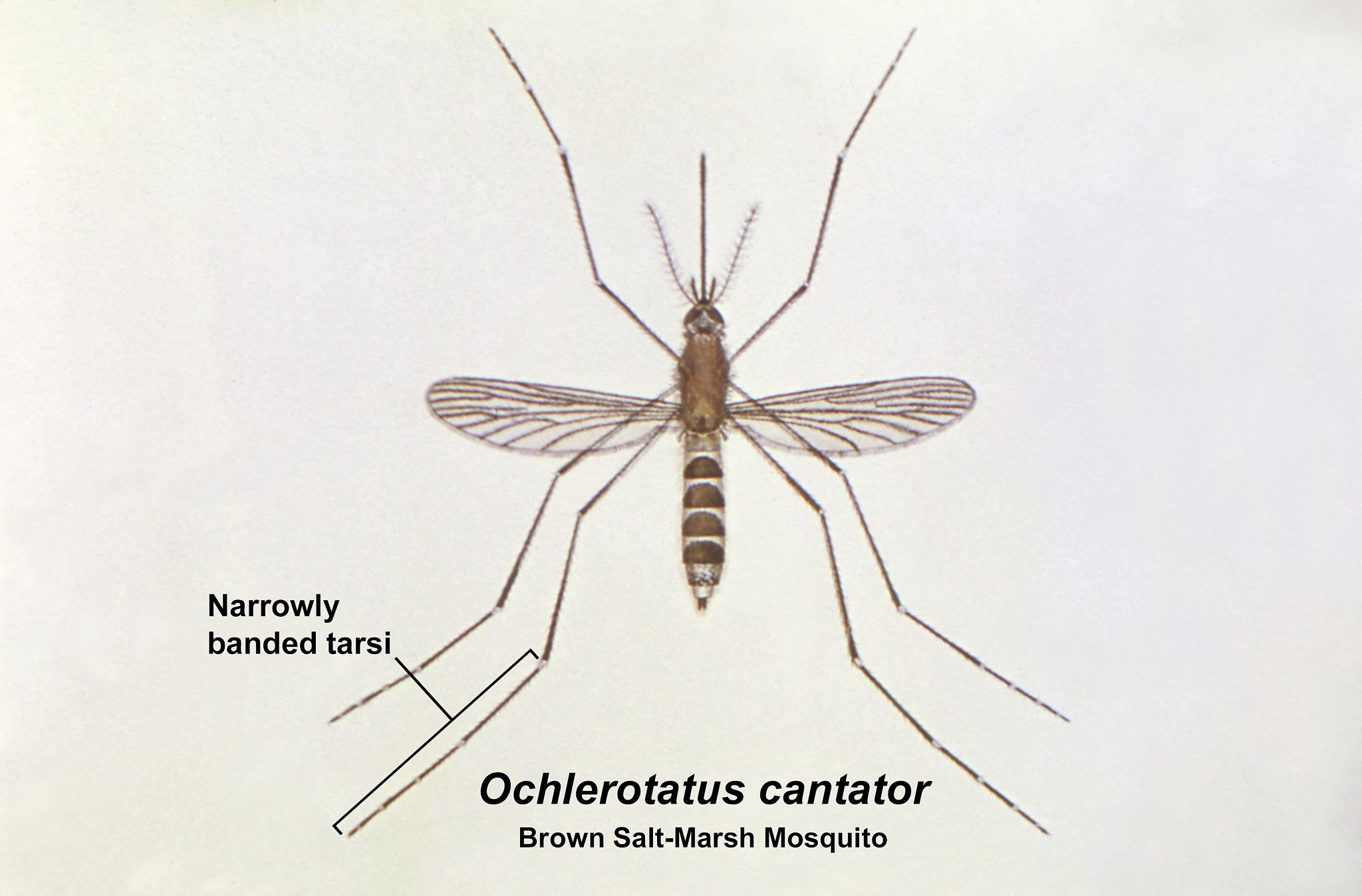
Adult salt marsh mosquitoes are medium-sized insects with slender bodies and long legs.
- Length: Approximately 4–8 mm.
- Color: Dark brown to black.
- Markings: White, silver, or yellowish bands on the legs and body.
- Proboscis: Long piercing mouthpart used by females to obtain blood meals.
- Wings: Transparent with fine scales.
- Flight Ability: Strong fliers capable of traveling many miles from breeding areas.
Larvae are aquatic and commonly called “wrigglers” because of their characteristic swimming movements.
Distribution and Habitat
Salt marsh mosquitoes occur throughout coastal regions of North America and are especially common along the Atlantic Coast, Gulf Coast, and portions of the Pacific Coast.
Preferred habitats include:
- Salt marshes
- Brackish wetlands
- Tidal pools
- Flooded grasslands
- Mangrove areas
- Coastal depressions
- Storm surge zones
These habitats provide ideal conditions for egg survival and larval development following periodic flooding.
Life Cycle
Salt marsh mosquitoes undergo complete metamorphosis.
Egg Stage
Females lay eggs on moist soil rather than directly in standing water.
The eggs are highly resistant to drying and may remain dormant for months or even years.
Larval Stage
When flooding occurs, eggs hatch rapidly and larvae begin feeding on microorganisms and organic matter in shallow pools.
Several larval stages are completed within a few days under favorable conditions.
Pupal Stage
Pupae remain active in water but do not feed.
This stage typically lasts only a few days.
Adult Stage
Adults emerge from the water surface and quickly begin dispersing.
Under warm conditions, the entire life cycle may be completed within one to two weeks.
Behavior and Biting Activity
Salt marsh mosquitoes are among the most aggressive biting mosquitoes in North America.
Unlike many species that feed primarily at dawn and dusk, salt marsh mosquitoes may attack throughout the day, especially during cloudy, humid, or shaded conditions.
Females require blood meals to produce eggs and readily feed on:
- Humans
- Dogs
- Horses
- Cattle
- Wildlife
- Birds
Large populations can make outdoor activities nearly impossible and significantly reduce quality of life in affected communities.
Damage and Economic Importance
The primary impact of salt marsh mosquitoes comes from their biting behavior and disease transmission potential.
Human Nuisance
Heavy swarms produce painful bites that cause itching, irritation, and allergic reactions.
Outdoor recreation, tourism, and commercial activities may be negatively affected.
Livestock Stress
Large mosquito populations can cause:
- Weight loss
- Reduced milk production
- Lower feed efficiency
- Behavioral stress
- Decreased productivity
Economic Costs
Communities often invest substantial resources into mosquito monitoring and control programs to reduce outbreaks.
Health and Disease Concerns
Salt marsh mosquitoes are capable of transmitting several important pathogens.
Diseases associated with various Aedes species include:
- Eastern Equine Encephalitis (EEE)
- West Nile Virus
- Dog Heartworm
- Various Arboviruses
While disease transmission rates vary by region, public health agencies closely monitor mosquito populations due to these risks.
Signs of Infestation
Common indicators include:
- Sudden mosquito outbreaks after flooding
- Large swarms near coastal communities
- Frequent biting during daytime hours
- Larvae present in shallow standing water
- Increased complaints from residents and visitors
- High mosquito trap counts
Management and Control (IPM)
Effective control requires a combination of monitoring, habitat management, biological controls, and personal protection.
Source Reduction
- Improve drainage where practical.
- Eliminate unnecessary standing water.
- Manage flood-prone depressions.
Biological Control
Natural predators help suppress larval populations.
- Killifish
- Mosquitofish
- Dragonfly nymphs
- Aquatic beetles
Larvicides
Applications of Bacillus thuringiensis israelensis (Bti) are commonly used to control larvae before adult emergence.
Bti is highly selective and has minimal impact on non-target wildlife.
Marsh Water Management
Modern mosquito control programs often use Open Marsh Water Management (OMWM) techniques.
These systems improve water circulation and increase access for natural fish predators.
Monitoring Programs
Regular surveillance allows early detection of population increases.
- Larval sampling
- Adult mosquito traps
- Disease surveillance
- Flood event monitoring
Personal Protection
- Use EPA-approved insect repellents.
- Wear long sleeves and pants.
- Install window and door screens.
- Avoid outdoor activities during peak mosquito periods.
Ecological Importance
Although considered nuisance pests, salt marsh mosquitoes play roles within coastal ecosystems.
They serve as food for:
- Fish
- Birds
- Bats
- Dragonflies
- Spiders
- Aquatic insects
Modern management programs seek to reduce mosquito impacts while preserving the ecological value of sensitive wetland habitats.
Research and Future Management
Current research focuses on:
- Improved mosquito surveillance systems
- Environmentally friendly larvicides
- Wetland management techniques
- Disease forecasting models
- Genetic mosquito control technologies
- Climate change impacts on mosquito populations
These efforts aim to improve mosquito suppression while minimizing ecological disruption.
Conclusion
Salt Marsh Mosquitoes are among the most aggressive and troublesome mosquito pests found in coastal regions. Their ability to survive dry periods, hatch rapidly following flooding, and disperse long distances makes them particularly difficult to manage. Through integrated pest management strategies that combine habitat modification, biological controls, larvicides, monitoring, and personal protection, communities can significantly reduce the nuisance and health risks associated with these persistent coastal pests.