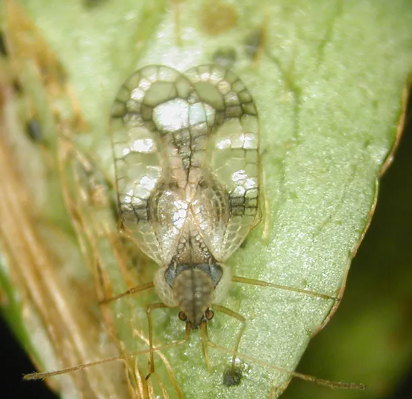
Rhododendron Lace Bugs (Stephanitis rhododendri) are tiny sap-sucking insects that feed primarily on rhododendrons and related ornamental plants. These pests are among the most common and destructive insects affecting rhododendrons in residential landscapes, botanical gardens, and nurseries. By feeding on leaf tissue, they remove chlorophyll and cause characteristic stippling, discoloration, and reduced plant vigor. Heavy infestations can severely diminish the ornamental value of affected shrubs.
Taxonomy and Classification
Rhododendron lace bugs belong to the order Hemiptera and the family Tingidae, commonly known as lace bugs. Members of this family are distinguished by their ornate, lace-like wings and flattened bodies.
- Order: Hemiptera
- Family: Tingidae
- Genus: Stephanitis
- Species: Stephanitis rhododendri
Several related species attack azaleas, mountain laurels, and other members of the heath family (Ericaceae).
Physical Description
Adult rhododendron lace bugs are very small insects, typically measuring between 3 and 4 mm in length.
- Adult (Key ID): Flattened, cream-colored to pale brown insect with delicate, transparent wings that resemble lace or stained glass.
- Head and Thorax: Covered by a distinctive hood-like extension.
- Nymph (Key ID): Dark-colored, wingless, and covered with numerous sharp spines.
- Eggs: Inserted into leaf tissue along veins and often covered with dark, varnish-like material.
- Conflict: Ornamental, Landscape Pest.
Distribution and Habitat
Rhododendron lace bugs are native to eastern North America but are now widely distributed throughout ornamental landscapes across the United States and other temperate regions.
Preferred habitats include:
- Residential landscapes
- Nurseries and garden centers
- Botanical gardens
- Parks and public gardens
- Woodland landscapes
Infestations are generally most severe on plants growing in full sun, where higher temperatures favor rapid population growth.
Life Cycle
Rhododendron lace bugs undergo incomplete metamorphosis consisting of egg, nymph, and adult stages.
Egg Stage
Females insert eggs into leaf tissue, usually on the undersides of leaves along major veins. Eggs overwinter within the foliage.
Nymph Stage
Nymphs hatch in spring and begin feeding immediately. They undergo several molts before becoming adults.
Adult Stage
Adults remain primarily on the undersides of leaves, where they continue feeding and reproducing. Multiple generations may occur annually, particularly in warmer climates.
Damage and Symptoms
Lace bugs feed by piercing leaf cells and extracting their contents, resulting in distinctive symptoms.
Leaf Stippling
The upper surface of infested leaves develops numerous tiny white, yellow, or pale green spots known as stippling.
Chlorosis and Bronzing
As feeding continues, stippling becomes more extensive and leaves may appear bleached, yellowed, or bronzed.
Tar Spots
The undersides of infested leaves become covered with small, shiny black spots of excrement. These “tar spots” are one of the most reliable signs of infestation.
Reduced Plant Vigor
Severe infestations reduce photosynthesis, weaken shrubs, decrease flowering, and increase susceptibility to environmental stress.
Behavior and Ecology
Rhododendron lace bugs spend nearly their entire lives on the undersides of leaves.
- Underside Feeding: Both nymphs and adults feed primarily beneath leaves.
- Sun Preference: Populations thrive on shrubs planted in sunny locations.
- Aggregation: Nymphs often cluster together near leaf veins.
- Host Specificity: Rhododendrons and related ericaceous plants are preferred hosts.
Management and Control
Integrated pest management provides the most effective and sustainable control.
Cultural Control
- Plant rhododendrons in partial shade whenever possible.
- Maintain proper irrigation and mulching to reduce plant stress.
- Select resistant cultivars when available.
Mechanical Control
- Use a strong stream of water to dislodge nymphs from leaf undersides.
- Remove heavily infested foliage when practical.
Biological Control
Natural enemies include:
- Lady beetles
- Lacewing larvae
- Predatory bugs
- Spiders
Conserving beneficial insects can significantly reduce lace bug populations.
Chemical Control
Insecticidal soaps and horticultural oils are effective against nymphs when thorough coverage of leaf undersides is achieved. For severe infestations on valuable shrubs, systemic insecticides applied as soil drenches may provide season-long control.
Prevention
Proper site selection is the most effective long-term management strategy. Rhododendrons grown under partial shade with adequate moisture are generally less susceptible to damaging infestations.
Economic Importance
Although lace bugs rarely kill established rhododendrons, they significantly reduce the aesthetic value of ornamental landscapes and can result in costly treatments or plant replacement in nurseries and high-value landscapes.
Research and Conservation
Current research focuses on identifying resistant rhododendron cultivars, improving biological control programs, and developing environmentally sustainable management strategies for ornamental landscapes.