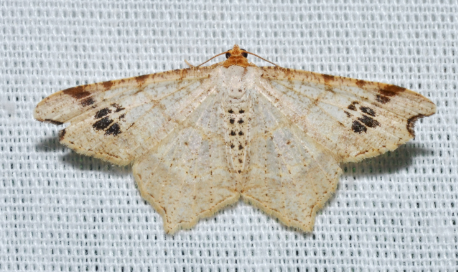
The Promiscuous Angle Moth (Macaria promiscuata) is a species of moth belonging to the Geometridae family, commonly known as the geometer moths. These moths are part of a large group of insects recognized for their slender bodies, triangular wings, and distinctive resting posture. While the Promiscuous Angle Moth is generally not considered a major structural pest, it occasionally appears around homes and gardens where outdoor lighting attracts adult moths.
Like many moth species, the Promiscuous Angle Moth plays a role in natural ecosystems as both a pollinator and as prey for birds, bats, and other insect predators. Its larvae feed on certain plants and shrubs, though infestations rarely reach levels that cause serious damage.
Scientific Classification
- Kingdom: Animalia
- Phylum: Arthropoda
- Class: Insecta
- Order: Lepidoptera
- Family: Geometridae
- Genus: Macaria
- Species: Macaria promiscuata
Physical Description
The Promiscuous Angle Moth is a relatively small moth species characterized by subtle coloring that helps it blend into bark, leaves, and natural surroundings.
- Wingspan: Typically ranges from about 20–30 mm.
- Coloration: Light brown, tan, or grayish tones with darker lines or angular markings.
- Wing Shape: Triangular with angled edges typical of geometer moths.
- Body: Slender body with delicate legs and antennae.
- Camouflage: Their coloration provides excellent camouflage against tree bark and foliage.
Adults typically rest with wings spread flat, making the angular patterns on their wings more visible.
Larval Stage (Caterpillar)
The caterpillars of the Promiscuous Angle Moth are often referred to as inchworms due to the way they move. Like other members of the Geometridae family, they lack some of the middle prolegs found in other caterpillars, which causes their distinctive looping motion.
- Green or brown coloration helps larvae blend with host plants.
- Slender body that mimics twigs or stems.
- Feeds on leaves of various trees and shrubs.
- Typically active during the growing season.
This camouflage helps protect them from predators such as birds and parasitic insects.
Distribution and Habitat
The Promiscuous Angle Moth is found across parts of North America, particularly in regions with wooded areas, forests, and suburban landscapes where host plants are abundant.
- Forests and wooded habitats
- Suburban yards and gardens
- Parks and natural landscapes
- Areas with shrubs and deciduous trees
Adults are most commonly seen during warm months when they are active at night and attracted to artificial lights.
Behavior
The Promiscuous Angle Moth is primarily nocturnal. Adult moths become active at night to feed, mate, and lay eggs.
- Adults are strongly attracted to outdoor lighting.
- Eggs are typically laid on host plants.
- Larvae feed on leaves before pupating.
- Overwintering may occur in the pupal stage depending on climate.
Like many moths, this species contributes to the nighttime pollination of certain plants.
Are Promiscuous Angle Moths Pests?
In most situations, the Promiscuous Angle Moth is not considered a serious pest. However, large numbers of larvae may occasionally feed on ornamental plants or shrubs.
- Rarely causes serious plant damage.
- Adult moths may accumulate around lights.
- Larvae occasionally feed on garden foliage.
- Generally controlled by natural predators.
If caterpillars become numerous, homeowners may wish to monitor plant health and consider basic DIY pest control methods.
Prevention and Control
Because this moth rarely becomes a significant pest, management typically focuses on simple prevention and monitoring rather than aggressive treatment.
- Reduce outdoor lighting that attracts adult moths.
- Inspect plants for inchworm larvae.
- Encourage natural predators such as birds.
- Remove larvae manually if populations become high.
For larger infestations affecting landscape plants, homeowners may consider consulting a local pest control professional.
Ecological Importance
Despite their occasional nuisance status, moths like the Promiscuous Angle Moth play important roles in ecosystems.
- Serve as food for birds, bats, and other wildlife.
- Help pollinate certain plants.
- Support biodiversity in forest ecosystems.
Because of this ecological role, pest management should focus on balanced control strategies rather than elimination.