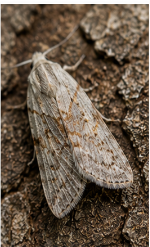
Paler Diacme Moths (Diacme elealis) are small nocturnal moths belonging to the family Crambidae, a large family commonly referred to as grass moths or crambid moths. Although they are not among the best-known North American moths, they are widespread in suitable habitats and contribute to healthy ecosystems by serving as pollinators, herbivores, and prey for numerous wildlife species. Their pale tan coloration and delicate wing markings provide excellent camouflage among grasses, dried vegetation, and woodland leaf litter.
Unlike some members of the Crambidae family that are significant agricultural pests, the Paler Diacme Moth is not considered an economically important pest. Its caterpillars feed naturally on wild vegetation without causing noticeable injury to crops, ornamental plants, or forests. Adults are harmless and are most commonly observed resting on vegetation during the day or flying around outdoor lights after dark.
Overview
The family Crambidae includes more than 10,000 species worldwide, occupying habitats ranging from wetlands and forests to grasslands and agricultural fields. The genus Diacme contains several small moths that are generally inconspicuous because of their muted colors and nocturnal behavior.
Paler Diacme Moths are an excellent example of the many native insects that quietly perform valuable ecological functions while attracting little attention from homeowners. They rarely occur in large numbers and do not become nuisance pests.
Taxonomy and Classification
- Order: Lepidoptera
- Family: Crambidae
- Subfamily: Spilomelinae
- Genus: Diacme
- Species: Diacme elealis
- Common Name: Paler Diacme Moth
Like all moths and butterflies, the Paler Diacme Moth undergoes complete metamorphosis, developing through egg, larva, pupa, and adult stages.
Identification
Paler Diacme Moths are relatively small with narrow wings and subtle markings that blend well with dried grasses and bark.
- Wingspan: Approximately 18–25 mm.
- Color: Pale tan, beige, cream, or light brown.
- Wing Pattern: Fine dark bands or faint crosslines.
- Body: Slender with smooth scales.
- Antennae: Thin and threadlike.
- Resting Position: Wings folded roof-like over the abdomen.
The overall appearance is understated, making the moth difficult to distinguish from many other small crambid species without close examination.
Larval Identification
The caterpillars are slender, well-camouflaged larvae that spend most of their time concealed within surrounding vegetation.
- Body: Narrow and cylindrical.
- Color: Green, pale brown, or yellow-green.
- Head: Small with chewing mouthparts.
- Behavior: Feed quietly on leaves and tender plant tissue.
Because of their excellent camouflage, the larvae are seldom observed unless vegetation is carefully inspected.
Distribution and Habitat
The Paler Diacme Moth occurs throughout portions of North America where suitable habitat and host plants are available.
Typical habitats include:
- Woodland edges
- Open meadows
- Native grasslands
- Prairies
- Pastures
- Parks
- Roadside vegetation
- Natural preserves
Adults often remain hidden during the day and become active only after sunset.
Life Cycle
Female moths lay eggs on or near suitable host plants. After hatching, the caterpillars begin feeding immediately on available foliage.
As they grow, the larvae pass through several molts before pupating within protected silken shelters among leaf litter or low vegetation. Adult moths emerge during warm weather, mate, and continue the annual life cycle.
Depending on climate and local conditions, one or more generations may occur each year.
Feeding Habits
Larvae
Although the complete host range remains incompletely documented, the caterpillars primarily consume herbaceous vegetation and naturally occurring grasses.
Likely food sources include:
- Native grasses
- Low-growing herbaceous plants
- Wildflowers
- Various meadow plants
Feeding damage is generally insignificant and does not threaten healthy vegetation.
Adults
Adult moths may feed on flower nectar, plant secretions, or other sugary liquids that provide energy for reproduction and flight.
While feeding, they may contribute modestly to nighttime pollination.
Behavior and Ecology
Paler Diacme Moths are strictly nocturnal, leaving their daytime resting places shortly after sunset.
Adults are frequently attracted to:
- Porch lights
- Security lighting
- Landscape lighting
- Illuminated windows
During daylight hours they depend on camouflage to remain concealed among dried grasses and woodland vegetation.
Damage and Pest Status
The Paler Diacme Moth is not considered a pest species.
Its caterpillars rarely occur in sufficient numbers to damage vegetation, and adults pose no threat to homes, businesses, agriculture, or ornamental landscapes.
They do not infest:
- Stored foods
- Furniture
- Clothing
- Wood structures
- Houseplants
Most encounters occur when adults are attracted to lights during warm evenings.
Integrated Pest Management (IPM)
No pest management is typically required.
If homeowners wish to reduce moth activity around buildings, simple non-chemical measures include:
- Reducing unnecessary exterior lighting.
- Using warm-colored or yellow outdoor light bulbs.
- Maintaining tight-fitting window screens.
- Keeping exterior doors closed during evening hours.
Broad-spectrum insecticides should be avoided because they provide little benefit while harming beneficial insects and pollinators.
Natural Predators
Paler Diacme Moths are an important food source for numerous animals.
- Songbirds
- Bats
- Spiders
- Ground beetles
- Praying mantises
- Parasitic wasps
- Predatory flies
These natural enemies help regulate populations and maintain ecological balance.
Ecological Importance
Although small and easily overlooked, Paler Diacme Moths contribute to healthy ecosystems by recycling plant material, supporting pollination, and serving as prey for higher levels of the food web.
Their presence reflects the biodiversity of native grasslands, meadows, and woodland-edge habitats.
Conservation and Research
Researchers continue studying members of the genus Diacme to better understand their taxonomy, life history, host plant preferences, and ecological roles within natural habitats.
Protecting native grasslands, preserving woodland edges, and minimizing unnecessary pesticide use help conserve these beneficial moths and many associated wildlife species.
Conclusion
Paler Diacme Moths (Diacme elealis) are harmless native insects that quietly inhabit meadows, woodland edges, and grasslands throughout portions of North America. Their caterpillars feed modestly on natural vegetation without causing significant damage, while adults contribute to pollination and provide an important food source for birds, bats, and other wildlife.
Rather than being viewed as pests, these small crambid moths should be appreciated as valuable members of healthy native ecosystems.