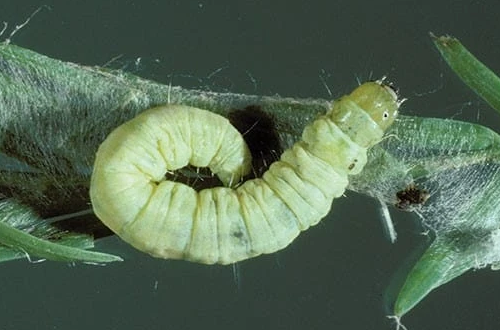
Leafroller Caterpillars are the larvae of numerous small moth species, most commonly members of the family Tortricidae. They receive their name from their distinctive habit of using silk to roll, fold, or tie leaves together, creating a protected shelter where they feed and develop. Leafrollers can become important pests of fruit trees, berries, vegetables, ornamental shrubs, shade trees, and agricultural crops.
Unlike caterpillars that feed openly on foliage, Leafroller Caterpillars spend much of their development concealed inside leaves held together with silk. This behavior protects them from weather, predators, and some pesticide applications. Damage can range from minor leaf injury to serious economic losses when caterpillars attack flower buds or developing fruit. Apples, pears, peaches, cherries, grapes, berries, and many ornamental plants may be affected by different leafroller species.
Taxonomy and Classification
Leafroller Caterpillars belong primarily to the moth family Tortricidae within the order Lepidoptera. Tortricidae is a large and diverse family containing thousands of species worldwide.
- Kingdom: Animalia
- Phylum: Arthropoda
- Class: Insecta
- Order: Lepidoptera
- Family: Tortricidae
- Common Group: Leafroller Caterpillars
One important North American example is the Obliquebanded Leafroller (Choristoneura rosaceana), a widespread pest of fruit trees and other woody plants. Other economically important species include various fruit-tree leafrollers and tortricid moths adapted to particular crops or regions.
Leafrollers undergo complete metamorphosis, progressing through egg, larva, pupa, and adult moth stages.
Physical Description
Leafroller Caterpillars are usually approximately 1/2 to 1 inch long when mature, although size varies considerably among species. Most are relatively slender and smooth compared with heavily hairy caterpillars.
- Color: Commonly green, yellowish-green, cream, tan, or pale brown.
- Head: Usually has a clearly defined brown, tan, or black head capsule.
- Body: Smooth, elongated, and relatively slender.
- Behavior: Caterpillars frequently wriggle violently when disturbed.
- Silk: Larvae produce silk for constructing shelters and escaping predators.
A particularly useful identification clue is their rapid escape response. When a rolled leaf is opened, the caterpillar inside may twist violently, crawl backward, or suddenly drop from the plant while suspended from a silken thread.
The Rolled-Leaf Shelter
The characteristic shelter provides one of the easiest ways to recognize a Leafroller infestation. Depending on the species and host plant, a caterpillar may roll an entire leaf, fold one edge over, tie several leaves together, or attach a leaf to developing fruit.
Fine strands of silk hold the structure together. The caterpillar remains inside and feeds on the protected foliage. Frass and feeding debris may accumulate within the shelter.
This protection also makes established caterpillars more difficult to reach with contact insecticides, which is why early detection is important.
Distribution and Habitat
Leafroller moths occur throughout much of the world. Different species are associated with particular climates, regions, and host plants.
They may occur in:
- Commercial orchards
- Vineyards
- Berry farms
- Vegetable production areas
- Residential gardens
- Nurseries
- Woodlands
- Parks and landscaped areas
Larvae are usually concentrated around foliage, buds, flowers, and new terminal growth. Fruit-feeding species may construct shelters where leaves touch the surface of developing fruit.
Life Cycle
The exact life cycle varies among species. Female moths generally deposit eggs on leaves, bark, twigs, or other surfaces near suitable host plants.
After hatching, young caterpillars begin feeding and eventually create silken shelters. The larvae pass through several growth stages before pupating, frequently within a rolled leaf or another protected location.
Adult moths emerge, mate, and begin another generation. Depending on species and climate, Leafrollers may produce one or several generations per year.
Some species overwinter as eggs, while others survive winter as partially developed larvae in protected locations on the host plant.
Leaf Damage
Foliage damage is often the first noticeable symptom. Caterpillars chew irregular holes or consume sections of leaves while remaining inside their shelters.
Common signs include:
- Rolled or folded leaves
- Leaves tied together with silk
- Chewed foliage
- Damaged growing tips
- Frass inside leaf shelters
- Silken webbing around leaves or fruit
Mature trees can usually tolerate moderate leaf feeding. Young plants and heavily infested ornamentals may experience reduced growth or noticeable defoliation.
Fruit Damage
Direct feeding on fruit is often more economically important than foliage loss. Caterpillars may feed where a leaf touches an apple, pear, peach, or other fruit, allowing them to remain partially concealed while scraping the fruit surface.
Damage may include shallow feeding scars, corky patches, irregular cavities, and distorted areas. Injuries occurring when fruit is young can expand as it grows, producing large scars by harvest.
The fruit may remain edible, but cosmetic damage can reduce its commercial grade or make it unsuitable for fresh-market sale.
Monitoring and Early Detection
Regular inspection is an important part of Leafroller management. Look for folded leaves, silk, feeding injury, and small caterpillars around new growth.
Pheromone traps are widely used in orchards and commercial agriculture to monitor adult male moth activity. Trap catches can help growers determine when particular species are flying and estimate when eggs are likely to hatch.
This information is valuable because young larvae are generally easier to control before they construct protective leaf shelters.
Management and Prevention
Leafroller control is best approached through Integrated Pest Management (IPM), combining monitoring, biological control, sanitation, and targeted treatments when necessary.
Mechanical Control
On small trees and ornamental plants, rolled leaves can often be removed by hand. Infested leaves may be crushed or discarded before the caterpillars complete development.
Pruning heavily infested terminal growth can also reduce localized populations, although unnecessary pruning should be avoided.
Biological Control
Leafrollers have numerous natural enemies, including parasitic wasps, predatory insects, spiders, and birds. Avoiding unnecessary broad-spectrum pesticides helps preserve these beneficial organisms.
Bacillus thuringiensis var. kurstaki, commonly called Bt, is a biological insecticide frequently used against young caterpillars. The larvae must consume treated plant material for Bt to work, making proper timing and coverage important.
Chemical Control
When insecticides are necessary, treatments are generally most effective against small, newly hatched larvae. Once caterpillars are enclosed within tightly rolled leaves, contact treatments may provide poorer control.
Products should always be selected according to the host plant, target species, local regulations, and label directions.
Mating Disruption
Commercial orchards may use mating disruption as part of an IPM program. Synthetic versions of female moth pheromones are distributed throughout the growing area, interfering with the ability of males to locate females.
Reducing successful mating can lower the number of eggs and caterpillars produced during subsequent generations. This technique can reduce dependence on conventional insecticides when used as part of a coordinated management program.
Conservation and Research
Leafroller Caterpillars include both economically important pests and native moth species that form part of natural ecosystems. Research focuses on improved pheromone monitoring, mating disruption, biological insecticides, parasitoid conservation, and more precise treatment timing.
The goal of modern management is not necessarily to eliminate every Leafroller Caterpillar but to keep damaging species below levels that cause unacceptable crop or landscape injury while conserving beneficial insects.
Conclusion
Leafroller Caterpillars are easily recognized by their habit of rolling, folding, or tying leaves together with silk. While moderate foliage feeding may cause little lasting harm, infestations can become economically important when caterpillars attack buds, new growth, and developing fruit.
Regular inspection and early detection provide the best opportunity for successful management. Pheromone monitoring, removal of infested leaves, conservation of natural enemies, Bt applications, mating disruption, and carefully timed insecticides can all play important roles in an effective Leafroller IPM program.