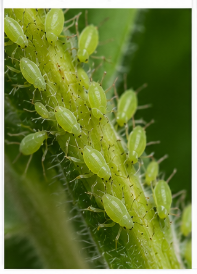
Lupine Aphids (Macrosiphum albifrons) are large, distinctive aphids strongly associated with plants in the genus Lupinus, commonly known as lupines. These sap-feeding insects can develop extremely dense colonies on stems, leaves, developing buds, and flower spikes. Because populations can increase rapidly, a relatively small infestation may develop into hundreds of aphids covering the upper portions of a plant.
Lupine Aphids are particularly important pests of ornamental lupines, where their feeding can cause stunted growth, distorted stems, damaged flower spikes, reduced flowering, and premature decline. Large colonies also produce considerable quantities of sticky honeydew, which can coat foliage and encourage the development of black sooty mold. Aphids can additionally contribute to the spread of certain plant viruses, making early detection particularly important in gardens and plantings where lupines are highly valued.
Taxonomy and Classification
Lupine Aphids belong to the order Hemiptera and family Aphididae. Like other aphids, they possess specialized piercing-sucking mouthparts that allow them to penetrate plant tissues and feed on phloem sap.
- Kingdom: Animalia
- Phylum: Arthropoda
- Class: Insecta
- Order: Hemiptera
- Family: Aphididae
- Genus: Macrosiphum
- Species: Macrosiphum albifrons
- Common Name: Lupine Aphid
Lupine Aphids undergo incomplete metamorphosis, developing through egg, nymph, and adult stages without a pupal stage. During favorable conditions, females can reproduce without mating through parthenogenesis, producing living female nymphs rather than laying eggs. This reproductive strategy allows populations to increase extremely quickly.
Physical Description
Lupine Aphids are among the more conspicuous aphids found on ornamental plants. Adults can approach approximately 1/8 to 1/4 inch in length and are considerably easier to see than many smaller aphid species.
- Color: Pale green, bluish-green, gray-green, or occasionally pinkish
- Body: Soft-bodied and somewhat pear-shaped
- Antennae: Very long and typically darker than the body
- Cornicles: Long, prominent tubes projecting from the rear of the abdomen
- Surface: May have a pale or powdery appearance
- Colonies: Frequently occur in dense groups covering stems and flower spikes
The combination of their relatively large size, long appendages, pale coloration, and association with lupines makes established colonies fairly distinctive.
Distribution and Habitat
Lupine Aphids occur in regions where suitable Lupinus species grow. They may be encountered on ornamental lupines in gardens and landscaped areas as well as on wild lupines in natural habitats.
Typical locations include:
- Residential flower gardens
- Perennial borders
- Native plant gardens
- Meadows
- Roadside plantings
- Nurseries
- Wild lupine populations
Colonies frequently concentrate around young, actively growing plant tissue. Tender shoots and developing flower stems provide abundant sap and are particularly vulnerable to deformation when large numbers of aphids feed simultaneously.
Life Cycle and Reproduction
The rapid reproductive ability of aphids is one reason infestations can appear to develop almost overnight. Under favorable spring and summer conditions, adult females may produce live nymphs without mating.
The newborn nymphs resemble smaller versions of the adults and immediately begin feeding. They molt several times before reaching maturity and producing additional offspring.
When colonies become overcrowded or host quality declines, winged adults may develop. These individuals can leave the original plant and disperse to other suitable lupines, allowing infestations to spread through a garden or larger planting.
Feeding Damage
Lupine Aphids insert their mouthparts into plant tissues and withdraw nutrient-rich sap. Individual aphids remove relatively little material, but hundreds feeding together can place considerable stress on growing plants.
Common symptoms include:
- Stunted terminal growth
- Twisted or distorted stems
- Curled or malformed leaves
- Weak flower stalks
- Reduced flowering
- Aborted buds
- Premature yellowing
- General loss of plant vigor
Young lupines and plants already stressed by drought, poor soil, root problems, or other pests may be particularly vulnerable.
Honeydew and Sooty Mold
Because plant sap contains more sugars than aphids require, Lupine Aphids excrete excess sugar as a sticky liquid called honeydew. Heavy colonies may coat stems, leaves, and nearby surfaces with this material.
Honeydew encourages the growth of sooty mold, a group of dark fungi that grow on sugary deposits rather than directly infecting plant tissue. Affected plants may develop a blackened or dirty appearance.
Honeydew also attracts ants. Ants may actively protect aphid colonies from ladybugs, lacewing larvae, and other natural enemies in exchange for access to the sugary secretion.
Plant Virus Transmission
Aphids are important vectors of numerous plant viruses. As an aphid moves between plants and probes plant tissues with its mouthparts, viral particles can sometimes be transferred from an infected host to a healthy one.
For this reason, controlling aphids does not always reverse damage once a virus has become established. Plants showing persistent mosaic patterns, unusual discoloration, severe distortion, or unexplained decline may require closer examination for disease as well as aphid activity.
Inspection and Monitoring
Regular inspection provides the best opportunity to control Lupine Aphids before colonies become overwhelming. Examine plants particularly closely during periods of rapid spring growth.
Check:
- New shoots
- Flower stalks
- Developing buds
- Leaf undersides
- Stem junctions
Look not only for aphids but also for sticky honeydew, ants, white shed skins, distorted growth, and black sooty mold.
Management and Prevention
Lupine Aphids can usually be managed through an Integrated Pest Management (IPM) program combining physical removal, natural predators, plant care, and selective treatments when necessary.
Physical Removal
Small colonies can often be removed with a strong stream of water. Direct the spray toward infested stems and the undersides of leaves. Repeated treatment may be necessary because surviving aphids can quickly rebuild the population.
Severely infested flower spikes or shoots can also be pruned and discarded.
Natural Predators
Lupine Aphids provide food for numerous beneficial organisms, including:
- Ladybugs
- Lacewing larvae
- Hoverfly larvae
- Predatory bugs
- Parasitic wasps
- Spiders
Parasitized aphids may become swollen, brown or tan structures known as aphid mummies. These should generally be left in place because a beneficial parasitoid may emerge from them.
Insecticidal Soap and Horticultural Oil
Insecticidal soaps and horticultural oils can provide effective suppression when they make direct contact with the aphids. Dense colonies must be thoroughly covered, including insects hidden around stems and beneath leaves.
Because these products have limited residual activity, follow-up applications may be necessary. Always follow label directions and avoid treating plants under environmental conditions that could increase the risk of foliage injury.
Systemic Insecticides
Systemic insecticides may control persistent aphid infestations by moving through plant tissues. However, special caution is necessary with flowering lupines because systemic residues may potentially expose bees and other pollinators visiting the flowers.
Whenever possible, lower-impact management methods should be considered before treating blooming plants.
Preventing Future Infestations
Maintain healthy lupines with appropriate irrigation, drainage, sunlight, and soil conditions. Avoid excessive nitrogen fertilizer, which can encourage large amounts of tender growth that is attractive to aphids.
Inspect new plants before introducing them into established beds, and monitor lupines regularly during periods when aphid populations are increasing.
Conservation and Research
Lupine Aphids are important subjects in ornamental and ecological pest management because their host plants include both cultivated and wild lupines. Research includes the study of aphid population dynamics, natural enemies, plant-virus relationships, resistant lupine varieties, and the effects of aphid feeding on native plant communities.
Modern management increasingly emphasizes protecting beneficial insects while keeping aphid populations below damaging levels rather than attempting to eliminate every aphid from the landscape.
Conclusion
Lupine Aphids (Macrosiphum albifrons) are unusually large aphids that can form dense colonies on lupine stems, leaves, buds, and flower spikes. Their feeding can stunt plants, distort flowers, reduce vigor, produce large amounts of honeydew, encourage sooty mold, and contribute to plant disease problems.
Early detection is the key to effective control. Water sprays, removal of heavily infested growth, conservation of ladybugs and other predators, insecticidal soaps, horticultural oils, and careful use of additional treatments can prevent populations from reaching damaging levels while protecting the pollinators and beneficial insects that visit lupine plantings.