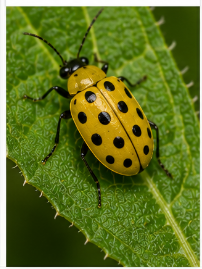
Lupine Beetles is a broad common name that may refer to several beetles associated with plants in the genus Lupinus. In pest-management discussions, the most important species are often Lupine Seed Weevils in the genus Tychius and certain leaf beetles that specialize in feeding on lupines. These insects can damage foliage, flowers, seed pods, and developing seeds, depending on the species involved.
Seed-feeding weevils are especially important because their larvae develop inside lupine seed pods and consume the seeds before they mature. This type of damage can reduce seed yield in cultivated lupine crops and interfere with the natural reproduction of native lupine populations. In conservation settings, heavy seed predation may be particularly serious when rare or localized lupine species depend on limited seed production for recovery.
Taxonomy and Classification
Lupine-associated beetles may belong to more than one beetle family. Seed-feeding Lupine Weevils are generally members of the family Curculionidae, while foliage-feeding species may belong to the family Chrysomelidae.
- Kingdom: Animalia
- Phylum: Arthropoda
- Class: Insecta
- Order: Coleoptera
- Primary Weevil Family: Curculionidae
- Important Weevil Genus: Tychius
- Possible Leaf Beetle Family: Chrysomelidae
- Host Plants: Lupinus species
These beetles undergo complete metamorphosis, passing through egg, larval, pupal, and adult stages. In seed-feeding species, the larval stage is responsible for the most important damage.
Physical Description
Adult Lupine Seed Weevils are small, compact beetles typically measuring around 1/8 inch long. Their small size and muted coloration make them difficult to notice on flowering lupines.
- Size: Commonly around 3 millimeters long
- Color: Brown, gray, black, or mottled
- Body: Small, rounded, and compact
- Surface: Often covered with fine scales or hairs
- Snout: Distinct elongated rostrum typical of weevils
The snout is an important identification feature. Adult females use their mouthparts to chew into developing seed pods before placing eggs in or near the pod tissue.
Larval Identification
The larvae of Lupine Seed Weevils are small, creamy white, legless grubs. They usually remain hidden inside seed pods, making them difficult to detect until the pod is opened.
- Color: Creamy white or pale yellow
- Body: Soft, curved, and legless
- Head: Small brown head capsule
- Location: Inside developing lupine seed pods
- Diet: Developing lupine seeds
The hidden feeding habit protects larvae from weather, predators, and many contact insecticides.
Distribution and Habitat
Lupine-associated beetles occur in regions where lupines grow naturally or are cultivated. Different species are found in North America, Europe, Australia, and other regions where Lupinus species are present.
Typical habitats include:
- Native lupine meadows
- Prairies
- Roadside plantings
- Gardens
- Seed-production fields
- Agricultural lupine crops
- Restoration sites
- Conservation areas
Adult activity is often closely synchronized with flowering and pod development because these stages provide suitable sites for feeding and egg laying.
Life Cycle
Female seed weevils become active when lupine plants begin flowering and producing young seed pods. Adults may feed on flowers, tender plant tissue, or developing pods before reproduction.
The typical life cycle includes:
- Egg: Females place eggs in or near developing pods.
- Larva: The newly hatched grub moves into the pod and begins feeding on seeds.
- Mature Larva: After completing development, the larva leaves the pod.
- Pupa: Pupation usually occurs in soil or protected debris near the host plant.
- Adult: New beetles emerge and eventually seek suitable lupine hosts.
The exact timing varies according to species, climate, and host-plant development.
Seed Damage
Seed destruction is the most important type of damage associated with Lupine Seed Weevils. Larvae feed directly on developing seeds inside the protective pod.
Common signs include:
- Small punctures on green seed pods
- Internal seed tunneling
- Hollow or partially consumed seeds
- Damaged seed embryos
- Reduced seed weight
- Lower germination rates
- Seeds that fail to develop completely
Because the larvae feed internally, pods may appear relatively normal from the outside while containing heavily damaged seeds.
Impact on Agriculture
Cultivated lupines may be grown for seed, animal feed, ornamental use, or other agricultural purposes. When seed-feeding beetles become abundant, they can substantially reduce the amount of viable seed harvested.
Potential agricultural consequences include:
- Reduced seed yield
- Lower seed quality
- Poor germination
- Increased sorting costs
- Reduced market value
- Higher pest-management expenses
Seed crops are particularly vulnerable because even moderate internal damage may make the harvested product unsuitable for planting.
Impact on Native Lupines
Seed predation may also be important in natural and restored lupine populations. Native lupines serve as food and habitat for a wide range of insects, including specialized butterflies and other wildlife.
When seed production is already limited by drought, poor pollination, habitat fragmentation, or small population size, additional losses caused by beetles may reduce successful recruitment of new plants.
This makes Lupine Seed Weevils particularly important in conservation programs involving rare or vulnerable lupine populations.
Foliage-Feeding Lupine Beetles
Not every beetle referred to as a Lupine Beetle feeds on seeds. Some leaf beetles attack foliage, stems, or flowers instead.
Foliage-feeding damage may include:
- Chewed holes in leaves
- Irregular leaf margins
- Skeletonized foliage
- Damaged flowers
- Reduced plant vigor
Correct identification is important because seed weevils and leaf beetles require different monitoring and management approaches.
Inspection and Monitoring
Monitoring should begin during flowering and continue through early pod development.
Inspect:
- Flower spikes for adult beetles
- Young pods for feeding punctures
- Mature pods for exit holes
- Developing seeds for internal damage
- Soil and plant debris near heavily infested plants
Beating flowering plants over a white tray or sheet may help reveal small adult weevils that would otherwise remain hidden among the foliage.
Management and Prevention
Management depends on whether lupines are being grown ornamentally, agriculturally, or for conservation. An Integrated Pest Management (IPM) approach should combine monitoring, cultural practices, sanitation, and targeted treatment when necessary.
Remove Infested Pods
In small gardens or conservation plantings, heavily infested pods can be removed before larvae complete development. This reduces the number of larvae reaching the soil to pupate.
Infested material should be disposed of away from healthy lupine plants.
Clean Up Plant Debris
Removing old pods and plant debris after seed production may reduce protected sites used by developing or overwintering beetles.
Good sanitation is especially useful where infestations occur repeatedly in the same planting.
Harvest Seed Promptly
Seed intended for propagation should be collected as soon as it is mature enough for harvest. Delaying harvest may allow additional larval feeding or permit mature larvae to leave the pods.
Collected seed should be carefully inspected before storage.
Biological Control
Lupine-associated beetles may be attacked by predators, parasitoids, and naturally occurring pathogens. Potential natural enemies include:
- Parasitic wasps
- Predatory beetles
- Spiders
- Birds
- Entomopathogenic fungi
Avoiding unnecessary broad-spectrum insecticides may help preserve natural enemies that contribute to population suppression.
Chemical Control
Where insecticides are necessary, timing is critical. Once larvae are feeding inside the seed pod, they are protected from many contact treatments.
Applications are therefore generally directed at adult beetles before or during early pod formation, before large numbers of eggs have been deposited.
Special care is needed because lupines may be flowering during the same period that adult beetles are active. Insecticides applied to blooms can harm bees and other pollinators. Products should be selected and timed carefully according to label directions and local recommendations.
Seed Protection in Conservation Programs
Conservation projects may collect seed from important lupine populations before beetle larvae complete development. Harvested material can then be inspected, cleaned, and stored under controlled conditions.
Where appropriate, carefully controlled temperature treatments may be used to eliminate internal insects, but treatment methods must be selected so they do not damage seed viability.
For rare plant populations, seed protection may be combined with propagation in nurseries before young plants are returned to restoration sites.
Conservation and Research
Lupine Beetles are studied both as agricultural pests and as natural seed predators. Research focuses on host specificity, beetle life cycles, natural enemies, treatment timing, resistant lupine varieties, and the effects of seed predation on native plant populations.
In agricultural systems, researchers are interested in lupine varieties whose flowering or seed-development periods do not coincide with peak adult weevil activity. In conservation settings, the goal is often to preserve enough viable seed for natural regeneration without eliminating native insects unnecessarily.
Conclusion
Lupine Beetles include several beetles associated with plants in the genus Lupinus, with Lupine Seed Weevils among the most important pests. Their larvae feed inside developing seed pods, where they can destroy seed embryos and dramatically reduce seed viability.
Damage can be economically important in cultivated lupine seed crops and may also interfere with the recovery of rare native lupine populations. Regular monitoring during flowering and pod development, removal of infested pods, sanitation, prompt seed collection, protection of natural enemies, and carefully timed adult control can reduce losses while limiting unnecessary pesticide use.