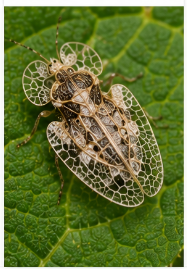
Lace Bugs are small, sap-feeding insects belonging to the family Tingidae. They receive their common name from the delicate, lace-like pattern covering their wings and the expanded plate behind the head. Although adults are only a fraction of an inch long, large populations can cause highly visible damage to ornamental trees and shrubs.
Lace Bugs feed almost entirely on the undersides of leaves, where they pierce plant cells and remove fluids containing chlorophyll. This feeding produces pale yellow or white spots on the upper leaf surface. As damage accumulates, the foliage may appear bleached, gray, bronzed, or unhealthy. Lace Bugs rarely kill mature plants, but repeated heavy infestations can reduce plant vigor, cause premature leaf drop, and significantly affect the appearance of valuable landscape plants.
Taxonomy and Classification
Lace Bugs belong to the order Hemiptera, commonly known as the true bugs. Members of this order have piercing-sucking mouthparts that allow them to feed on plant or animal fluids.
- Kingdom: Animalia
- Phylum: Arthropoda
- Class: Insecta
- Order: Hemiptera
- Family: Tingidae
- Common Name: Lace Bugs
Lace Bugs undergo incomplete metamorphosis, progressing through egg, nymph, and adult stages. There is no pupal stage. Many species are highly host-specific and are named for the plant they most commonly attack.
Important examples include Azalea Lace Bugs, Sycamore Lace Bugs, Oak Lace Bugs, Hawthorn Lace Bugs, and Rhododendron Lace Bugs.
Physical Description
Adult Lace Bugs are small, flat, and oval-shaped, usually measuring approximately 1/8 to 1/4 inch long. Their most distinctive feature is the transparent, net-like structure of the wings and pronotum.
- Length: Approximately 3–6 millimeters
- Shape: Flat, oval, and delicate
- Color: Pale brown, cream, gray, or translucent
- Wings: Covered with raised veins forming a lace-like pattern
- Mouthparts: Piercing-sucking beak
- Location: Usually found on the underside of leaves
Their patterned wings may help break up the insect’s outline and provide camouflage against the leaf surface.
Lace Bug Nymphs
Nymphs are smaller, darker, and lack fully developed wings. They are often black or brown and may have spiny projections extending from the body.
Young nymphs usually remain in groups near the area where they hatched. As they mature, they spread across the underside of the leaf and continue feeding.
Shed nymphal skins often remain attached to the foliage and may accumulate alongside adults, eggs, and dark fecal spots.
Distribution and Habitat
Lace Bugs occur throughout much of the world and are found wherever suitable host plants grow. Many species are native insects associated with native trees and shrubs, while others have expanded their range through the movement of ornamental plants.
Common habitats include:
- Residential landscapes
- Public gardens
- Parks
- Nurseries
- Woodlands
- Street-tree plantings
- Commercial landscapes
- Botanical collections
Lace Bugs often become most abundant on plants growing in hot, sunny, or drought-stressed locations. Azaleas planted in full sun, for example, may suffer more severe damage than the same plants grown in suitable partial shade.
Host Plants
Different Lace Bug species specialize on particular plants. Commonly affected hosts include:
- Azaleas
- Rhododendrons
- Sycamores
- Oaks
- Hawthorns
- Mountain laurels
- Andromedas
- Cotoneasters
- Elms
- Walnuts
Finding Lace Bugs on one plant does not necessarily mean that neighboring plant species will also become infested. Correct identification of both the insect and host plant can help determine the likely species involved.
Life Cycle
Female Lace Bugs deposit eggs in or on the underside of leaves. Some species insert eggs into leaf tissue and cover them with a dark protective material.
The life cycle consists of:
- Egg: Eggs are placed near feeding sites on the host plant.
- Nymph: Young insects hatch and begin feeding immediately.
- Adult: Winged adults continue feeding, mating, and laying eggs.
Several generations may develop during a single growing season in warm climates. Some species overwinter as eggs in leaves, while others survive as adults in bark crevices, leaf litter, or protected areas near the host plant.
Feeding Damage
Both adults and nymphs feed by inserting their mouthparts into leaf cells and removing plant fluids. Because feeding occurs on the underside of the leaf, the insects may remain unnoticed until damage appears on the upper surface.
Common symptoms include:
- Fine yellow or white stippling
- Bleached or gray foliage
- Bronzing of leaves
- Reduced plant vigor
- Premature leaf drop
- Dark fecal spots beneath leaves
- Shed nymphal skins
Early damage may resemble spider mite feeding, nutrient deficiency, or drought stress. The presence of Lace Bugs and tar-like fecal spots on the leaf underside helps confirm the diagnosis.
Fecal Spots
One of the most reliable signs of Lace Bug activity is the presence of small, shiny, black or dark brown fecal spots beneath infested leaves. These spots may resemble tiny drops of tar or varnish.
Fecal material often occurs alongside eggs, shed skins, nymphs, and adults. Heavy infestations can cover much of the lower leaf surface.
Impact on Plant Health
Lace Bug damage is usually cosmetic, particularly on mature trees. However, repeated infestations can reduce photosynthesis and place additional stress on plants already affected by drought, root problems, poor soil, or improper planting conditions.
Young plants, newly transplanted shrubs, and high-value ornamentals may suffer more serious consequences. Severe feeding may cause extensive discoloration and early leaf loss.
Inspection and Monitoring
Inspect susceptible plants during spring and summer, paying close attention to the undersides of leaves.
Look for:
- Adults with lace-like wings
- Dark, spiny nymphs
- Black fecal spots
- Shed skins
- White or yellow stippling above
- Leaf bronzing or bleaching
Monitoring should begin before severe discoloration develops because established infestations are more difficult to control.
Management and Prevention
Lace Bug control is most effective when plant health, natural enemies, direct treatment, and proper timing are combined through an Integrated Pest Management approach.
Maintain Plant Health
- Water plants deeply during dry weather.
- Apply mulch to conserve soil moisture.
- Avoid excessive fertilizer.
- Plant susceptible species in appropriate light conditions.
- Reduce unnecessary root and soil disturbance.
Healthy plants are better able to tolerate feeding and recover from damage.
Use Resistant Plants
When possible, select resistant or tolerant cultivars. Replacing repeatedly damaged plants with less susceptible alternatives may provide the best long-term solution.
Water Sprays
A strong stream of water directed at the undersides of leaves may dislodge some adults and nymphs from small shrubs. This method may need to be repeated and is most useful during light infestations.
Insecticidal Soap and Horticultural Oil
Insecticidal soap and horticultural oil can suppress Lace Bugs through direct contact. Complete coverage of the leaf underside is essential because the insects remain protected beneath the foliage.
Repeated applications may be required because these treatments provide little residual activity and may not affect protected eggs.
Systemic Insecticides
Systemic insecticides may be used for persistent infestations on large trees or valuable landscape plants. Depending on the product, treatments may be applied to the soil, trunk, or foliage.
Systemic products must be used carefully because some can affect pollinators when applied to flowering plants. Always follow the label and consider treatment timing, plant species, and nearby beneficial insects.
Natural Enemies
Lace Bugs are attacked by several beneficial predators, including:
- Lacewing larvae
- Ladybugs
- Predatory mites
- Assassin bugs
- Minute pirate bugs
- Spiders
- Parasitic wasps
Avoiding unnecessary broad-spectrum insecticides helps preserve these natural enemies and may prevent future outbreaks.
Conservation and Research
Lace Bugs are managed primarily as ornamental and landscape pests. Research focuses on identifying resistant plant varieties, improving biological control, understanding host specialization, and reducing dependence on systemic insecticides.
Although damaging populations require management, Lace Bugs remain part of natural food webs and provide prey for many beneficial insects and spiders.
Conclusion
Lace Bugs are small, lace-winged insects that feed on the undersides of leaves and cause distinctive stippling, bleaching, bronzing, and dark fecal spotting. They commonly attack azaleas, rhododendrons, sycamores, oaks, and other ornamental plants.
Most infestations affect appearance rather than causing plant death, but repeated heavy feeding can weaken stressed or young plants. Regular inspection, proper watering, resistant plants, preservation of natural enemies, and carefully targeted treatments provide the most effective management.