Overview
Kapok lace bugs are delicate-looking but destructive leaf-feeding insects that attack foliage by piercing plant cells and sucking out their contents. They usually feed from the undersides of leaves, which makes early infestations easy to miss. Their damage, however, becomes visible on the upper leaf surface as fine stippling, pale patches, and an overall bleached or dusty appearance. On ornamental trees, this can quickly reduce visual quality and indicate that the plant is under steady feeding pressure.
Lace bugs are especially important because their damage is often mistaken for drought stress, sun scorch, or nutritional issues. The plant may look faded or unhealthy from a distance, but closer inspection reveals the real cause: colonies of insects and dark varnish-like spots of excrement on the leaf undersides. In warm conditions or on stressed host plants, repeated generations can build up and produce widespread canopy symptoms.
Kapok lace bugs are a strong addition to a Pestipedia cluster because they connect to foliage pests, sap-feeding insects, and common tree-health misdiagnoses. They also pair well with entries such as Kapok Aphids, Kapok Mealybugs, Garden Pests, and the alphabetical pest directory.
Identification
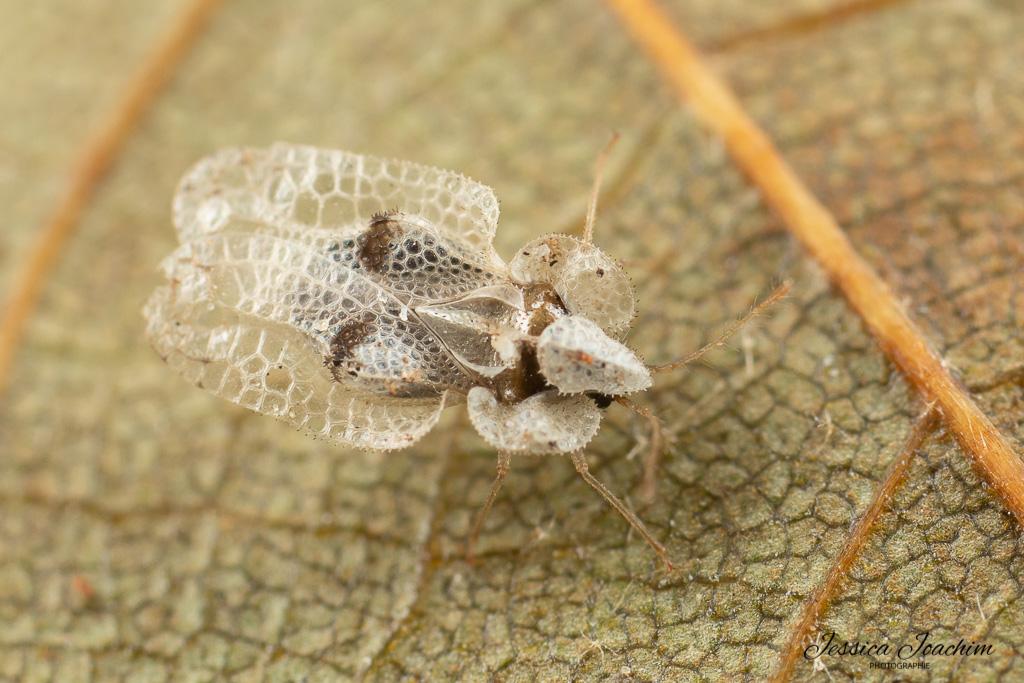
Lace bugs get their common name from the ornate, net-like pattern on their wings and thorax. Adults are small and flattened, often appearing almost transparent when viewed closely. Nymphs are darker and more spiny in appearance. Both life stages remain mostly on the undersides of leaves, where they feed in groups.
- Small flattened insects with lacy, net-like wing patterns
- Usually found on leaf undersides
- Nymphs are darker, smaller, and often spiny
- Black varnish-like droppings are common near feeding sites
- Upper leaf surfaces show pale stippling or bronzing
The insects themselves are easy to overlook without turning leaves over, which is why foliage symptoms are often the first sign noticed by property owners.
How They Damage Leaves
Kapok lace bugs use piercing-sucking mouthparts to draw fluids from individual leaf cells. Each feeding puncture destroys a tiny bit of green tissue, and over time thousands of punctures create widespread discoloration. Rather than chewing holes, they leave the leaf structurally intact but functionally weakened. This reduces photosynthetic efficiency and gives the leaf a faded, stippled appearance.
In light infestations, the effect may appear as fine speckling. In heavier infestations, entire leaves can become yellowish, silvery, or bronzed. If the plant is already under water stress or heat stress, the cumulative damage may lead to early leaf drop or a general decline in canopy density.
- Fine stippling across the upper leaf surface
- Pale, silvery, or bronzed foliage
- Reduced photosynthetic efficiency
- Possible premature leaf drop during heavy infestation
- Dirty-looking undersides from droppings and cast skins
Signs of Infestation
The most reliable way to confirm lace bugs is to inspect the underside of damaged leaves. Look for adults, dark nymphs, cast skins, and black specks of waste. The top of the leaf often looks much more damaged than the underside at first glance, which can mislead people into assuming environmental injury rather than insect feeding.
- Pale stippling or bronzing on upper leaf surfaces
- Black specks and insect clusters on undersides
- Leaves that look dusty or washed out
- Patchy decline in foliage quality
- Heavier symptoms on sun-exposed or stressed leaves
Infestations often become worse during hot dry conditions, especially when the host plant is already weakened. This is why lace bug outbreaks are frequently associated with stressed ornamentals rather than thriving, vigorous specimens.
Why Lace Bugs Are Often Overlooked
Lace bugs are overlooked because they do not create dramatic chewing injury, boring holes, or obvious webbing. Instead, they quietly strip away leaf quality cell by cell. Their damage develops gradually and can look similar to nutrient problems, spray burn, or environmental exposure. By the time the stippling becomes obvious, the insects may have been feeding for weeks.
This makes routine leaf inspection especially important on susceptible trees. Catching a population early can prevent widespread canopy discoloration and preserve more of the plant’s seasonal performance.
Management and Control
Management works best when it combines monitoring with plant-health support. Light infestations may be tolerated on established trees, but repeated damage on young or ornamental specimens should be addressed early. Washing leaf undersides, improving irrigation consistency, and encouraging beneficial insects can all help. In some cases, horticultural oils or insecticidal soaps may be effective when applied thoroughly to the undersides of leaves where the insects actually live.
- Inspect the undersides of stippled leaves
- Reduce drought stress through proper watering
- Wash small infestations off foliage when practical
- Apply insecticidal soap or horticultural oil if needed
- Encourage predators such as lacewings and assassin bugs
- Monitor regularly during warm-weather growth periods
A plant under less stress is usually better able to tolerate feeding and less likely to show severe canopy decline.