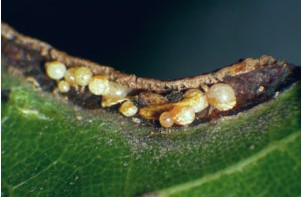
Overview
Itch Mites is a broad term commonly used to describe several species of microscopic parasitic mites that cause skin irritation in humans and animals. The most medically significant species is the Scabies Mite (Sarcoptes scabiei), which causes the highly contagious skin condition known as scabies. Other mites sometimes referred to as itch mites include bird mites, rodent mites, and various animal-associated mites that may temporarily bite humans.
Scabies mites are true parasitic arachnids that burrow directly into the upper layers of human skin, where they feed, tunnel, and lay eggs. Their activity causes intense itching, skin irritation, inflammation, and allergic reactions that can become severe without treatment.
Unlike temporary biting mites, scabies mites complete their entire life cycle on the human host. Because of their contagious nature and ability to spread rapidly through close contact, scabies infestations are considered an important public health concern worldwide.
Other itch mites, such as bird and rodent mites, do not permanently infest humans but may bite aggressively after their normal hosts abandon nests or die. These infestations often occur in homes, attics, wall voids, or structures with rodent or bird activity.
Proper diagnosis, medical treatment, sanitation, and elimination of the infestation source are essential for long-term control.
Quick Facts
- Common Name: Itch Mites
- Main Species: Sarcoptes scabiei
- Classification: Arachnids
- Main Problem: Severe itching and skin irritation
- Transmission: Skin-to-skin contact
- Activity: Burrow into skin
- Medical Concern: Scabies and allergic reactions
- Visibility: Microscopic
- Threat Level: High public health concern
Taxonomy and Classification
Itch mites belong to the arachnid subclass Acari, which also includes ticks and other mites.
- Kingdom: Animalia
- Phylum: Arthropoda
- Class: Arachnida
- Subclass: Acari
- Family: Sarcoptidae
- Species: Sarcoptes scabiei
Unlike insects, mites possess:
- Eight legs as adults
- No wings
- No antennae
- Microscopic body structures
Scabies mites are obligate parasites, meaning they depend entirely on a living host for survival and reproduction.
Identification
Itch mites are extremely small and nearly invisible to the naked eye, measuring only about 0.2 to 0.4 millimeters long.
Appearance
- Round or globular body
- Pale white or translucent coloration
- Eight short legs
- Microscopic size
- Slow crawling movement
Because they are difficult to see directly, infestations are usually identified by symptoms rather than by spotting the mites themselves.
Burrows
Female scabies mites tunnel beneath the outer skin layer, creating thin winding tracks called burrows. These burrows are often visible as:
- Thin grayish lines
- Serpentine tracks
- Raised skin tunnels
- Small blister-like bumps
Common Infestation Areas
Scabies infestations commonly occur in:
- Between fingers
- Wrists
- Elbows
- Armpits
- Waistline
- Groin area
- Around the navel
- Under breasts
In children and infants, infestations may also occur on the scalp, face, hands, and feet.
Habitat and Distribution
Scabies mites occur worldwide in all climates and socioeconomic groups.
Their habitat is restricted almost entirely to:
- Human skin
- Warm body folds
- Crowded living conditions
- Shared bedding and clothing
Scabies spreads especially easily in:
- Nursing homes
- Hospitals
- Dormitories
- Correctional facilities
- Childcare centers
- Military barracks
- Family households
Bird and rodent mites are commonly associated with:
- Bird nests
- Rodent infestations
- Attics
- Wall voids
- Roof spaces
- Abandoned nests
Life Cycle
The life cycle of the scabies mite occurs almost entirely within the skin.
Egg Stage
Female mites lay eggs inside skin burrows. Eggs hatch within approximately 3 to 4 days.
Larval Stage
Newly hatched larvae emerge and migrate to the skin surface before developing further.
Nymph Stage
Nymphs continue developing while feeding on skin secretions and tissue fluids.
Adult Stage
Adult females continue burrowing and reproducing, extending the infestation.
The entire life cycle typically takes about 10 to 17 days.
Behavior and Medical Impact
The intense itching associated with itch mites is caused primarily by the body’s allergic reaction to:
- Mite saliva
- Waste products
- Eggs
- Dead mites
Nighttime Itching
Symptoms are usually worse at night, leading to:
- Sleep disruption
- Severe discomfort
- Excessive scratching
- Skin damage
Secondary Infections
Persistent scratching can break the skin and allow bacterial infections to develop.
Common complications include:
- Impetigo
- Cellulitis
- Skin inflammation
- Open sores
Delayed Symptoms
First-time infestations may not produce symptoms for 4 to 6 weeks after exposure.
Previously infested individuals often develop symptoms much faster after reinfestation.
Crusted Scabies
A severe condition known as crusted scabies or Norwegian scabies may develop in immunocompromised individuals.
This form involves:
- Thousands of mites
- Thick crusted skin
- Extreme contagiousness
- Severe inflammation
Bird and Rodent Mites
Some itch mites originate from birds or rodents rather than humans.
These mites:
- Bite humans temporarily
- Do not reproduce on humans
- Do not burrow into skin
- Cause itchy bite reactions
Common sources include:
- Bird nests in vents
- Dead rodents in walls
- Attic infestations
- Roof void nesting areas
Removing the animal host and nesting materials is critical for elimination.
Signs of Infestation
- Intense itching, especially at night
- Tiny red bumps or rash
- Visible burrow lines
- Persistent skin irritation
- Skin crusting
- Scabs from scratching
- Clusters of itchy bites
- Family members with similar symptoms
Prevention and Control
Successful management requires both medical treatment and environmental sanitation.
Medical Treatment
Prescription scabicide treatments are necessary for true scabies infestations.
Common treatments include:
- Permethrin cream
- Oral ivermectin
- Sulfur ointments
- Prescription topical medications
Treatment must usually be repeated after 7 to 10 days to kill newly hatched mites.
Treat All Contacts
All close contacts should be treated simultaneously, including:
- Family members
- Sexual partners
- Caregivers
- Roommates
This prevents reinfestation cycles.
Laundry and Sanitation
Wash all recently used items in hot water.
- Bedding
- Clothing
- Towels
- Pillowcases
Dry items using high heat settings.
Items that cannot be washed should be sealed in plastic bags for several days.
Environmental Cleaning
Vacuum furniture, carpets, and mattresses thoroughly.
For bird or rodent mites:
- Remove nests
- Eliminate rodents
- Seal entry points
- Clean contaminated areas
Interesting Facts
- Scabies mites are arachnids, not insects.
- Female mites tunnel beneath human skin.
- Symptoms are caused mainly by allergic reactions.
- Mites are most active during nighttime hours.
- Scabies affects hundreds of millions of people globally.
- Bird mites cannot complete their life cycle on humans.
- Scabies infestations can spread rapidly in crowded environments.
Public Health Importance
Scabies remains one of the world’s most widespread parasitic skin diseases.
Public health efforts focus on:
- Early diagnosis
- Community treatment programs
- Resistance monitoring
- Improved sanitation
- Reducing transmission in institutions
Research continues into:
- New scabicide treatments
- Drug resistance prevention
- Rapid diagnostic tools
- Improved public health strategies
- Safer treatment options