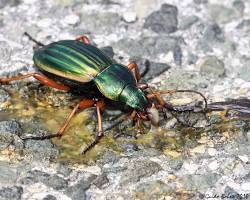
Ground Beetles (family Carabidae) are a massive and highly diverse family of beetles containing more than 40,000 known species worldwide. These beetles are among the most beneficial insects found in gardens, forests, agricultural fields, and natural ecosystems because most species are aggressive predators that feed on many destructive pests.
Ground beetles are best known for their speed, flattened bodies, and nocturnal hunting behavior. They actively prey upon slugs, snails, caterpillars, cutworms, insect eggs, maggots, and numerous other plant-feeding pests. Some species also consume weed seeds, making them valuable allies in both agriculture and home gardening.
Although overwhelmingly beneficial, ground beetles occasionally become nuisance pests when they accidentally wander indoors during periods of heavy rain, drought, or seasonal migration.
Quick Facts
- Family: Carabidae
- Order: Coleoptera
- Habitat: Forests, gardens, fields, lawns, urban areas
- Diet: Insects, slugs, snails, weed seeds
- Status: Beneficial predator
- Size: Tiny species to approximately 1.5 inches long
- Activity: Mostly nocturnal
Taxonomy and Classification
Ground beetles belong to the order Coleoptera, the largest insect order containing all true beetles. Within this order, they are classified in the family Carabidae, one of the most important groups of predatory insects in terrestrial ecosystems.
The family includes many specialized groups and tribes, including:
- Caterpillar Hunters (Calosoma species)
- Bombardier Beetles (Brachinus species)
- Tiger Beetles (closely related predatory beetles)
- Seed-feeding ground beetles
Ground beetles undergo complete metamorphosis with four developmental stages:
- Egg
- Larva
- Pupa
- Adult beetle
Both larvae and adults are usually active predators.
Physical Description
Ground beetles vary greatly in size and appearance but share several common features.
General Appearance
Most species are dark brown or black, although many display metallic blue, green, bronze, purple, or copper coloration. Some species possess iridescent or glossy surfaces that shimmer in sunlight.
The body is generally:
- Flattened
- Elongated
- Streamlined for rapid movement
- Covered with hardened wing covers (elytra)
Distinct grooves or ridges usually run lengthwise along the elytra.
Head and Mandibles
Ground beetles possess large prominent heads with strong mandibles adapted for capturing and consuming prey. Their jaws are powerful enough to subdue soft-bodied insects and larvae.
Behavioral Characteristics
These beetles are fast runners and quickly seek cover when disturbed or exposed to light. Most species are nocturnal hunters that spend daylight hours hidden beneath:
- Rocks
- Leaf litter
- Mulch
- Logs
- Debris
- Soil cracks
Larvae
Ground beetle larvae are elongated, flattened, and dark-colored. They are often referred to as “active grubs” because of their rapid movement and predatory behavior.
Larvae possess strong jaws and aggressively hunt prey in soil, mulch, and leaf litter.
Distribution and Habitat
Ground beetles are cosmopolitan insects found on every continent except Antarctica. They inhabit nearly every terrestrial ecosystem including forests, deserts, grasslands, wetlands, agricultural fields, and urban landscapes.
Preferred habitats include:
- Gardens
- Crop fields
- Woodlands
- Lawns
- Mulched beds
- Compost piles
- Riverbanks
- Under stones and logs
Most species remain close to ground level where prey is abundant and moisture conditions are favorable.
Behavior and Feeding Habits
Ground beetles are primarily nocturnal predators that actively patrol soil surfaces and vegetation at night searching for prey.
Predatory Behavior
These beetles consume a wide variety of pests including:
- Cutworms
- Cabbage maggots
- Tent caterpillars
- Slugs
- Snails
- Aphids
- Root maggots
- Insect eggs and larvae
Their role as natural pest controllers makes them extremely valuable in integrated pest management programs.
Weed Seed Consumption
Many species also consume weed seeds, helping reduce weed populations in agricultural fields and gardens.
Nocturnal Activity
Ground beetles typically emerge after sunset to hunt. During the day they remain hidden in cool, moist shelters to avoid predators and dehydration.
Beneficial Importance
Ground beetles are considered one of the most beneficial insect groups in agriculture and gardening.
Their benefits include:
- Natural pest suppression
- Reduction of chemical pesticide dependence
- Weed seed reduction
- Improved ecological balance
- Support for sustainable agriculture
Farmers and gardeners often encourage ground beetle populations as part of environmentally friendly pest management programs.
Nuisance Problems
Conflict with humans is generally limited to accidental indoor invasions. Ground beetles sometimes enter homes during:
- Heavy rainfall
- Drought conditions
- Seasonal migrations
- Searches for shelter
Once indoors, they are harmless and do not damage structures, furniture, food, or clothing.
Homeowners may encounter them in:
- Basements
- Garages
- Lower floors
- Utility rooms
- Entryways
Chemical Defense
Some species possess remarkable chemical defense systems.
Bombardier Beetles
Bombardier Beetles can spray hot, irritating chemical mixtures from the abdomen when threatened. The defensive spray is accompanied by an audible popping sound.
Other ground beetles may release pungent odors or bitter chemicals when handled roughly.
Management and Prevention
Management focuses primarily on preventing indoor entry rather than killing the beetles because of their highly beneficial ecological role.
Exclusion
- Seal cracks around foundations
- Repair gaps beneath doors
- Seal utility penetrations
- Install proper door sweeps
- Screen basement windows
Outdoor Cleanup
Reduce daytime hiding places near foundations by removing:
- Leaf piles
- Excess mulch
- Wood debris
- Stone piles
- Dense vegetation near buildings
Indoor Removal
Any beetles found indoors should be swept up, vacuumed, or captured and released outdoors.
Avoid Broad-Spectrum Pesticides
Using unnecessary pesticides may kill these beneficial predators and lead to increased pest problems in gardens and landscapes.
Conservation and Research
Ground beetles are widely studied for their role in biological pest control. Researchers examine methods to conserve and encourage beetle populations in farms and gardens.
One conservation strategy involves creating “beetle banks” — raised grassy strips within fields that provide shelter and overwintering habitat for predatory beetles.
Protecting ground beetles helps strengthen natural ecosystem stability and reduces reliance on chemical pesticides.
Interesting Facts About Ground Beetles
- Over 40,000 species of ground beetles exist worldwide.
- Most species are beneficial predators.
- Some species can run extremely fast.
- Bombardier beetles can spray hot chemicals defensively.
- Many species help control weeds by eating seeds.
Related Pestipedia Articles
/p>