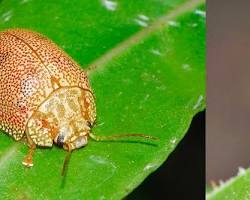
Eucalyptus Leaf Beetle Larvae, most commonly associated with species such as Paropsis charybdis, Chrysophtharta, and related eucalyptus-feeding leaf beetles, are highly destructive defoliating pests of Eucalyptus trees. Native to Australia but invasive in many regions around the world, these larvae have become serious pests in ornamental landscapes, commercial plantations, windbreaks, and urban forestry systems. Their feeding activity can rapidly strip foliage from trees, reduce growth, weaken canopy development, and increase susceptibility to secondary pests and diseases.
In the United States, particularly in California and other warm regions where eucalyptus trees are commonly planted, Eucalyptus Leaf Beetle Larvae are considered major invasive pests that threaten both ornamental and commercial eucalyptus plantings. Heavy infestations may result in severe defoliation, branch dieback, and long-term decline of stressed trees.
Taxonomy and Classification
- Order: Coleoptera
- Family: Chrysomelidae
- Common Group: Leaf Beetles
- Primary Genera: Paropsis, Chrysophtharta
Eucalyptus Leaf Beetles belong to the family Chrysomelidae, one of the largest beetle families in the world. Many species within this family specialize on particular host plants, and eucalyptus-feeding species are highly adapted to overcoming the aromatic oils and chemical defenses produced by eucalyptus foliage.
Several species have become invasive outside Australia due to international trade and the global planting of eucalyptus trees for landscaping and timber production.
Identification
The larvae are the primary damaging stage. They possess soft-bodied, slug-like or caterpillar-like appearances and typically measure between 10 and 15 millimeters long when fully developed. Coloration ranges from pale green to yellowish-brown with darker markings, spots, or stripes.
Key identifying features include:
- Dark brown or black head capsule
- Six true legs near the front of the body
- Clustered feeding behavior
- Slug-like body shape
- Pungent eucalyptus odor when disturbed
Young larvae commonly feed in groups along leaf margins and tender new shoots. When disturbed, some species evert specialized scent glands that release strong eucalyptus-like defensive odors to deter predators.
Adult beetles are generally smaller and harder-bodied, often displaying metallic, mottled, brown, or olive coloration depending on the species.
Distribution and Habitat
Eucalyptus Leaf Beetle species occur worldwide wherever eucalyptus trees are cultivated outside their native Australian range.
Major infestation regions include:
- California
- New Zealand
- South America
- Southern Europe
- South Africa
- Mediterranean climates
Preferred habitats include:
- Eucalyptus plantations
- Urban eucalyptus landscapes
- Windbreaks
- Parks
- Roadside tree plantings
- Commercial timber groves
The larvae strongly prefer young foliage, tender shoots, and newly developing leaf flushes.
Life Cycle
The life cycle includes complete metamorphosis:
- Egg
- Larva
- Pupa
- Adult
Females lay clusters of yellow-orange eggs directly on eucalyptus leaves. After hatching, larvae immediately begin feeding on foliage. They pass through multiple larval stages (instars) before dropping to the soil or leaf litter to pupate. Adults later emerge and restart the cycle.
In warm climates, several generations may occur annually, allowing populations to increase rapidly during favorable environmental conditions.
Feeding Behavior and Damage
Eucalyptus Leaf Beetle Larvae are aggressive foliage feeders capable of causing extensive canopy thinning and defoliation.
Common damage symptoms include:
- Scalloped leaf edges
- Skeletonized foliage
- Tip dieback
- Canopy thinning
- Stunted growth
- Premature leaf drop
- Excessive branching (“witches’ broom”)
Larvae frequently target soft terminal growth and newly developing foliage. Repeated feeding forces trees to exhaust energy reserves while attempting to regenerate lost leaves. Severe infestations may significantly weaken young trees and reduce timber production.
Stressed trees also become increasingly vulnerable to secondary invaders such as borer insects and fungal pathogens.
Economic Importance
Eucalyptus Leaf Beetle Larvae are economically significant pests in commercial forestry operations and ornamental landscapes.
Major impacts include:
- Reduced timber growth
- Decline of ornamental trees
- Canopy loss in urban landscapes
- Increased maintenance costs
- Tree mortality in severe infestations
Young eucalyptus plantations are especially vulnerable because repeated defoliation can permanently reduce growth rates and timber quality.
Management and Control (IPM)
Monitoring
Regular inspection of new foliage during spring and summer is essential. Early signs include egg clusters, scalloped leaf edges, and grouped feeding larvae.
Biological Control
Parasitoid wasps, including species such as Neopolycystus insectifurax and related biological control agents, help suppress beetle populations naturally in some regions.
Mechanical Control
- Prune heavily infested tips
- Destroy infested foliage
- Use sticky trunk barriers
- Remove severe infestations early
Chemical Control
Targeted applications of products containing spinosad or other labeled insecticides may help reduce larval populations when applied during early feeding stages.
Tree Health Management
Maintaining proper irrigation, soil health, and tree vigor improves the ability of eucalyptus trees to recover from feeding damage.
Conclusion
Eucalyptus Leaf Beetle Larvae are destructive invasive pests capable of causing severe defoliation and long-term decline in eucalyptus trees. Their clustered feeding behavior, rapid reproduction, and preference for tender foliage make them especially damaging in ornamental landscapes and commercial plantations. Early detection, biological control, and integrated pest management strategies are essential for minimizing damage and preserving healthy eucalyptus populations.