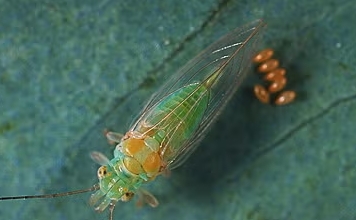
Eucalyptus Psyllids are small sap-feeding insects that attack eucalyptus trees and shrubs throughout many parts of the world. These insects belong to several genera within the family Psyllidae and are among the most important pests affecting ornamental and commercial eucalyptus plantings. Their feeding activity causes leaf distortion, discoloration, premature leaf drop, reduced tree vigor, and the production of sticky honeydew that promotes black sooty mold growth. In regions where eucalyptus trees are heavily planted in urban landscapes, psyllid outbreaks can create widespread aesthetic and horticultural problems.
Taxonomy and Classification
Eucalyptus Psyllids belong to the order Hemiptera, commonly known as the true bugs, and the family Psyllidae. Psyllids are closely related to aphids, whiteflies, and scale insects because they feed by piercing plant tissues and extracting sap.
Several psyllid species attack eucalyptus trees, including:
- Red Gum Lerp Psyllid (Glycaspis brimblecombei)
- Blue Gum Psyllid (Ctenarytaina eucalypti)
- Eucalyptus Psyllid (Ctenarytaina spatulata)
- Spotted Gum Psyllid species
Many of these insects are native to Australia, where eucalyptus trees evolved alongside them. However, several species have become invasive pests in North America, Europe, South America, and other regions where eucalyptus has been introduced as an ornamental or commercial tree.
Identification
Adult eucalyptus psyllids are extremely small insects, typically measuring only a few millimeters long. They resemble miniature cicadas or tiny leafhoppers with transparent wings held roof-like over the body.
Coloration varies by species but commonly includes pale green, yellow, tan, or brown tones. Adults are highly active and may jump or fly when disturbed.
The immature stages, called nymphs, are often more damaging than adults. Nymphs feed in groups on leaves and stems and may produce protective waxy coverings or structures called lerps, which are small white or crystalline coverings made from sugars and waxes secreted by the insect.
Heavy infestations may produce several visible signs:
- Sticky honeydew deposits
- Black sooty mold growth
- Leaf curling and distortion
- Yellowing foliage
- Premature leaf drop
- White lerp coverings on leaves
Distribution and Habitat
Eucalyptus Psyllids are found worldwide wherever eucalyptus trees are grown. Their populations are especially problematic in warm Mediterranean, subtropical, and temperate climates where eucalyptus species are widely used in landscaping, forestry, and windbreak plantings.
Common habitats include:
- Urban landscapes
- Parks and campuses
- Commercial eucalyptus plantations
- Residential properties
- Roadside plantings
- Windbreaks and shelterbelts
Different psyllid species may specialize on certain eucalyptus species, making some trees significantly more vulnerable than others.
Life Cycle
Eucalyptus Psyllids undergo incomplete metamorphosis with egg, nymph, and adult stages.
Females lay eggs on eucalyptus leaves, stems, or buds. After hatching, nymphs begin feeding immediately by inserting needle-like mouthparts into plant tissue and extracting sap.
Nymphs molt several times before becoming adults. In warm climates, multiple overlapping generations may occur throughout the year, allowing populations to increase rapidly during favorable conditions.
Many psyllid outbreaks become most severe during warm, dry weather when natural fungal diseases and predators are less effective at suppressing populations.
Feeding Behavior and Damage
Eucalyptus Psyllids feed directly on plant sap, weakening foliage and interfering with normal growth. Their feeding damage is especially severe on young trees, newly planted ornamentals, and stressed eucalyptus species.
Common forms of damage include:
- Leaf Distortion: Leaves curl, twist, or become misshapen.
- Chlorosis: Feeding causes yellowing and discoloration.
- Defoliation: Severe infestations trigger leaf drop.
- Sooty Mold: Honeydew accumulation supports black fungal growth.
- Reduced Growth: Repeated feeding weakens overall tree vigor.
- Aesthetic Damage: Trees become unattractive in landscapes.
Although healthy mature eucalyptus trees often survive infestations, repeated attacks can stress trees and make them more vulnerable to drought, disease, and secondary pests.
Natural Enemies
Several beneficial insects naturally suppress eucalyptus psyllid populations, including:
- Parasitic wasps
- Lady beetles
- Lacewings
- Predatory bugs
- Spiders
In some regions, specialized parasitoid wasps have been introduced as biological control agents with considerable success against invasive psyllid populations.
Management and Control (IPM)
Integrated Pest Management (IPM) strategies are the preferred approach for controlling eucalyptus psyllids.
- Tree Selection: Plant eucalyptus species less susceptible to psyllid attack.
- Biological Control: Preserve beneficial predators and parasitoids.
- Water Management: Maintain tree vigor through proper irrigation.
- Pruning: Remove heavily infested branches when practical.
- Monitoring: Inspect leaves regularly for lerps, honeydew, and nymph activity.
- Systemic Treatments: In severe cases, professional arborists may apply systemic insecticides.
Broad-spectrum insecticide applications are often discouraged because they may disrupt natural biological control and worsen long-term pest outbreaks.
Ecological and Economic Importance
Eucalyptus Psyllids are important pests in ornamental horticulture, forestry, and urban tree management. Large infestations reduce the value and health of eucalyptus plantings while increasing maintenance costs for municipalities and property owners.
Because eucalyptus trees are widely planted for shade, timber, erosion control, and landscaping, psyllid outbreaks can have substantial economic and environmental consequences in affected regions.
Conclusion
Eucalyptus Psyllids are highly specialized sap-feeding insects capable of causing widespread damage to eucalyptus trees in landscapes and plantations. Although small in size, their rapid reproduction, honeydew production, and foliage damage make them important pests in many parts of the world. Long-term management relies heavily on integrated pest management strategies, tree health maintenance, and biological control programs that preserve natural enemies.