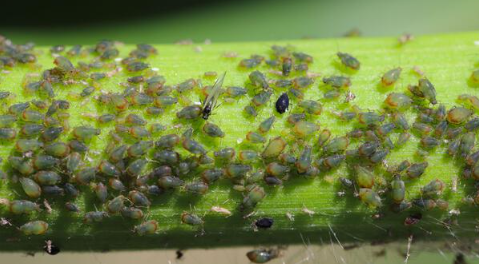
Corn root aphids (Aphis maidiradicis) are specialized, soil-dwelling aphids that attack the root systems of corn and certain grasses. Unlike foliar aphids that feed on leaves and stems, these pests operate below ground, making infestations difficult to detect until plant symptoms become evident. Their feeding disrupts nutrient and water uptake, leading to reduced growth, poor plant vigor, and yield loss in affected fields.
One of the most unique aspects of corn root aphids is their symbiotic relationship with ants, particularly cornfield ants. These ants protect the aphids from predators and transport them to new host plants, effectively farming them for honeydew. This relationship significantly increases the spread and survival rate of aphid populations, making control more challenging.
Infestations are most common in fields with a history of grassy weeds or previous corn crops, as these environments support both aphids and their ant partners. Understanding this ecological relationship is essential for effective management.
The “Ant-Farmed” Subterranean Pest: Corn Root Aphid
The Corn Root Aphid (Aphis maidiradicis) is a specialized agricultural pest found across the United States, particularly in the Midwest Corn Belt. This insect is unique because its survival is dependent on a mutualistic relationship with the Cornfield Ant (Lasius alienus). Without the intervention of ants to transport them to host roots, these aphids cannot thrive, making ant management a critical component of U.S. corn protection.
Technical Identification: Diagnostic Markers
- Phenotype: Characterized by a small, pear-shaped, bluish-green body. A primary diagnostic key is the waxy, white powdery coating that often covers the colony, and their rounded, dark cornicles.
- Subterranean Habitat: Unlike most aphids, this species lives underground. They are found attached to the roots of corn, grasses, and certain weeds like smartweed.
- The Ant Connection: The presence of active ant mounds in U.S. corn rows is a primary indicator. Ants store aphid eggs in their nests over winter and carry the hatched nymphs to corn roots in the Spring.
Infestation Impact: Nutrient Depletion and Stunting
The primary impact of the Corn Root Aphid is the extraction of plant fluids from the root vascular system.
- Vigor Reduction: As the aphids drain sap, the corn plant exhibits stunted growth and yellowing or reddening of the leaves. This stress often mimics nutrient deficiencies or drought in fields.
- Root Weakening: Heavy feeding weakens the root structure, making the crop susceptible to lodging (falling over) during summer storms.
- Yield Loss: Chronic infestations can result in significant grain reduction, as the starved root system cannot support ear development.
Management & Control Strategies
Management of Corn Root Aphids in U.S. agriculture focuses on disruption of the ant-aphid partnership.
| Strategy | Technical Specification | Operational Benefit |
|---|---|---|
| Deep Spring Tillage | Executing thorough soil cultivation before planting | destroys ant nests and scatters stored aphid eggs; provides disruption of the life cycle in fields. |
| Crop Rotation | Rotating with non-grass cropslike soybeans | Starves the aphids by removing host roots; prevents 100% of the population from establishing dominance. |
| Weed Suppression | Eliminating early-season host weeds | Prevents the aphids from surviving before the corn is planted; a critical step for growers. |
- Monitoring: Inspect stunted plants in corn fields by carefully excavating the root ball. Seeing bluish-green insects and attending ants confirms the diagnosis.
- Technical Tip: Because the aphids are protected underground by ants, foliar sprays are ineffective. Managing the ant population is the most effective tool for root aphid control.
Identification
Corn root aphids are small, soft-bodied insects, typically bluish-green or white. They are rarely seen unless soil is disturbed around plant roots.
Signs of infestation include stunted growth, yellowing plants, and uneven crop development. The presence of ants around plant bases is a strong indicator of infestation.
Roots may appear coated with aphids and honeydew when examined closely.
Life Cycle
The lifecycle includes egg, nymph, and adult stages. Eggs overwinter in soil and hatch in spring. Ants transport newly hatched aphids to host plants.
Aphids reproduce rapidly, often without mating, leading to exponential population growth during the growing season.
Multiple generations occur annually, with populations peaking during warm weather.
Damage and Impact
Feeding on roots reduces nutrient uptake, causing stunted growth and reduced yields. Plants may appear drought-stressed even when soil moisture is adequate.
Heavy infestations can significantly reduce crop productivity, particularly in early growth stages.
The ant-aphid relationship further increases damage potential by protecting aphids from natural enemies.
Prevention and Control
Managing ant populations is critical to controlling corn root aphids. Reducing grassy weeds and rotating crops helps disrupt lifecycle patterns.
Monitoring fields early in the season allows for timely intervention. Maintaining soil health improves plant resistance.
An Integrated Pest Management approach that targets both aphids and ants provides the most effective control.