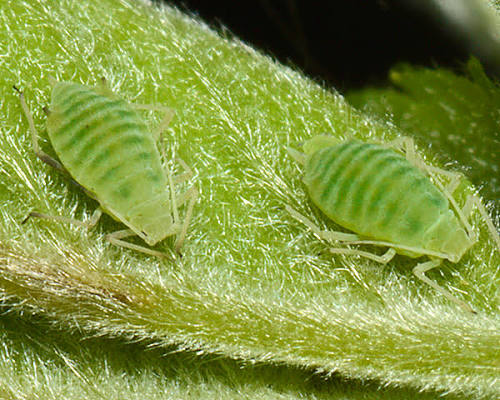
Columbine aphids are small, sap-feeding insects that form colonies on columbine plants in the genus Aquilegia. They commonly gather on tender stems, new leaves, flower stalks, and the undersides of foliage. Light populations usually cause little lasting injury, but large colonies can stunt growth, curl leaves, weaken flower stalks, and cover the plant with sticky honeydew.
In North America, the name frequently refers to Nasonovia aquilegiae, a species historically listed as Kakimia essigi. Other aphid species may also colonize garden columbines, so identifying an individual species generally requires magnification and specialist knowledge. Management is similar for most aphids found on these ornamental plants.
Taxonomy and Classification
- Kingdom: Animalia
- Phylum: Arthropoda
- Class: Insecta
- Order: Hemiptera
- Family: Aphididae
- Genus: Nasonovia
- Species: Nasonovia aquilegiae
The classification of this aphid has changed over time. Garden references may use the older name Kakimia essigi or place it in the subgenus Nasonovia (Kakimia). These names refer to the columbine-associated aphid rather than separate types of garden pests.
Identification
Columbine aphids are tiny, soft-bodied insects with a pear-shaped profile. Adults and nymphs are generally less than one-eighth of an inch long. Their color may range from pale green and yellowish green to darker green or brownish shades, depending on age, host plant, and environmental conditions.
Like other aphids, they have long antennae and two small tube-like structures called cornicles projecting from the rear of the abdomen. Most individuals in an established colony are wingless. Winged adults may appear when plants become crowded, deteriorate, or no longer provide suitable feeding conditions.
Colonies are most likely to occur around new growth and just below flower buds. White objects mixed among the living aphids are often shed skins rather than dead insects. Ants traveling repeatedly up and down the plant may also reveal an infestation because they collect the sugary honeydew produced by aphids.
Host Plants and Distribution
These aphids feed primarily on columbines, including native North American species and cultivated hybrids. Potential hosts include eastern red columbine, Colorado blue columbine, golden columbine, European columbine, and ornamental varieties planted in borders, woodland gardens, pollinator gardens, and containers.
Columbine aphids can occur wherever suitable host plants are grown. Populations are often most noticeable during periods of active plant growth or later in summer when colonies become concentrated on remaining tender foliage. Warm conditions and excessive nitrogen fertilization can encourage rapid population growth.
Life Cycle
Columbine aphids undergo incomplete metamorphosis. Their life cycle consists of egg, nymph, and adult stages, without a pupal stage. During favorable weather, females can reproduce without mating and give birth to living female nymphs. These offspring mature quickly and begin producing additional nymphs, allowing a small infestation to develop into a dense colony.
Each nymph molts several times before becoming an adult. The discarded white skins frequently remain attached to leaves and stems. Several overlapping generations may occur during a growing season.
When colonies become crowded or plant quality declines, winged forms can develop and fly to other suitable plants. Seasonal cycles and overwintering behavior vary among aphid species and local climates. In cold regions, aphids commonly survive winter as eggs on a host plant or nearby vegetation.
Signs and Plant Damage
Aphids insert slender, piercing-sucking mouthparts into plant tissue and remove sap. Small colonies may produce no visible injury, while heavy infestations can cause:
- Curled, puckered, or distorted leaves
- Stunted foliage and shortened stems
- Deformed flower buds or weakened flower stalks
- Yellowing and premature leaf decline
- Sticky honeydew on foliage and nearby surfaces
- Black sooty mold growing on accumulated honeydew
- Ant activity around aphid colonies
Established columbines usually tolerate some feeding, especially late in the growing season. Greater concern is justified when aphids cover a young plant, prevent buds from opening, or repeatedly weaken a stressed specimen. Honeydew and sooty mold are primarily cosmetic, although a heavy coating can interfere with the plant’s appearance and normal leaf function.
How to Control Columbine Aphids
Inspect Plants Regularly
Check new growth, flower stems, and leaf undersides beginning in spring. Early colonies are easier to remove than large populations hidden within curled foliage. Make sure the insects are aphids rather than beneficial predators or columbine leafminer damage.
Use Water or Hand Removal
Dislodge aphids with a firm stream of water, directing the spray toward stems and leaf undersides. Many displaced aphids cannot return to the plant. Repeat the treatment after several days if necessary. Small colonies can also be wiped away or heavily infested flower stalks can be pruned and discarded.
Protect Natural Enemies
Lady beetles, lacewing larvae, hover fly larvae, minute pirate bugs, and parasitoid wasps naturally suppress aphids. Parasitized aphids become swollen, tan or brown “mummies” with a papery appearance. Avoid broad-spectrum insecticides that kill these beneficial insects and allow surviving aphids to rebound.
Reduce Ant Protection
Ants sometimes protect aphid colonies from predators in exchange for honeydew. If ants are numerous, identify and manage their nest or travel route using methods appropriate for the ant species. Reducing ant access can help natural enemies reach the aphids.
Apply Low-Impact Products When Needed
Insecticidal soap and horticultural oil can control exposed aphids when sprays directly contact them. Thoroughly cover stems and leaf undersides, following all label directions. Test the product on a small section first because columbine foliage may be sensitive under hot or dry conditions.
Columbines attract bees and hummingbirds, so avoid spraying open flowers or treating plants while pollinators are visiting. Systemic insecticides should generally be avoided on flowering columbines because residues may expose nectar- and pollen-feeding insects.
Prevention
Keep columbines appropriately watered and avoid excessive nitrogen fertilizer, which produces soft growth attractive to aphids. Provide adequate spacing and inspect new plants before adding them to the garden. A diverse planting with small flowering plants can supply food and shelter for aphid predators and parasitoids.
Conclusion
Columbine aphids are small sap-feeding insects that can stunt foliage, distort buds, and coat plants with honeydew. Most infestations are temporary and can be managed with monitoring, water sprays, selective pruning, and protection of natural enemies. Insecticidal soap or horticultural oil may be used for persistent colonies, but treatments should be applied carefully to protect the pollinators attracted to columbine flowers.