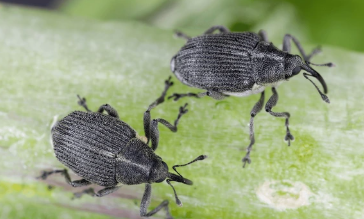
Canary seed weevils is an informal name for grain-infesting weevils discovered in stored canary seed, birdseed mixtures, or related cereal products. The name does not refer to one scientifically recognized species that feeds exclusively on canary seed. In homes and storage facilities, the insects involved are usually rice weevils, granary weevils, or maize weevils in the genus Sitophilus.
Canary seed comes from Phalaris canariensis, a cereal grass grown primarily for birdseed and, in some cases, human food. Bags of canary seed may become infested during production, transportation, retail storage, or after being stored in a home. Once introduced, the weevils can spread to nearby grains, seeds, cereals, pasta, dry pet food, and decorative products containing whole kernels.
Taxonomy and Classification
- Kingdom: Animalia
- Phylum: Arthropoda
- Class: Insecta
- Order: Coleoptera
- Family: Curculionidae
- Genus: Sitophilus
The principal stored-grain species that may be called canary seed weevils include the rice weevil (Sitophilus oryzae), granary weevil (Sitophilus granarius), and maize weevil (Sitophilus zeamais). These closely related beetles have similar feeding habits and are often difficult to separate without magnification and an identification key.
Identification
Adult grain weevils are tiny beetles, generally measuring between one-sixteenth and one-quarter of an inch long. Their most recognizable feature is an elongated snout, or rostrum, extending from the head. The body is reddish brown, dark brown, or nearly black and is covered with small pits.
Rice and maize weevils usually have four pale reddish, yellowish, or tan spots on their hardened wing covers. Both species possess functional wings and can fly. Granary weevils generally lack these spots, have a shinier body, and cannot fly.
The larvae are white to cream-colored, legless, C-shaped grubs with darker head capsules. Larvae are seldom seen because they complete their development inside individual seeds or grain kernels. Small round holes in seeds indicate that adults have finished developing and emerged.
Life Cycle
A female weevil uses her snout to chew a small opening in a suitable seed. She deposits one egg inside and seals the opening with a gelatinous material. The tiny larva hatches within the seed and consumes the interior while remaining concealed by the outer hull.
After passing through several larval stages, the insect pupates inside the hollowed seed. The new adult then chews a circular exit hole and enters the surrounding stored product. Depending on the species, temperature, and humidity, development may be completed in approximately one month under favorable conditions.
Warm storage areas allow populations to increase quickly. Because eggs, larvae, and pupae remain hidden inside apparently intact seeds, an infestation may be well established before adults begin crawling or flying around the storage area.
Signs of an Infestation
The first sign may be small beetles crawling inside a birdseed container, around a pantry, or across a windowsill. Other evidence includes:
- Round emergence holes in individual seeds
- Hollow, lightweight, or easily crushed kernels
- Fine powder accumulating at the bottom of a package
- Adult beetles crawling through stored seed
- Weevils appearing in nearby cupboards or rooms
- Infestations spreading into rice, wheat, corn, pasta, or cereal
Adult rice and maize weevils can fly and may be found some distance from the original source. Granary weevils cannot fly but can crawl through shelving and enter products through damaged packaging, seams, or other small openings.
Damage and Health Concerns
Canary seed weevils hollow out seeds, reduce their nutritional value, and contaminate products with insects, shed skins, waste, and feeding debris. A heavily infested bag of birdseed may become unsuitable for use and can serve as a source of infestation for other stored foods.
These weevils do not bite or sting people or pets. They do not damage furniture, clothing, or structural wood. Their presence is primarily a food-contamination and product-quality problem rather than a medical or structural threat.
How to Control Canary Seed Weevils
Locate the Infested Product
Inspect all canary seed, birdseed, whole grains, cereals, dry pet food, pasta, dried beans, nuts, and decorative items containing seeds. Check unopened packages as well as opened ones because insects may enter through seams or thin packaging.
Discard Infested Materials
Place infested products in a sealed bag and remove them from the home. Do not simply move an infested bag to another indoor room, garage, or basement, where emerging adults can continue spreading.
Clean the Storage Area
Vacuum shelves, corners, peg holes, cracks, and spaces beneath shelf liners. Remove spilled seed and grain that could support surviving insects. Empty the vacuum outdoors immediately after cleaning. Wash storage surfaces with soap and water, but remember that cleaning alone will not eliminate insects still developing inside overlooked packages.
Use Pest-Resistant Containers
Store replacement birdseed and other susceptible products in tightly sealed glass, metal, or heavy plastic containers. Thin plastic bags and cardboard boxes provide limited protection. Buy quantities that can be used within a reasonable period and rotate older stock before opening newer products.
Avoid Routine Insecticide Sprays
Spraying cupboards is usually unnecessary and will not kill larvae protected inside seeds. Never apply insecticides directly to birdseed, food, feeding equipment, or food-contact surfaces unless the product label specifically permits that use. Removing the source, cleaning thoroughly, and using sealed containers provide the most reliable household control.
Prevention
Inspect birdseed packages before purchase and avoid bags with tears, seed dust, webbing, or visible insects. Keep storage areas cool, dry, and clean. Do not combine new seed with remnants from an older container until the container has been emptied and cleaned.
Conclusion
Canary seed weevils are usually rice, granary, or maize weevils infesting stored canary seed and birdseed mixtures. Their hidden development inside individual seeds makes early detection difficult. Finding and discarding the source, inspecting nearby foods, vacuuming storage areas, and transferring susceptible products into airtight containers will normally eliminate an infestation without routine pesticide use.