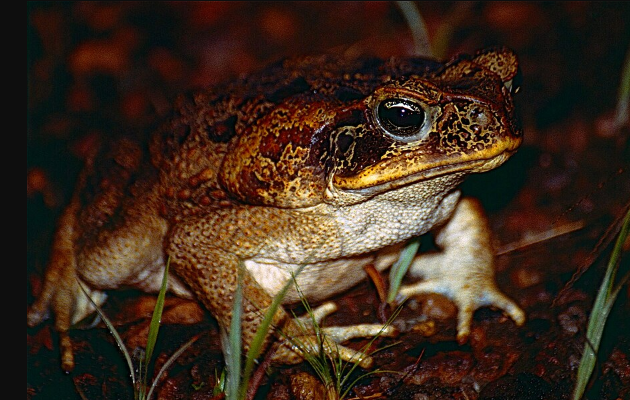
Cane toads (Rhinella marina) are extremely large, ground-dwelling toads known for the powerful toxin produced by glands behind their eyes. They are also called marine toads, giant toads, or bufo toads, although “bufo toad” comes from their former scientific name, Bufo marinus.
Cane toads are native from tropical South America through Central America and into the lower Rio Grande Valley of southern Texas. They have been introduced into Florida, Hawaii, and numerous tropical regions outside their natural range. Introduced populations are considered invasive because the toads poison predators, compete with native wildlife, reproduce rapidly, and thrive around human development.
Taxonomy and Classification
- Kingdom: Animalia
- Phylum: Chordata
- Class: Amphibia
- Order: Anura
- Family: Bufonidae
- Genus: Rhinella
- Species: Rhinella marina
Older publications frequently use Bufo marinus. This is a former scientific combination for the same species, not a separate type of cane toad.
Identification
Adult cane toads commonly measure six to nine inches long, although smaller adults and juveniles also occur. Their dry, warty skin ranges from reddish brown and grayish brown to olive or tan. The belly is usually pale beige or yellowish, sometimes with darker mottling.
The most important identifying features are the enlarged parotoid glands located behind the eyes. On a cane toad, these glands are large, triangular, and angle downward toward the shoulders. The glands produce a milky defensive secretion containing potent toxins.
Cane toads may be confused with Florida’s native southern toad. Adult southern toads generally reach only three to four inches long and have pronounced ridges, or cranial crests, on the head. Cane toads lack these distinct head ridges and possess much larger triangular glands. Juveniles can be difficult to identify, so uncertain animals should be photographed and confirmed by a wildlife specialist before removal.
Distribution and Habitat
Introduced cane toads in Florida are concentrated mainly in central and southern portions of the state, generally south of the Interstate 4 corridor. Established populations also occur in Hawaii and several United States territories. An isolated sighting does not necessarily indicate an established population.
Cane toads are especially successful in urban, suburban, and agricultural environments. They commonly appear in yards, golf courses, school grounds, nurseries, farms, parking lots, and areas near canals or ponds. Irrigation, outdoor lighting, pet food, garbage, and abundant insects make developed properties particularly attractive.
Adults are primarily nocturnal. They shelter beneath vegetation, boards, debris, landscape materials, or structures during the day and emerge after sunset to feed. Activity often increases during warm, wet weather.
Diet and Behavior
Cane toads are opportunistic feeders that consume beetles, ants, crickets, cockroaches, spiders, and many other invertebrates. Large individuals may also eat frogs, smaller toads, lizards, snakes, small mammals, carrion, and food discarded by people.
Unlike most native frogs and toads, cane toads readily consume pet food and household scraps. Leaving food outdoors overnight can repeatedly draw them into areas used by dogs and cats.
Life Cycle
Cane toads breed in ponds, canals, drainage ditches, temporary pools, and other standing or slow-moving water. Breeding commonly follows heavy rainfall. In southern Florida, reproduction may occur throughout much of the year.
A female can deposit thousands of eggs in long, gelatinous strings. The eggs hatch into small, dark tadpoles that gather in shallow water. Depending on temperature and available food, tadpoles may transform into tiny toadlets within approximately two weeks to two months.
Cane toads are toxic throughout their life cycle. Eggs, tadpoles, juveniles, adults, and even dead toads can expose animals to toxins. Cane toad eggs and tadpoles may also threaten fish and native predators that consume them.
Why Are Cane Toads Dangerous?
The large parotoid glands release bufotoxins when a toad is bitten, squeezed, or severely threatened. The secretion can irritate human skin and cause intense eye irritation. Greater danger occurs when a dog or other animal bites, mouths, or swallows a toad.
Signs of cane toad poisoning in pets can begin within minutes and may include:
- Heavy drooling or foaming at the mouth
- Bright red or brick-red gums
- Pawing at the mouth or shaking the head
- Vomiting or disorientation
- Stumbling, tremors, or abnormal behavior
- Difficulty breathing
- Seizures, abnormal heart rhythms, or collapse
Severe poisoning can be fatal. Dogs are at particular risk because they may chase and bite moving animals during nighttime walks or while exploring fenced yards.
What to Do if a Pet Bites a Cane Toad
Treat suspected cane toad exposure as a veterinary emergency. Immediately separate the pet from the toad and contact a veterinarian or emergency animal hospital. Do not wait for severe symptoms to develop.
Wipe the animal’s gums, tongue, and inner mouth repeatedly with a clean, wet cloth, using a fresh section of cloth each time. Florida wildlife authorities also recommend rinsing the mouth with water for approximately ten minutes while keeping the animal’s head pointed downward. Direct the water forward and out of the mouth, never toward the throat, to avoid aspiration.
Proceed to a veterinarian immediately after beginning first aid. Do not induce vomiting or give medications, food, or home remedies unless instructed by a veterinary professional. Mouth cleaning removes surface toxin but does not replace treatment for toxin that has already been absorbed.
Cane Toad Prevention and Control
Remove Food Sources
Feed pets indoors whenever possible and bring food and water bowls inside at night. Clean outdoor grills, eating areas, and spilled animal feed. Use secure lids on garbage and compost containers.
Reduce Shelter
Keep grass reasonably short, trim dense vegetation near the ground, remove brush piles, and eliminate clutter. Fill openings beneath sheds, decks, air-conditioning pads, and other structures where toads can hide during the day.
Manage Water and Lighting
Empty unnecessary containers that hold standing water and repair irrigation leaks. Maintain swimming pools and ornamental ponds appropriately. Reduce unnecessary nighttime lighting or use fixtures that attract fewer insects, since concentrations of insects provide easy prey for toads.
Protect Pets
Supervise pets outdoors after dark and use a leash in areas where cane toads occur. Inspect the yard with a flashlight before allowing a dog outside. Train dogs to respond reliably to a “leave it” command.
Removal
Confirm identification before capturing any toad because native species are beneficial and may be legally protected. Wear waterproof gloves and eye protection when handling a confirmed cane toad. Never relocate an invasive cane toad to another property or natural area.
Removal and euthanasia laws vary by location. In Florida, cane toads may be removed from private property with landowner permission, but anti-cruelty laws apply and captured animals cannot be released elsewhere. Homeowners should follow current Florida Fish and Wildlife Conservation Commission guidance or hire an experienced wildlife-control professional.
Conclusion
Cane toads are large, toxic amphibians that can pose a life-threatening danger to pets. Their large triangular glands, lack of pronounced head crests, and substantial adult size help distinguish them from native southern toads. Removing outdoor food, shelter, standing water, and insect-attracting conditions can reduce encounters. Any pet that bites or mouths a suspected cane toad requires immediate mouth decontamination and emergency veterinary care.