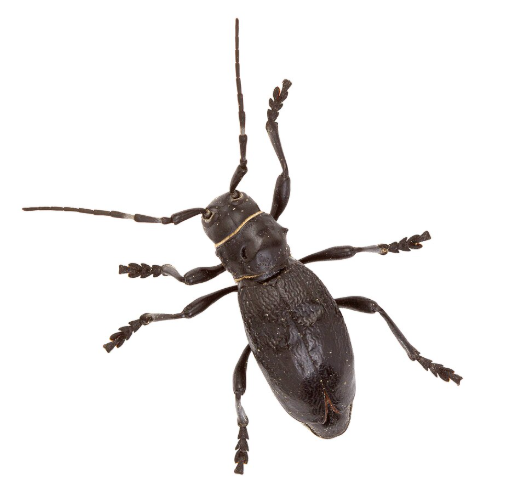
Cactus longhorn beetles are large, flightless beetles in the genus Moneilema. They are native to the deserts and dry grasslands of the southwestern United States and northern Mexico. Although these beetles are natural components of desert ecosystems, their feeding can seriously damage ornamental, cultivated, or stressed cacti.
Adults chew the outer surfaces of cactus stems and pads, while their larvae tunnel inside stems, crowns, and roots. Heavy infestations can cause yellowing, internal decay, structural collapse, and the eventual death of smaller cactus plants.
Taxonomy and Classification
Cactus longhorn beetles belong to the family Cerambycidae, a large group commonly called longhorned beetles because of their elongated antennae. They are members of the order Coleoptera.
- Order: Coleoptera
- Family: Cerambycidae
- Subfamily: Lamiinae
- Genus: Moneilema
- Common names: Cactus longhorn beetle, cactus beetle, and giant cactus beetle
Several species occur in North America, including Moneilema gigas, Moneilema armatum, and Moneilema appressum. Individual species differ in size, geographic range, and preferred cactus hosts.
Identification
Adult cactus longhorn beetles are generally about 1 to 1.5 inches long, although size varies by species. Their bodies are elongated, heavily armored, and usually dull black or dark brown. Some species have faint ridges, spots, or bands on their hardened wing covers.
The antennae are conspicuously long and may approach or exceed the length of the body, particularly in males. The legs are also relatively long and powerful, allowing the beetles to walk efficiently across rocky desert soil.
Unlike many longhorned beetles, cactus longhorn beetles are flightless. Their wing covers are fused, and they travel by walking. Their solid black appearance may cause them to be mistaken for darkling beetles or blister beetles. However, the exceptionally long antennae and longhorn-shaped body help distinguish them.
The larvae are pale, legless, grub-like insects with brownish head capsules. They remain concealed inside cactus tissue or around the crown and root system, making them difficult to detect before significant damage develops.
Distribution and Habitat
Cactus longhorn beetles occur primarily in the Southwestern United States, including Arizona, New Mexico, Texas, California, Nevada, Utah, and portions of neighboring states. Their range extends southward into Mexico.
They inhabit deserts, semiarid grasslands, rocky slopes, canyons, and areas containing native cactus populations. Adults may also enter xeriscaped yards, botanical gardens, cactus nurseries, and landscapes where prickly pears or other susceptible cacti are grown.
Host Plants
Members of the genus Moneilema are closely associated with plants in the cactus family. Frequently attacked hosts include:
- Prickly pear cacti (Opuntia species)
- Cholla cacti (Cylindropuntia species)
- Barrel cacti
- Hedgehog cacti
- Fishhook cacti
- Other native and ornamental cactus species
Adult beetles may feed along cactus pad margins, growing tips, flower buds, and tender stem surfaces. Larvae cause more destructive injury by feeding within the plant.
Life Cycle and Behavior
Adult activity generally increases during warm weather and may become especially noticeable following summer rainfall. Because the beetles cannot fly, they walk between cactus plants and spend much of their time near the ground or climbing host stems.
Females deposit eggs in small wounds, crevices, or chewed areas near the base of a cactus. After hatching, the larvae bore into the plant and feed on soft internal tissues. Some larvae work downward into the crown and roots, disrupting the movement of water and nutrients.
The larval period is the most damaging and least visible stage. Mature larvae pupate within protected plant tissue or nearby material. Depending on the species and local climate, development may take several months or extend through a seasonal cycle.
Signs of Cactus Longhorn Beetle Damage
Early detection is difficult because larvae feed internally. Property owners should watch for:
- Irregular chewing marks along pad edges or stems
- Darkened wounds or sunken areas near the cactus base
- Oozing plant fluids around entry sites
- Soft, discolored, or decaying tissue
- Wilting or yellowing despite adequate growing conditions
- Loose stems or pads that break away easily
- Sudden collapse of an otherwise established cactus
- Large black beetles walking around cactus beds
Damage may be confused with frost injury, excessive watering, fungal rot, or rodent feeding. Cutting into a severely affected plant may reveal internal tunnels, frass, decayed tissue, or pale larvae.
Management and Control
An integrated pest management approach is usually the safest option. Inspect valuable cactus plants regularly during warm months, paying particular attention to the crown, base, and undersides of pads.
- Hand removal: Pick adult beetles from plants with gloved hands or forceps and place them in a sealed container.
- Remove infested tissue: Cut away badly damaged pads or stems when the infestation is localized. Disinfect tools between plants.
- Dispose of infested plants: Severely damaged cacti containing larvae may need to be removed so beetles cannot complete development.
- Reduce plant stress: Provide appropriate drainage, sunlight, and irrigation. Overwatering can accelerate decay in beetle-damaged tissue.
- Inspect new plants: Examine nursery cacti before bringing them into a landscape, especially around the base and root crown.
- Protect native habitats: Avoid unnecessary pesticide applications to wild cactus populations, where these beetles are part of the natural ecosystem.
Contact insecticides may kill exposed adults, but they generally cannot reach larvae hidden deep inside cactus tissue. Broad-spectrum treatments can also harm pollinators and beneficial desert insects. Consult a local extension office or licensed pest professional before treating valuable landscape specimens.
Are Cactus Longhorn Beetles Dangerous?
Cactus longhorn beetles are not considered dangerous to people or pets. They do not infest houses, damage structural lumber, or reproduce in furniture. An adult may pinch if handled carelessly, but it is not venomous and does not sting. Their primary concern is damage to cactus plants.
Conclusion
Cactus longhorn beetles are distinctive native insects adapted to life in dry environments. While they have an ecological role in breaking down weakened cactus tissue, larvae can kill ornamental or rare plants by tunneling through their crowns and roots. Regular inspection, prompt adult removal, careful sanitation, and proper cactus care provide the most practical protection.