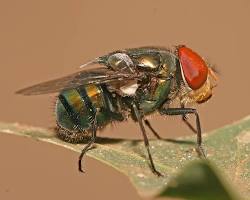
The Blue Bottle Fly is a metallic-colored blow fly belonging to the family Calliphoridae. These flies are well known for their shiny blue bodies and their association with decaying organic material, garbage, animal carcasses, and waste. Blue bottle flies are among the first insects to arrive at decomposing material, making them important in both natural decomposition processes and forensic investigations.
Although blue bottle flies play an ecological role as decomposers, they are commonly regarded as nuisance pests around homes, garbage areas, livestock facilities, and food-handling environments. Their ability to move between waste materials and human food sources makes them potential carriers of bacteria and contamination.
These flies are especially common during warm weather and may suddenly appear indoors when attracted by:
- Garbage
- Pet waste
- Dead rodents
- Animal carcasses
- Rotting food
- Compost piles
- Food residues
Blue bottle flies are closely related to other flies within the blow fly group and are larger and noisier than typical house flies.
Quick Facts
- Order: Diptera
- Family: Calliphoridae
- Habitat: Garbage areas, animal remains, urban environments
- Diet: Decaying organic material
- Activity Period: Spring through fall
- Status: Household and sanitation nuisance
Identification
Blue bottle flies are medium to large flies with distinctive metallic coloration.
Adults generally measure:
- Approximately 1/4 to 1/2 inch long
Key identifying features include:
- Metallic blue abdomen
- Shiny body surface
- Large reddish compound eyes
- Clear wings
- Short antennae
- Loud buzzing flight
Compared to house flies, blue bottle flies are:
- Larger
- More brightly colored
- More heavily built
- Louder in flight
The larvae, commonly called maggots, are:
- Cream-colored
- Legless
- Soft-bodied
- Specialized for feeding on decaying tissue
Distribution and Habitat
Blue bottle flies occur worldwide and are especially common in urban and suburban environments.
Typical habitats include:
- Garbage areas
- Dumpsters
- Compost piles
- Animal remains
- Pet waste areas
- Livestock facilities
- Food-processing sites
They are highly attracted to:
- Rotting meat
- Dead animals
- Organic waste
- Animal feces
- Food scraps
Indoors, blue bottle flies may appear when:
- A dead rodent is present in walls
- Garbage is left uncovered
- Food waste accumulates
- Window or door screens are damaged
Adult flies are strong fliers and can easily travel considerable distances in search of breeding sites.
Life Cycle
Blue bottle flies undergo complete metamorphosis consisting of four stages:
- Egg
- Larva (maggot)
- Pupa
- Adult
Females lay eggs directly on suitable organic material such as:
- Dead animals
- Rotting meat
- Garbage
- Animal waste
Eggs hatch rapidly, often within:
- 8 to 24 hours under warm conditions
Maggots immediately begin feeding on decaying material.
Larvae pass through several growth stages before moving away from the food source to pupate in:
- Dry soil
- Protected cracks
- Debris
- Organic material
Adult flies emerge from the pupal stage and quickly begin reproducing.
During warm weather, the entire life cycle may be completed in:
- As little as 2 to 3 weeks
Behavior
Blue bottle flies are strongly attracted to odors produced by decomposition.
They use specialized sensory organs to detect:
- Rotting organic matter
- Animal remains
- Garbage odors
- Food waste
Common behaviors include:
- Flying rapidly around windows
- Buzzing near lights
- Gathering around waste materials
- Laying eggs on decomposing matter
Adult flies feed primarily on:
- Liquids
- Decaying organic fluids
- Sugary materials
- Moist food residues
Because they frequently contact unsanitary materials, they can mechanically spread bacteria to food and surfaces.
Pest Status
Blue bottle flies are considered nuisance and sanitation pests.
Problems associated with these flies include:
- Food contamination
- Bacterial transmission
- Indoor nuisance activity
- Maggot infestations
- Persistent buzzing indoors
Heavy indoor infestations may indicate:
- A hidden dead animal
- Improper garbage handling
- Severe sanitation issues
- Organic material trapped in walls or attics
Although blue bottle flies do not bite humans, they are undesirable in homes and food-related environments.
Signs of Infestation
Common signs include:
- Large metallic blue flies indoors
- Loud buzzing near windows
- Maggots in garbage or decaying material
- Clusters of flies near light sources
- Strong decomposition odors
Sudden indoor appearances often indicate a nearby breeding source.
Prevention
Good sanitation is the most effective prevention method.
- Keep garbage sealed tightly.
- Clean food waste promptly.
- Dispose of animal remains quickly.
- Use tight-fitting trash containers.
- Install and repair window screens.
- Clean pet waste regularly.
- Maintain clean compost systems.
Removing breeding sources is critical for long-term control.
Control
Successful control depends on locating and eliminating breeding material.
Control methods may include:
- Sanitation improvements
- Garbage management
- Removing dead animals
- Using fly traps
- Applying targeted insecticides
- Improving exclusion methods
In severe infestations, professional pest control services may be needed to locate hidden breeding sources such as dead rodents inside walls.
Interesting Facts
- Blue bottle flies are among the first insects to locate animal remains.
- Their metallic coloration comes from microscopic body structures.
- They are important insects in forensic science investigations.
- Maggots help decompose dead organic material in ecosystems.
- Adult flies can detect decomposition odors from long distances.
- Warm temperatures greatly accelerate their development cycle.