Overview
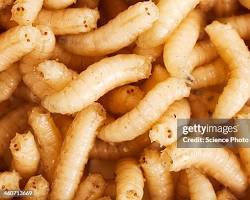
Maggots are the soft-bodied, legless larvae of flies in the order Diptera. Most commonly associated with house flies, blow flies, flesh flies, and other scavenging species, maggots play an essential role in nature by breaking down dead organic matter. Despite their ecological importance, they are often viewed as pests when they appear in garbage cans, compost piles, animal waste, spoiled food, or other unsanitary environments.
These larvae are highly efficient decomposers capable of consuming large amounts of decaying material in a short period. Their presence accelerates nutrient recycling in ecosystems, but infestations around homes, restaurants, livestock facilities, and food-processing areas can create sanitation concerns and attract additional pests.
While most maggots develop harmlessly in decaying organic material, certain species can invade living tissue in humans and animals, causing a condition known as myiasis. In contrast, some carefully selected species are intentionally used in modern medicine for wound treatment, demonstrating the complex relationship humans have with these insects.
Quick Facts
- Common Name: Maggots
- Order: Diptera
- Primary Hosts: Decaying organic matter
- Diet: Decomposing plant and animal material
- Development: Complete metamorphosis
- Importance: Decomposition, medicine, forensic science
- Common Sources: Garbage, carrion, manure, spoiled food
Taxonomy and Classification
Maggots are not a single species but rather the larval stage of many fly species. They belong to the order Diptera, which contains more than 150,000 known fly species worldwide.
- Kingdom: Animalia
- Phylum: Arthropoda
- Class: Insecta
- Order: Diptera
Common fly families that produce maggots include:
- Muscidae – House Flies
- Calliphoridae – Blow Flies
- Sarcophagidae – Flesh Flies
- Phoridae – Scuttle Flies
- Piophilidae – Cheese Skippers
All maggots undergo complete metamorphosis consisting of egg, larva, pupa, and adult stages.
Identification
Maggots are easily recognized by their worm-like appearance and lack of visible legs.
Physical Characteristics
- Soft, cylindrical body
- Creamy white, yellow, or pale gray coloration
- No legs
- No visible head capsule
- Tapered front end
- Blunt rear end
- Segmented body structure
Most species range from a few millimeters to approximately 3/4 inch long depending on age and species.
When disturbed, maggots move using muscular contractions that create a characteristic wriggling motion.
Habitat and Distribution
Maggots occur worldwide and can be found wherever suitable organic material is available.
Common habitats include:
- Garbage containers
- Animal carcasses
- Manure piles
- Compost heaps
- Spoiled food
- Pet waste
- Dead rodents inside walls
- Food processing facilities
They require moisture to survive and typically develop in warm environments rich in decomposing organic matter.
Life Cycle
Maggots develop rapidly under favorable conditions.
Egg Stage
Female flies lay clusters of eggs directly on suitable food sources. Depending on temperature, eggs may hatch within 8 to 24 hours.
Larval Stage
After hatching, maggots immediately begin feeding. This stage is responsible for nearly all feeding activity and lasts several days to several weeks depending on species and environmental conditions.
As they grow, they pass through multiple larval stages called instars.
Pupal Stage
Once fully developed, maggots leave the feeding site and seek a protected location where they transform into pupae.
The pupa appears as a hard, capsule-like structure called a puparium.
Adult Stage
Adult flies emerge from the puparium and begin the cycle again. Under ideal conditions, an entire generation may develop in as little as 7 to 14 days.
Behavior and Feeding
Maggots are highly specialized feeding machines.
Their mouth hooks scrape and tear organic material, which is then partially digested with enzymes before consumption.
Common food sources include:
- Dead animals
- Rotting fruit
- Spoiled meat
- Manure
- Food waste
- Organic debris
- Animal carcasses
Large groups of maggots often feed together, generating heat through their collective activity. These aggregations are sometimes called maggot masses.
Damage and Impact
Sanitation Problems
The most common issue associated with maggots is their presence in garbage and waste disposal areas.
Infestations may:
- Create unpleasant odors
- Contaminate food products
- Attract additional flies
- Attract rodents and scavengers
- Reduce sanitation standards
Food Contamination
Maggots developing in stored food products can render food unusable and may indicate poor sanitation or storage practices.
Myiasis
Some fly species can infest living tissue, causing a medical condition called myiasis.
Affected areas may include:
- Open wounds
- Skin lesions
- Nasal passages
- Eyes
- Livestock tissues
Although uncommon in developed nations, myiasis can be serious and requires medical attention.
Signs of Infestation
- Visible masses of wriggling larvae
- Strong odor of decomposition
- Large numbers of adult flies
- Accumulations of decaying organic matter
- Pupae near garbage or food sources
Benefits of Maggots
Despite their reputation, maggots provide several important benefits.
Decomposition
Maggots rapidly recycle nutrients by consuming dead organic matter, helping maintain ecosystem health.
Forensic Entomology
Scientists use maggot development stages to estimate the time of death during criminal investigations.
Medical Applications
Sterile maggots are used in maggot debridement therapy, where they remove dead tissue from chronic wounds while leaving healthy tissue intact.
This treatment has been successfully used for:
- Diabetic ulcers
- Pressure sores
- Chronic wounds
- Necrotic tissue removal
Prevention and Control
Sanitation
Proper sanitation is the most effective method of preventing maggot infestations.
- Remove garbage regularly
- Store waste in sealed containers
- Clean food spills promptly
- Maintain compost properly
- Remove animal waste frequently
Garbage Can Maintenance
- Wash bins regularly
- Disinfect containers
- Keep lids tightly closed
- Store trash in shaded areas
Exclusion
- Repair window screens
- Seal entry points
- Keep doors closed
- Use air curtains in commercial facilities
Source Removal
If maggots are present, locate and eliminate the breeding source. Simply killing the larvae will not solve the problem if the food source remains available.
Interesting Facts
- Maggots can consume large amounts of organic matter relative to their size.
- Some species develop from egg to adult in less than two weeks.
- Maggot masses generate heat that speeds development.
- Forensic investigators use maggot growth rates to estimate postmortem intervals.
- Medical-grade maggots are still used in hospitals worldwide.
- They are among nature’s most efficient decomposers.
Conservation and Research
Research involving maggots continues to expand in medicine, forensic science, and ecology. Scientists study their role in decomposition, wound healing, waste management, and environmental monitoring.
Although often viewed negatively, maggots perform essential ecological functions that help maintain healthy ecosystems and recycle nutrients throughout the natural world.