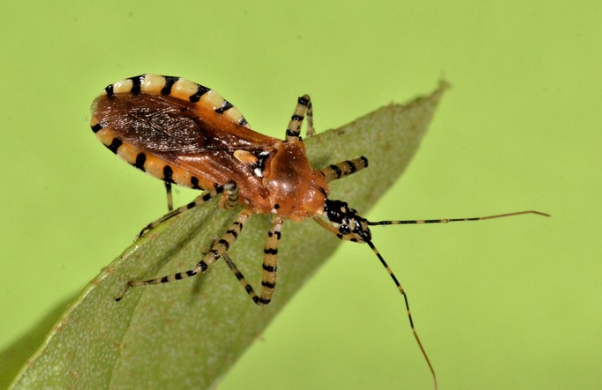
Pselliopus modesta is a species of assassin bug (family Reduviidae), a group of predatory insects known for their role in controlling other insect populations. Found throughout parts of North America, particularly in warm and semi-arid regions, this species plays an important ecological role by feeding on a variety of pest insects. While it is generally considered beneficial, it can become a nuisance or even a minor health concern when encountered in close proximity to humans due to its ability to deliver a painful defensive bite.
Unlike plant-feeding pests, Pselliopus modesta is a hunter. It uses a specialized piercing-sucking mouthpart called a rostrum to capture and immobilize prey. The insect injects digestive enzymes that liquefy internal tissues, allowing it to feed efficiently. This predatory behavior makes assassin bugs valuable natural enemies of many agricultural and garden pests, including caterpillars, beetles, and other soft-bodied insects.
However, their presence in residential environments can be alarming. They may be attracted to areas with abundant prey, including gardens, landscaping, and outdoor lighting where insects gather. Occasionally, they may wander indoors, especially during seasonal changes or when searching for shelter.
Taxonomy and Classification
Order: Hemiptera
Family: Reduviidae
Genus: Pselliopus
Species: Pselliopus modesta
Members of the Reduviidae family are commonly referred to as assassin bugs due to their predatory habits. This family includes a wide range of species, some of which are beneficial predators, while others (such as kissing bugs) are of medical importance. Pselliopus modesta, however, is primarily a beneficial predator and not a disease vector.
Identification
Pselliopus modesta is a medium-sized insect with an elongated body, long legs, and a narrow head. It typically displays muted coloration, including shades of brown, gray, or dull orange, which helps it blend into its surroundings. The body may have subtle patterning, but it is less vividly colored than some related species.
The most distinctive feature is the curved, beak-like rostrum used for feeding. When not in use, it is tucked beneath the body. The insect’s posture is alert and somewhat angular, reflecting its role as an active predator.
Nymphs resemble smaller versions of adults but lack fully developed wings. As they molt and mature, their coloration and body proportions become more defined.
Habitat and Behavior
This species is commonly found in gardens, agricultural fields, wooded areas, and desert landscapes where insect prey is abundant. It prefers environments that provide both shelter and hunting opportunities, such as leaf litter, shrubs, and plant stems.
Pselliopus modesta is primarily a solitary hunter. It does not build webs or nests but instead actively searches for prey. Using its strong front legs, it captures insects and delivers a quick immobilizing bite.
Although generally not aggressive toward humans, it may bite if handled or accidentally pressed against the skin. These bites are defensive rather than predatory.
Life Cycle
The lifecycle follows incomplete metamorphosis, consisting of egg, nymph, and adult stages. Eggs are typically laid on plant surfaces or in sheltered areas. After hatching, nymphs begin feeding on small insects and gradually grow through a series of molts.
Development time depends on environmental conditions such as temperature and food availability. In warm climates, multiple generations may occur annually. Both nymphs and adults are predatory and contribute to pest control throughout their lifecycle.
Benefits and Risks
The primary benefit of Pselliopus modesta is its role as a natural pest control agent. By feeding on harmful insects, it helps reduce populations of species that damage crops and ornamental plants.
The main risk is its bite. While not dangerous in most cases, the bite can be painful and may cause localized swelling or irritation. Sensitive individuals may experience stronger reactions.
Management and Control
In most cases, control is unnecessary and even discouraged, as this insect is beneficial. However, when it becomes a nuisance, management should focus on prevention rather than elimination.
Integrated Pest Management strategies include reducing outdoor lighting that attracts prey insects, sealing entry points into structures, and minimizing clutter or debris where insects can hide.
Direct handling should be avoided to prevent defensive bites. If removal is necessary, the insect can be gently relocated outdoors.