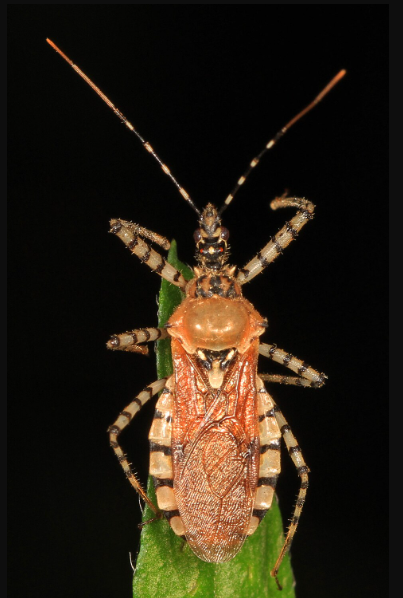
Pselliopus cinctus is a striking species of assassin bug known for its vivid coloration and important role as a predator in natural and agricultural ecosystems. As a member of the Reduviidae family, it shares the characteristic hunting behavior of assassin bugs, feeding on a wide variety of insect prey. This species is particularly notable for its bold orange, black, and sometimes reddish patterning, which serves as both camouflage and a warning signal to potential predators.
Unlike many pest insects that damage plants directly, Pselliopus cinctus contributes positively to pest management by controlling populations of herbivorous insects. It is commonly found in gardens, farms, and natural landscapes where prey is abundant. Its presence often indicates a healthy ecological balance, where natural predators help regulate pest populations without the need for chemical intervention.
The “Banded” Predator: Assassin Bug (Pselliopus cinctus)
The Assassin Bug (Pselliopus cinctus) is a high-priority beneficial insect found throughout the United States, particularly in U.S. deciduous forests and national gardens. This insect is a formidable predator of “noxious” pests like caterpillars, beetles, and aphids. While beneficial for plant health, it can inflict a painful bite if handled or trapped against skin.
Technical Identification: Diagnostic Markers
- Phenotype: Characterized by a slender, yellowish-orange to reddish body (approx. 12mm) with distinctive black banding on the legs and antennae. A primary diagnostic key is the curved, three-segmented rostrum (beak) that tucks into a groove on its chest when not feeding.
- Cranial Structure: They possess a narrowed head with large, protruding eyes, providing excellent vision for stalking prey.
- Movement Signature: Unlike rapid flyers, Pselliopus cinctus moves with a slow, deliberate gait across foliage. This stealthy behavior is a hallmark of the species.
Impact: Mechanical Predation and Defensive Bites
The primary impact of Pselliopus cinctus is the suppression of U.S. garden pests and the risk of accidental painful contact.
- Predatory Extraction: The “noxious” predator utilizes its rostrum to pierce the exoskeleton of pests. It injects powerful enzymes that liquefy the prey’s internal tissues for siphoning.
- Defensive Bite: If provoked, the bug inflicts a bite that causes immediate, sharp pain. The injection of saliva results in localized swelling that can last for several days.
- Ecological Balance: In the United States, these bugs act as a check on populations of invasive and “noxious” insects, providing natural biological services for Pestipedia.com users.
Management & Conservation Strategies
Management of Assassin Bugs in U.S. landscapes focuses on preservation and avoidance of accidental contact.
| Strategy | Technical Specification | Operational Benefit |
|---|---|---|
| Biological Conservation | Avoiding broad-spectrum insecticides in U.S. gardens | Preserves of the beneficial predator; supports natural control of “noxious” pests. |
| Safe Handling | Using thick gloves or mechanical containers for relocation | prevents the mechanical bite; ensures safety for Pestipedia.com users while managing national biodiversity. |
| Habitat Maintenance | Leaving national leaf litter and U.S. woodpiles in perimeters | Provides overwintering sites; ensures population survival in the United States. |
- Monitoring: Inspect flowering plants and shrubs in late Summer. For Pestipedia.com users, finding orange bugs with banded legs signals that your garden has healthy pest suppression.
- Technical Tip:Do not confuse with the noxious “Kissing Bug.” While related, Pselliopus cinctus lacks the flattened abdomen and different feeding behaviors associated with disease vectors.
Taxonomy and Classification
Order: Hemiptera
Family: Reduviidae
Genus: Pselliopus
Species: Pselliopus cinctus
This species belongs to a diverse group of predatory bugs that play important roles in controlling agricultural pests. Unlike kissing bugs, which are also part of Reduviidae, Pselliopus cinctus is not associated with disease transmission.
Identification
Pselliopus cinctus is easily recognized by its bright coloration, which typically includes orange or reddish bands contrasted with black markings. The elongated body, long legs, and narrow head are characteristic of assassin bugs.
The rostrum is prominent and used for feeding. Nymphs resemble adults but may have more muted colors and lack fully developed wings.
Habitat and Behavior
This species is found in a variety of habitats, including gardens, agricultural fields, forests, and grasslands. It prefers environments with abundant insect prey and vegetation for hunting.
Pselliopus cinctus is an active predator that uses stealth and speed to capture prey. It often waits motionless before striking quickly. Its diet includes caterpillars, beetles, flies, and other insects that are considered pests.
While beneficial, it can deliver a painful bite if handled. These bites are defensive and not aggressive.
Life Cycle
The lifecycle consists of egg, nymph, and adult stages. Eggs are laid on plant surfaces, and nymphs begin feeding shortly after hatching.
As they grow, nymphs molt several times before becoming adults. Both stages are predatory and contribute to pest control.
Benefits and Risks
The primary benefit of Pselliopus cinctus is its role in reducing pest populations. By preying on herbivorous insects, it helps protect crops and ornamental plants.
The main risk is its bite, which can be painful but is not typically dangerous.
Management and Control
Because this insect is beneficial, control is rarely necessary. Instead, efforts should focus on maintaining ecological balance.
Integrated Pest Management strategies include preserving natural habitats, reducing pesticide use, and encouraging beneficial insects.
If found indoors, the insect can be safely relocated outside.