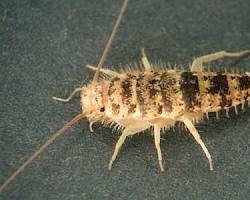
Zygentoma is the scientific order that includes the familiar household pests known as Silverfish (Lepisma saccharinum) and Firebrats (Thermobia domestica). These primitive, wingless insects have existed for hundreds of millions of years and are among the oldest insect groups still living today. Despite their ancient origins, they remain common pests in modern homes, businesses, museums, libraries, archives, and food storage facilities.
Zygentoma species are primarily known for feeding on materials rich in starches, sugars, cellulose, and other carbohydrates. Their feeding habits can result in damage to books, wallpaper, photographs, fabrics, stored foods, and valuable historical artifacts. Although they do not bite, sting, spread disease, or directly threaten human health, their ability to damage irreplaceable materials makes them important structural and property pests.
Because they are highly secretive and nocturnal, infestations often remain unnoticed for months or even years before significant damage becomes apparent.
Taxonomy and Classification
Zygentoma belongs to a primitive group of wingless insects that evolved long before modern flying insects appeared.
- Kingdom: Animalia
- Phylum: Arthropoda
- Class: Insecta
- Order: Zygentoma
Important members include:
- Silverfish (Lepisma saccharinum)
- Firebrats (Thermobia domestica)
- Gray Silverfish (Ctenolepisma longicaudata)
- Four-Lined Silverfish (Ctenolepisma lineata)
Unlike most insects, members of Zygentoma continue molting throughout their entire lives, even after reaching adulthood.
Identification
Zygentoma insects possess a distinctive appearance that makes them relatively easy to recognize.
Adults
- Length: 12–20 mm.
- Shape: Elongated and teardrop-shaped.
- Color: Silver, gray, brown, or mottled.
- Body Covering: Tiny scales that give a metallic appearance.
- Antennae: Long and thread-like.
- Tail Appendages: Three long bristle-like filaments.
The three tail filaments are one of the most recognizable characteristics of all Zygentoma species.
Silverfish
- Prefer cool, humid environments.
- Typically found in bathrooms, basements, and crawlspaces.
- Silvery-gray coloration.
Firebrats
- Prefer warm environments.
- Often found near furnaces and water heaters.
- Mottled brown coloration.
Distribution and Habitat
Zygentoma insects are found worldwide and thrive in a variety of indoor environments.
Common habitats include:
- Basements
- Bathrooms
- Attics
- Crawlspaces
- Laundry rooms
- Kitchens
- Libraries
- Museums
- Archives
- Storage areas
Different species prefer different environmental conditions.
Silverfish Habitats
- High humidity.
- Dark locations.
- Cool temperatures.
- Moist structural voids.
Firebrat Habitats
- Warm temperatures.
- Boiler rooms.
- Near furnaces.
- Hot utility spaces.
Life Cycle
Zygentoma insects undergo simple metamorphosis.
- Egg Stage: Eggs are deposited in cracks, crevices, and hidden locations.
- Nymph Stage: Young insects resemble miniature adults.
- Adult Stage: Individuals continue molting throughout life.
Unlike butterflies, beetles, or flies, they do not pass through larval or pupal stages.
Many species can live:
- Two to three years.
- Five years or more under ideal conditions.
- Longer than many common household pests.
Their longevity contributes significantly to cumulative damage.
Feeding Habits
Zygentoma species feed on a wide variety of carbohydrate-rich materials.
Preferred Food Sources
- Paper
- Book bindings
- Wallpaper paste
- Photographs
- Cardboard
- Cotton fabrics
- Silk
- Linen
- Stored flour
- Cereals
- Pet food
They are particularly attracted to materials containing starches, dextrins, cellulose, sugars, and adhesives.
Damage and Economic Importance
The primary impact of Zygentoma insects involves slow but persistent damage to property.
Paper Damage
- Irregular feeding holes.
- Surface scraping.
- Damaged documents.
- Deterioration of books.
Libraries and archives are especially vulnerable to infestations.
Fabric Damage
- Holes in clothing.
- Damage to stored textiles.
- Destruction of natural fibers.
Infestations may go unnoticed until substantial damage has occurred.
Food Contamination
- Contaminated stored products.
- Fecal deposits.
- Shed scales.
- Food spoilage concerns.
Although they consume relatively small amounts, contamination often renders products undesirable.
Signs of Infestation
Property owners may observe:
- Live insects at night.
- Small feeding holes.
- Yellow staining.
- Shed scales.
- Tiny black fecal pellets.
- Damaged books and papers.
- Wallpaper deterioration.
Most infestations are discovered when individuals encounter insects while turning on lights in dark rooms.
Behavior and Conflict
Several characteristics contribute to the persistence of Zygentoma infestations.
- Nocturnal Activity: Most feeding occurs at night.
- Secretive Behavior: They remain hidden during daylight hours.
- Long Lifespan: Individuals survive for years.
- Continued Molting: Growth continues throughout life.
- Broad Diet: Numerous food sources support survival.
These factors often make infestations difficult to detect during their early stages.
Management and Prevention
An Integrated Pest Management (IPM) program is the most effective approach.
Moisture Control
- Reduce humidity below 50%.
- Use dehumidifiers.
- Improve ventilation.
- Repair plumbing leaks.
- Address condensation problems.
Moisture reduction is often the most important control measure.
Sanitation
- Vacuum cracks and crevices.
- Remove paper clutter.
- Clean food spills.
- Reduce dust accumulation.
Sanitation reduces both food sources and hiding places.
Exclusion
- Seal cracks.
- Repair gaps around pipes.
- Store vulnerable items in sealed containers.
- Protect valuable documents.
Chemical Control
- Boric acid dusts.
- Silica-based dusts.
- Residual insecticides.
- Targeted crack-and-crevice treatments.
Professional treatments may be required for severe infestations.
Museums and Archives
Zygentoma insects are considered major pests in museums, libraries, and archival facilities.
They may damage:
- Historical manuscripts.
- Rare books.
- Photographs.
- Maps.
- Textiles.
- Artwork.
For this reason, many institutions maintain extensive monitoring programs specifically targeting silverfish and firebrats.
Conservation and Research
Research involving Zygentoma focuses on non-toxic monitoring systems, improved museum pest management strategies, pheromone-based detection tools, and environmentally friendly control methods. Scientists are particularly interested in protecting valuable cultural artifacts while minimizing pesticide use in sensitive collections.
Although often overlooked due to their secretive nature, Zygentoma insects remain among the most important household and museum pests because of their ability to damage books, paper products, textiles, and stored foods over long periods of time.